
MyTechDailyNews Breakdown: iPhone Duo Screen Complaints in Launch Week Point Back to the Hinge
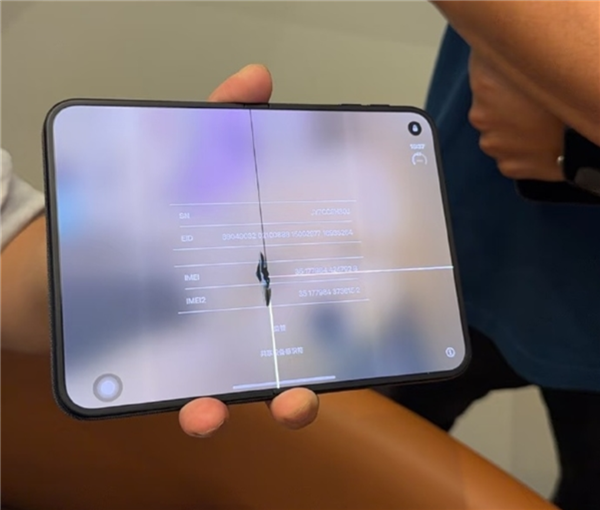
For anyone who follows consumer hardware, the opening week after a launch is the moment when a marketing storyline meets ordinary hands and pockets. That is precisely the window in which reports of screen trouble on the iPhone Duo began circulating — the first foldable phone Apple has ever put on sale. The conversation has not drifted toward battery life or software bugs; it keeps returning to one mechanical region: the hinge. This breakdown collects the teardown reading, the factory-side comment carried by a news outlet, and the single documented counter visit, then turns them into a plain-language checklist, a list of misreadings to avoid, and answers to the questions readers keep asking.
The hardware at issue: precision parts doing a delicate job
Descriptions of the iPhone Duo hinge point to a cluster of small, interdependent components: gears, springs and interconnected metal joint segments that carry the folding motion. The shape follows the teardrop layout that has become fairly common on foldable devices, tucking part of the folding circle inside the body once the phone is shut. On top of that, Apple is described as adding curved guide rails that constrain how those joint segments travel, so the display absorbs less stress while the phone opens and closes.
Teardown commentary narrows the suspicion to two moving parts:
- Center support rod. iFixit, in an earlier iPhone Duo teardown report, speculated that if this rod does not retract correctly while the phone closes, it can press too hard against the screen.
- Curved guide rail. The rail that steers hinge movement sits higher than the components around it in the folded state; if it fails to move as intended, it can also interfere with the panel.
Two separate accounts, one direction of travel
What makes this worth reading carefully is that two different kinds of source are gesturing at the same neighbourhood inside the phone. According to a report by Jiemian News, a journalist checked with one Foxconn employee, who replied that the cause behind this screen trouble was broadly in line with the mechanical analysis above.
That account also supplied manufacturing context. Under capacity pressure, Apple had reportedly relaxed yield-based inspection standards by a certain margin earlier in order to keep supply moving, a condition the worker described as raising the likelihood that screen-defective units make their way into the market. On remediation, the report says the iPhone Duo line has already swapped out one batch of components, that actual production was not affected, and that the stocking strategy had not been adjusted for now.
The owner-side picture: a repair that could not start
One reported customer journey shows what the same issue looks like across a service counter. After running into the fault, the owner went to the Apple service point at the MixC mall in Shenyang hoping to have the device fixed. Even with a willingness to pay out of pocket, the repair could not be done on the spot: staff reportedly said the required part was out of stock, gave no arrival timing, and could only register the request.
Read as a signal, that detail matters more than the fault itself. When spare parts have no estimated arrival date, the queue in front of an owner is measured in unknowns rather than days.
Four ways this story is commonly misread
- "This is a cracked-glass problem." The described suspects are mechanical pieces sitting behind the panel — a support rod and a guide rail — not an impact fracture.
- "Apple invented a one-of-a-kind hinge." The teardown notes describe a teardrop arrangement already fairly common in the category; the reported addition is the curved guide rail that constrains joint movement.
- "Week-one complaints prove every unit is defective." They prove load on service channels and a named suspicion; the cause is still attributed to suspected component behaviour, not a settled diagnosis.
- "The line swapped parts, so phones are being recalled." The factory-side account speaks of one batch of components replaced, production continuing unaffected, and no change to stocking strategy so far.
A practical checklist, whether you own one or are still watching
- Record the exact symptom and the state in which it appears: fully opened, fully folded, or mid-transition.
- Keep the purchase receipt and purchase date handy before you book anything.
- Start with an official service point; offering to pay still only buys you a place in the queue, as the Shenyang MixC case illustrates.
- Ask specifically whether the needed part is in stock and what the arrival window is, rather than asking only "when will it be fixed".
- If the part is unavailable, confirm the request has been registered and take away a reference number.
- Handle the crease area without forcing the fold to a hard stop, and stop to document anything that feels like internal pressure or a raised edge.
- Decide in advance what would change your judgement: a named official diagnosis, or confirmed parts availability.
FAQ: the questions readers keep asking
Which product is under discussion?
The iPhone Duo, the first foldable model Apple has launched. The screen complaints surfaced in the first week of sale.
Which component is being questioned?
The hinge assembly, and within it two reported suspects: a center support rod that may not retract correctly when the phone closes, and a curved guide rail that may not move as expected in the folded state.
Who published the teardown reading?
iFixit, in an earlier iPhone Duo teardown report. Its pressure-on-screen scenario was framed as speculation, not a confirmed defect.
Was there any factory-side comment?
Jiemian News reported speaking with one Foxconn employee, who said the cause was broadly close to those analyses, mentioned a previously relaxed yield-inspection threshold used to protect supply, and said the line had already replaced one batch of components.
Has production stopped?
No stoppage is described. According to that account, actual production was not affected and the stocking strategy had not been adjusted for now.
What happened at the repair counter?
In the Shenyang MixC case, the owner could not get the device repaired even while willing to pay, because the part was out of stock with no stated arrival time; only a registration was accepted.
The takeaway for everyday tech readers
The useful pattern here is not "first foldable Apple, first complaint". It is that a debut folding product is stress-tested by real users within days, and what breaks cover is usually mechanical rather than digital. On the iPhone Duo, the hinge is where a teardown shop's reasoning and a factory-side comment currently meet, while the counter visit in Shenyang shows how a single missing part becomes the practical consequence for owners. Treat the mechanism as suspected until an official diagnosis is issued, keep every service request documented with a reference number, and let parts availability — not the volume of headlines — be your cue for the next update.