
MyTechDailyNews General: iPhone Duo Preorders, Apple Foldable Shipments, and What 2026 Means for Buyers
MyTechDailyNews readers watching the next round of foldable-phone news may find that the first week of iPhone Duo preorders already tells a more practical story than a simple launch hype headline. TrendForce stated yesterday that, less than a week after preorders started, some Apple official-site order dates have been delayed to January 2027. Early owner feedback is split in a familiar way: the unfolded screen, split-screen workflow, and general visual experience are praised, while app black bars, button configuration, and fingerprint unlocking require users to adapt. Screen damage reports and high repair estimates have simultaneously made reliability and ownership cost the biggest questions around the device.
The shipment math: a near-flat market, a big Apple share
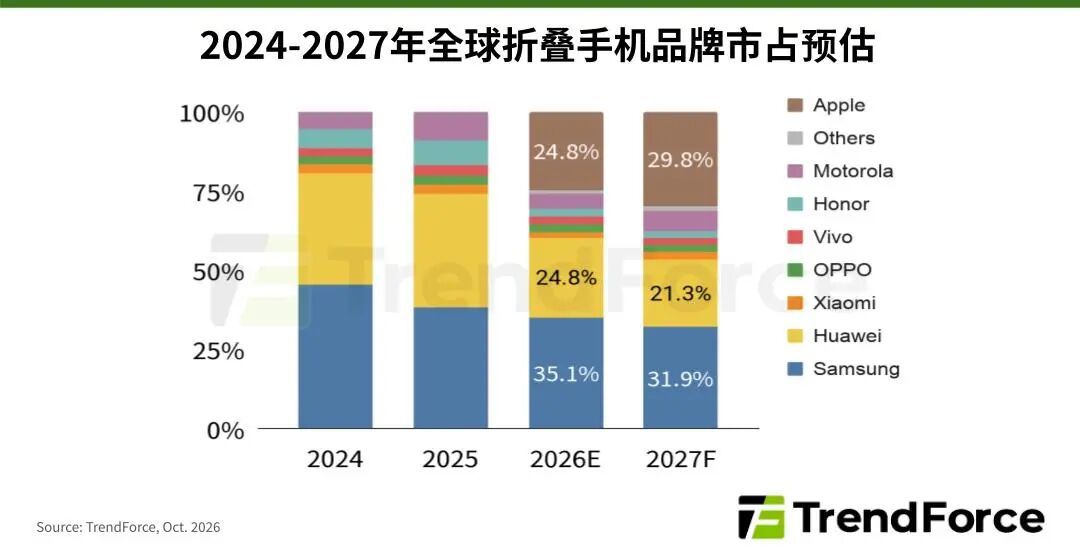
TrendForce estimates that global foldable smartphone shipments in 2026 will grow only 0.5% overall. Within that backdrop, the first foldable iPhone is projected to ship about 5 million units in its first year. That volume equals nearly 25% of global foldable phone shipments and gives Apple about 24.8% market share in the iPhone Duo’s first year on the market. Because the total category is barely expanding, the main effect is not a bigger pie but faster redistribution: existing foldable brands may see their shares change more quickly as Apple’s entry attracts buyers who had been waiting for a familiar ecosystem.
Hardware and crease control: why early comments focus on adaptation
From the analysis perspective, the iPhone Duo’s lower crease visibility is linked to stress control across multiple material layers and optical optimization with nanotexture surfaces. The waterdrop-style hinge is the key dynamic-control part; if the central support does not yield enough, local areas can receive extra contact and stress concentration. A recent teardown discussion raised that same reasoning. Apple has reportedly replaced a small number of devices with internal screen abnormalities, while future engineering work is expected to coordinate hinge travel, support height, bonding accuracy, and assembly tolerances.
Software, battery, and the next competitive question
Software is another part of the adaptation curve. Some apps still show black bars and do not fully use the available space, which means the hardware advantage is not always reflected in daily use. A larger folding screen also raises energy-management pressure. The balance has to support multitasking, AI computing, and battery life while using high-efficiency emissive materials and adaptive driving. TrendForce sees Apple’s biggest advantage as the ability to integrate silicon, the operating system, and developer support. If app adaptation and hardware reliability keep improving, the foldable phone race may move away from exterior novelty and toward how efficiently a device can handle multiple tasks at once.
What this means for everyday readers
-
Watch delivery updates on Apple’s official site if a preorder is still pending, because some dates are shown as January 2027.
-
Compare reliability and repair exposure before treating a foldable as a primary phone, because screen damage reports and high repair quotes are now part of the market conversation.
-
Track app adaptation before deciding whether a foldable will be useful for main workflows, since black bars and underused screen space can affect daily multitasking.
-
Consider button layout and fingerprint unlocking as adjustment points, especially if using the device for quick, one-handed actions.
Common misconceptions
-
Misconception: More iPhone Duo shipments automatically mean the whole foldable category is growing fast. Reality: TrendForce places 2026 global foldable smartphone shipment growth at only 0.5%, so the larger effect is share redistribution.
-
Misconception: A lower-visibility crease removes reliability questions. Reality: Screen damage reports and high repair estimates remain central to the discussion, alongside the need for engineering improvements.
-
Misconception: Foldable success is only about hardware. Reality: App black bars, space utilization, energy management, multitasking behavior, and AI workloads all shape the practical experience.
Quick FAQ
Q: How many iPhone Duo units is Apple expected to ship in the first year?
A: TrendForce projects about 5 million units in the first year, equal to nearly 25% of global foldable phone shipments.
Q: Did iPhone Duo preorders face delivery delays?
A: Yes. TrendForce said yesterday that some official-site orders, less than a week after preorders began, had delivery dates pushed to January 2027.
Q: Is the crease the main hardware concern?
A: Not only the crease. The iPhone Duo is described as having lower crease visibility through material stress control, nanotexture optical optimization, and a waterdrop-style hinge, but central support, bonding precision, hinge travel, and assembly tolerances still need coordinated refinement.
Q: Why does this matter if 2026 shipments only grow 0.5%?
A: A category that is near flat does not have much room for everyone to grow at once. When Apple ships about 5 million units and claims about 24.8% market share in the iPhone Duo’s first year on the market, other foldable brands may need to defend their positions more aggressively.
Final takeaway
The iPhone Duo story is not just another product headline: it shows how one launch can change market expectations in a category that is close to flat. For buyers, the practical takeaway is to treat early interest, delivery shifts, app adaptation, and repair exposure as one package. For the industry, the takeaway is that the next foldable battle may be won by daily efficiency, not novelty.