
MyTechDailyNews General Guide: Apple Intelligence in China Adds Qwen, Live Translation and iOS 27.3 Timeline
Apple's first Apple Intelligence features for China are entering release preparation, and the rollout is easier to understand as a timeline rather than a single launch event. The system is positioned as part of everyday iPhone work, with generative tools that assist writing, communication, creation, photo organization, mail management and notification review. Apple shared the plan on October 31. The latest iOS developer beta opens a testing experience on November 4, while the formal rollout to Chinese users arrives in December with iOS 27.3. Support on other platforms is described as coming after required approvals are complete.
Rollout calendar at a glance
- October 31: Apple announces first China-facing Apple Intelligence functions are ready for release preparation.
- November 4: The newest iOS developer beta provides the first functions for early testing.
- December: iOS 27.3 delivers the first functions to Chinese users.
- Later: Additional platform support follows after necessary approvals.
The China-specific model link: Apple, Alibaba and Qwen
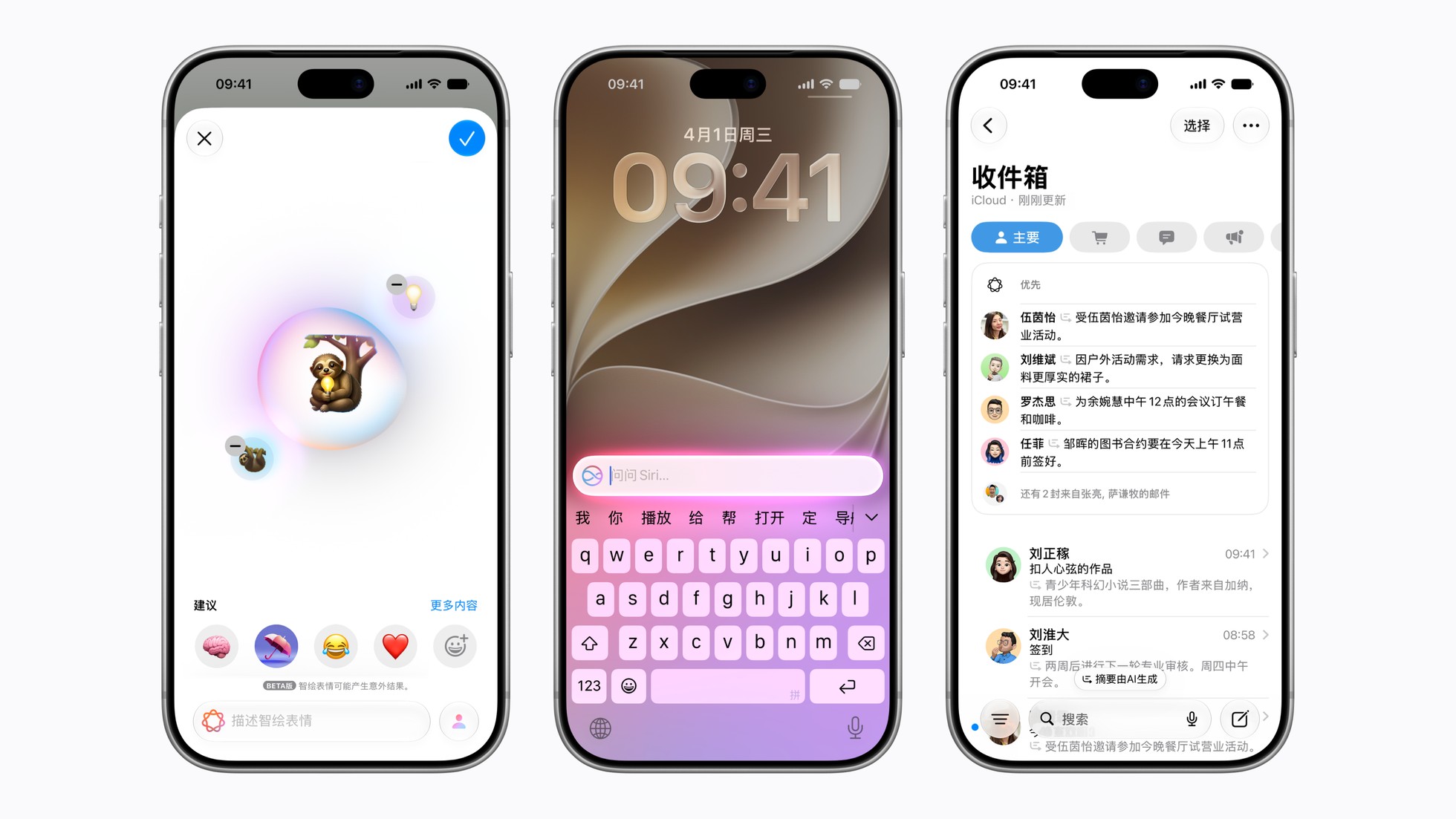
One of the most notable parts of the China release is the relationship between Apple and Alibaba. Apple has established a collaboration with Alibaba and brings Qwen model capabilities into selected Apple Intelligence scenes. This means Chinese users can use Qwen inside functions such as Siri, writing tools and visual intelligence. The services covered include text understanding, image understanding and content generation.
Live translation for messages, calls and face-to-face talk
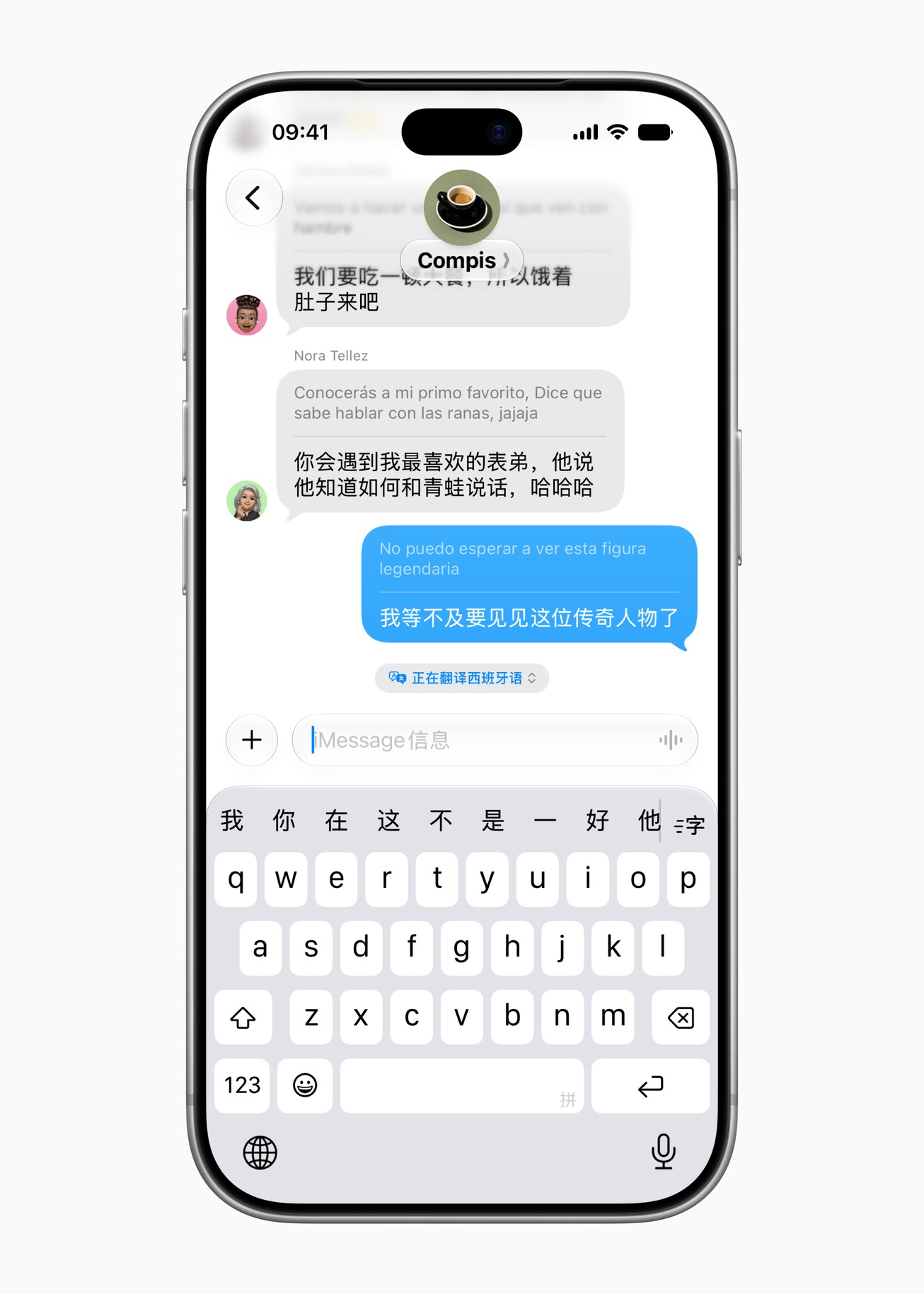
For cross-language use, Apple Intelligence adds real-time translation that helps users send messages or communicate across languages. The capability is integrated into Messages, FaceTime and Phone. That places translation inside common communication paths rather than requiring a separate routine.
For in-person conversation, AirPods 4, AirPods Pro 2 and later models that support active noise cancellation can also be used for face-to-face real-time translation. This expands translation beyond on-screen chats and calls.
Writing tools and the new Create feature
For writing, Apple Intelligence can automatically rewrite, proofread and summarize text. These tasks are presented as system-level tools, so users can apply them while composing content. The update also introduces a new Create feature, allowing users to call Qwen directly inside system writing tools to generate original content.
Visual intelligence, Photos tools and natural-language search
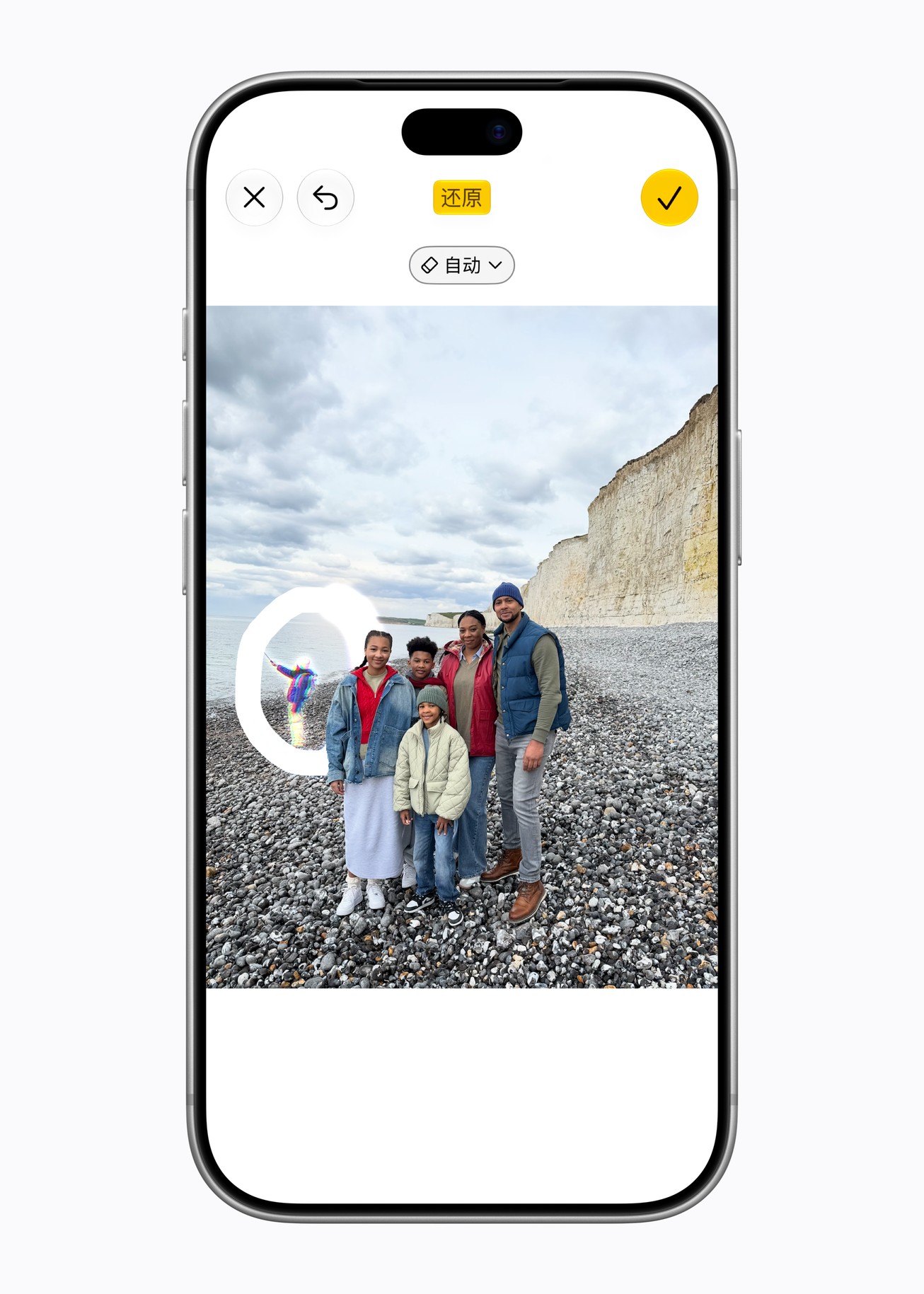
With the iPhone camera, visual intelligence can identify objects and places nearby and provide instant information. Inside Photos, the Erase tool can remove distracting elements while keeping the overall picture natural. Apple also describes natural-language search for photos and videos: users can enter a description and locate desired content. In addition, a simple text prompt can be used to generate memory films automatically.
Genmoji for custom emoji
For personalized expression, Apple introduced Genmoji. Users can create custom emoji directly from text descriptions, giving them a way to match different communication scenarios without relying only on preset emoji sets.
Mail: Priority Messages, summaries and smart replies
In Mail, the inbox now includes a Priority Messages area at the top. This is intended to highlight important mail that needs attention, such as boarding passes or same-day important invitations. Mail summary can condense long messages and complex threads. Smart reply can generate context-aware reply suggestions, helping users handle communication tasks more quickly.
Notifications: summaries, top items and reduced distractions
Notification management is also enhanced. Long notifications and grouped stacks can be summarized by notification summaries. The most urgent items are placed at the top through top notification handling. A distraction-reducing focus mode pushes only important information that requires immediate response, lowering the frequency of interruptions from unrelated alerts.
Notes, call transcription and Siri upgrades
For voice and records, Apple Intelligence can automatically create summaries for audio transcriptions in Notes. It can also summarize call transcription content, helping users quickly review key points.
Apple says the new Siri experience is more natural. Users can communicate with Siri by typing directly. The system is described as able to understand intent even when wording is incomplete or not perfectly connected, and it maintains context across consecutive exchanges. When a request needs broader knowledge support, Siri can connect to the Qwen model for assistance.
The upgraded Siri experience includes questions about photos and documents that contain PDF files or presentations. Access is available by signing into a Qwen account or using Apple’s sign-in method.
What this first China release does not include
Apple emphasized that the first batch of Apple Intelligence features released for the Chinese market does not include Siri AI. It also does not include other next-generation Apple Intelligence features announced at WWDC 2026. Those capabilities are outside the scope of this update.
Supported devices and language conditions
The published plan says first core Apple Intelligence features support iPhone 16 series and later models, iPhone Duo, iPhone 15 Pro, iPhone 15 Pro Max and iPhone Air. When using the features, the device language and Siri language must both be set to English and Simplified Chinese. Apple also notes that some functions may vary across different languages and regions.
Common misconceptions
- The November 4 developer beta is not the formal consumer rollout; the formal rollout for Chinese users comes with iOS 27.3 in December.
- The China release includes Qwen in selected scenes, but it does not bring Siri AI into this first batch.
- The plan is staged: other platform support is described as waiting for necessary approvals, not as an immediate simultaneous launch.
- Feature availability is not uniform for every language and region; some capabilities may differ.
Action checklist for readers
- Use the Apple-published dates as checkpoints: October 31 announcement, November 4 developer testing, December iOS 27.3 consumer rollout.
- If testing the November 4 experience, review whether the device belongs to the supported list: iPhone 16 series and later models, iPhone Duo, iPhone 15 Pro, iPhone 15 Pro Max and iPhone Air.
- Before relying on the features, check that both device language and Siri language are set to English and Simplified Chinese.
- For communication-heavy use, pay attention to Messages, FaceTime, Phone, Mail, Notes and notification summaries, because those are the main areas described in the release.
- For cross-language situations, consider AirPods 4, AirPods Pro 2 and later noise-cancellation models mentioned for face-to-face real-time translation.
FAQ
What is Apple Intelligence for China?
It is Apple’s AI system adapted for Chinese iPhone users, covering writing, communication, creation, information processing and everyday features inside iPhone experiences.
Which company supports the Qwen side of the China release?
Apple has established cooperation with Alibaba, and Qwen capabilities are used in selected feature scenes such as Siri, writing tools and visual intelligence.
When can developers test the first China features?
They can test on November 4 with the latest iOS developer beta.
When do Chinese users get iOS 27.3?
Apple says the first functions arrive in December together with iOS 27.3.
What communication apps include real-time translation?
The capability is integrated into Messages, FaceTime and Phone, and compatible AirPods models can be used for face-to-face translation.
Does the first China release include Siri AI?
No. Apple says Siri AI is not included in this first batch.
What devices support the first core functions?
The plan lists iPhone 16 series and later models, iPhone Duo, iPhone 15 Pro, iPhone 15 Pro Max and iPhone Air.
What language settings are required?
The features require device language and Siri language to be set to English and Simplified Chinese at the same time.