
Case File: What Anthropic's Claude Office Push Tells Business Users Before the IPO | MyTechDailyNews General
The most telling line in Anthropic's latest update is not a product boast. It is its own product lead calling the spreadsheet feature "quite basic" while routing advanced finance work to the add-ins that live inside existing office software. That one admission explains the whole pre-IPO play: widen the user base fast, but do not pretend the tool is ready for audit-level numbers. Below is what happened, what the filings show, and which parts an ordinary team can copy.
What happened: Claude moves from the engineers' bench to the office desk
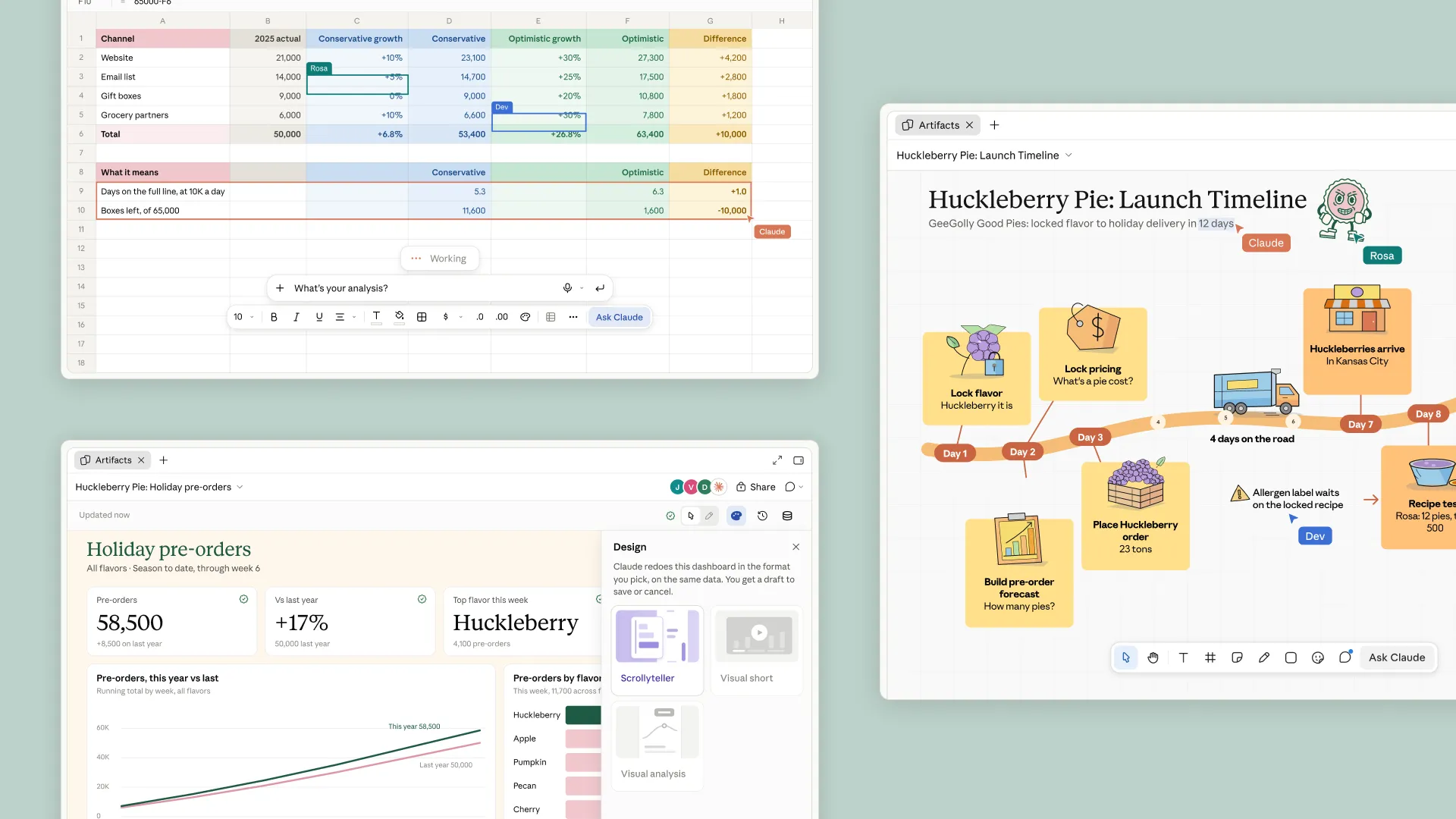
The short version: Anthropic is expanding its AI services to all kinds of business professionals while it nears the public market. Until now its tools found the loudest demand among software engineers, who use them to simplify code writing and debugging. The new push is aimed at people who live in spreadsheets, decks and support tickets instead of a code editor.
The scope limit came from the company itself. Anthropic product lead Nicholas Lin described Claude Sheets at this stage as "quite basic" and said it is not aimed at more advanced work such as financial modeling. In those settings, he noted, Anthropic's add-ins built for existing spreadsheet software are where the value shows up. Lin framed the division of labour without hiding it: "I think Microsoft and Google products still have their place at certain times and in certain scenarios, especially in more advanced enterprise use cases. But we also want to show new ways of getting work done inside Claude."
The New York session made the reaction concrete: at 12:43 p.m. New York time, Microsoft shares were down 3%.
Why the timing matters: an IPO clock that punishes vague answers
Conclusion first: this office push is a filing-driven move, not a research experiment. The company is filling out its story for investors while the registration process runs, which is why product boundaries and revenue claims appear in the same news cycle. Reconstructing that sequence is the most useful part of the case, because it shows what a company must answer in public.
| When | What happened | Why it matters in this case |
|---|---|---|
| December 2025 | Anthropic retained law firm Wilson Sonsini to prepare listing work, according to a brokerage research note from Yushan Securities | first hard evidence that IPO machinery, not just product, was being built |
| June 1, 2026 | confidential draft registration statement submitted to the SEC | the clock starts quietly; product messaging shifts toward a broader buyer |
| August 25, 2026 | The Wall Street Journal reported the company would pitch investors a total addressable market above $30 trillion | growth math has to include non-technical staff, not only developers |
| October 23 and 26, 2026 | reports of investors trimming expectations toward roughly $1.5 trillion from about $2 trillion; the public S-1 was posted on October 26 | the valuation debate becomes a public exercise |
| End of September and October 31, 2026 | annualized revenue reached $81 billion, up $10 billion in one month | the pace of change is now measured week by week |
| Tuesday | documents filed that day disclosed those figures; the company is seeking a fully diluted valuation of about $1.4 trillion in its IPO | the number now in front of investors |
| November 2 and 10, 2026 | amendments to the registration document | the disclosure is still being rewritten as you read this |
One caveat for readers tracking the price tag: even the most optimistic expectation sits below the roughly $2 trillion some investors had hoped for, yet above the $965 billion valuation from the previous round, and the final valuation, amount raised and listing date are still unsettled — a moving target we broke down in our earlier look at the repriced Anthropic IPO.
What the numbers actually say: enormous growth, expensive growth
Run-rate first, then the harder accounting. Documents filed Tuesday showed the AI developer's annualized revenue at $81 billion as of October 31, up $10 billion from the end of September, while it seeks a fully diluted IPO valuation of about $1.4 trillion. The public registration document tells a second, less flattering story: revenue of $16.3 billion in the first half of 2026 against about $1.2 billion a year earlier, an operating loss that narrowed to $693 million from $2.1 billion, and a GAAP net loss of $80.7 billion that The Wall Street Journal and Reuters both reported as driven largely by non-cash fair-value adjustments of roughly $72.4 billion.
Two more lines from the prospectus deserve attention from anyone comparing AI vendors. No single customer accounted for more than 10% of revenue in the nine months ended September 30, 2026, and the top five customers made up about 25%, many of them without long-term contracts. Demand is broad, but it is also loosely locked in.
Suppliers are telling a parallel story. AMD's third-quarter data-center revenue reached $8.55 billion of its $13.38 billion total, and chief executive Lisa Su has said AI adoption is running ahead of what enterprises expected — the same direction of travel that makes Anthropic's curve so steep, and so costly.
The case itself: three workflows you could copy
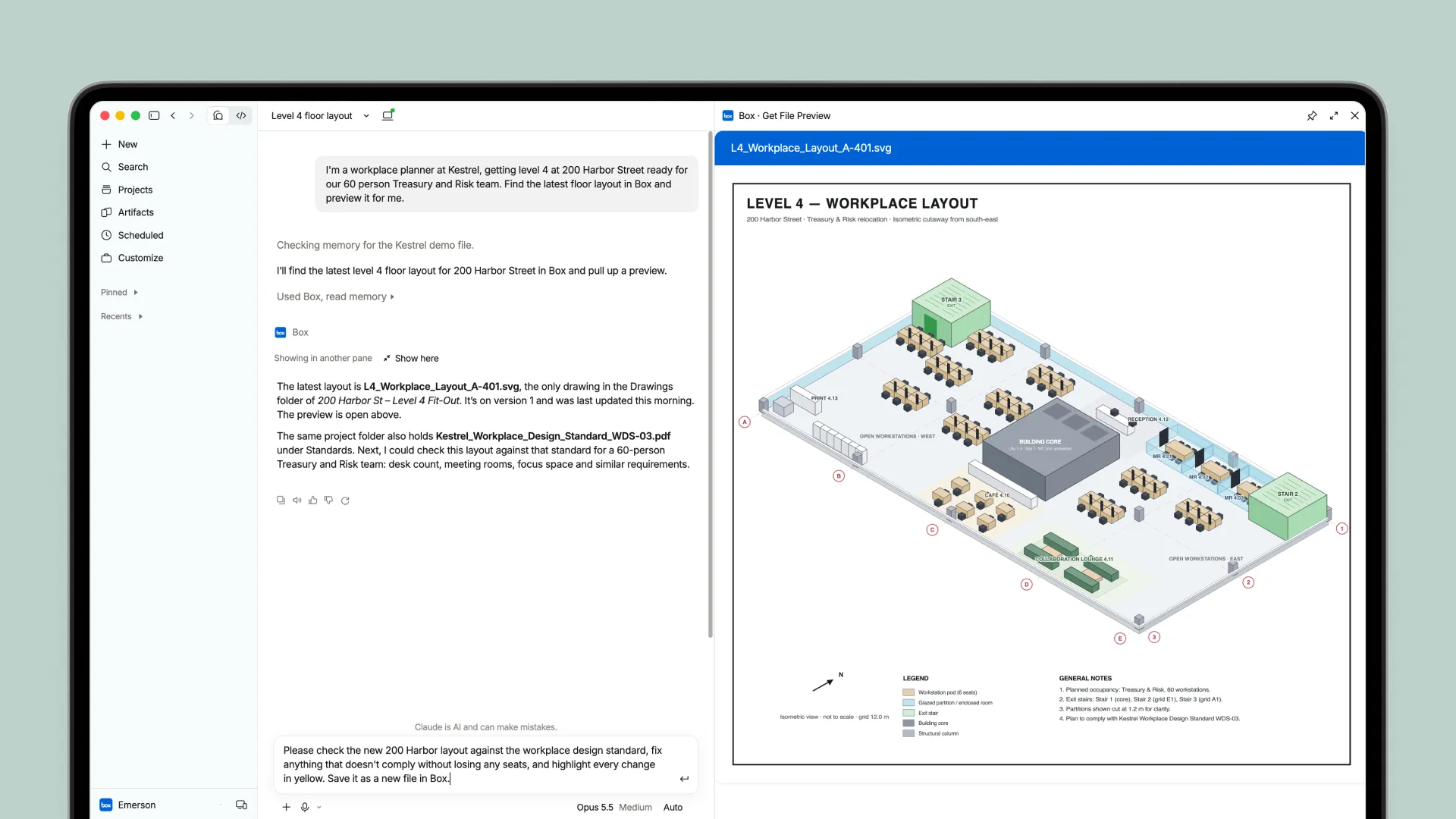
Forget the feature list for a moment; the concrete deployments are the reusable part. Anthropic's office-suite announcement, as carried by business outlets including Mysteel, described three changes worth studying, including one from a paying customer.
| Who | What they built or changed | Before → after | Takeaway |
|---|---|---|---|
| Anthropic's own legal team | A review tool that runs inside Slack and flags what needs editing against the team's existing rules | Marketing-material review: three days → 24 hours; simple fixes resolved before formal review | Non-coders shipped a workflow tool without waiting on engineering |
| Anthropic's finance team | A long management update turned into an interactive page the team maintains together with Claude | Static document → living page | Reporting becomes something a team edits, not something one person sends |
| Advantage Solutions, with financial planning and analysis lead Ash Gupta | Forecast rounds where slide building, written explanations and verification were automated | About 10 hours of prep → under 30 minutes | Time saved goes back to analysis and decision support, not to more slides |
Notice what all three share: the win is preparation time, not judgement. Nothing in the announcement claims the model replaced the person signing off, and Lin's own "quite basic" assessment of Claude Sheets makes the same point from the product side.
Partner and competitor in the same sentence
Anthropic also announced that Adobe, Atlassian and HubSpot may embed a version of their existing applications inside Claude. The company is simultaneously a partner to these vendors and a rival to them — a relationship that has raised repeated concerns since the beginning of this year that AI may one day render traditional enterprise software products obsolete.
Read as a case, the arrangement is a hedge on both sides. For incumbents, embedding is a way to keep the workflow while the interface moves. For Anthropic, it is a way to reach finance, marketing and support teams without rebuilding every connector itself. The drop of 3% in Microsoft's shares during New York trading hours suggests investors see the same double edge.
Common misconceptions about this story
- Annualized revenue equals revenue. An $81 billion run-rate is a snapshot multiplied forward; the filing's own first-half figure was $16.3 billion. Do not compare the two across companies.
- "Quite basic" means "useless". It means the vendor is not claiming audit-grade modelling inside Claude Sheets, and points to add-ins for existing spreadsheet software instead.
- A big valuation means the product is ready for regulated work. Pricing ambitions and compliance readiness are separate questions; a net loss that is mostly non-cash still leaves real compute bills.
- Partner embeds mean suites are being replaced. Adobe, Atlassian and HubSpot are putting their own apps inside Claude, not disappearing from them.
- Time saved equals accuracy gained. Every case above reduced preparation time. Review and sign-off stayed with people.
Checklist: five checks before a business workflow moves into Claude
- Is the number audit-critical? If a figure feeds a filing, invoice or model that someone signs, keep it in the spreadsheet software where the version history and controls live.
- Who owns the rules? The legal-team example worked because it encoded existing review rules; write yours down first, or the tool has nothing to check against.
- What data leaves your document? Confirm plan and admin settings before pasting customer or payroll data into any prompt.
- What does it cost per seat? Reported Claude Sheets beta access rides on paid plans starting around $20 a month; multiply by team size before promising savings.
- Time both paths for two weeks. Measure prep time and correction rate side by side; if the correction rate rises, the saving is fake.
FAQ: what readers keep asking
Is Claude Sheets a replacement for Excel or Google Sheets?
Not today, by the company's own description. Lin called the feature "quite basic" and said heavier work such as financial modelling is better served by add-ins that plug into existing spreadsheet software. Treat Claude Sheets as a drafting and analysis layer.
Why did Microsoft's stock fall 3%?
Because the announcement reframed where office work starts. If a chat-style surface becomes the place tasks begin, the incumbents risk becoming the storage layer behind it. At 12:43 p.m. New York time, Microsoft shares were down 3%.
How fast is Anthropic growing, and is it profitable?
Fast, and not yet clean on a GAAP basis. Annualized revenue hit $81 billion as of October 31, up $10 billion from the end of September, while the first half of 2026 showed $16.3 billion in revenue, a $693 million operating loss and an $80.7 billion net loss reported as largely non-cash fair-value changes.
When does Anthropic list, and at what value?
The company is seeking a fully diluted valuation of about $1.4 trillion in its IPO, with media reports pointing to a mid-November trading window. Final valuation, money raised and date remain undecided.
What should an ordinary office worker do with this?
Pick one repetitive preparation task — forecast slides, ticket summaries, document first drafts — and test it for two weeks with the five checks above. Keep the sign-off step human.
What to watch next
Three signals will tell you whether this case marks a durable shift or a roadshow decoration. First, whether the next amendment shows the office features carrying usage or still sitting behind the developer business. Second, how partner embeds are priced, since Adobe, Atlassian and HubSpot have every reason to negotiate hard. Third, whether enterprise buyers move real budget from software suites into AI surfaces at all. The New York Times put the stakes plainly this month: an Anthropic listing would act as a touchstone, offering the first deep public look at the health of the businesses propping up the AI boom.
So here is the question worth sitting with: if the growth story now depends on finance, legal and marketing teams rather than coders, does a product whose own lead calls the spreadsheet layer "quite basic" have enough time to earn their trust before the books are closed on price?
References
- Anthropic, official announcement of its S-1 filing with the SEC — anthropic.com/news/s1-sec
- Claude for Microsoft 365, product page for the Excel, PowerPoint, Word and Outlook add-ins — claude.com
- Reuters on the first-half net loss and revenue disclosed in the prospectus — reuters.com
- The New York Times on what an Anthropic listing would reveal about the AI economy — cn.nytimes.com
- Wall Street CN on the reported total addressable market pitch above $30 trillion — wallstreetcn.com
- Guandian.cn on investor expectations trimming toward about $1.5 trillion — guandian.cn
- Mysteel's report of Anthropic's office-suite announcement and its named case studies — mysteel.com
- Yushan Securities timeline of Anthropic's IPO preparation — esunsec.com.tw