
MyTechDailyNews General: AMD may raise Radeon GPU and GDDR6 kit prices again in November 2026
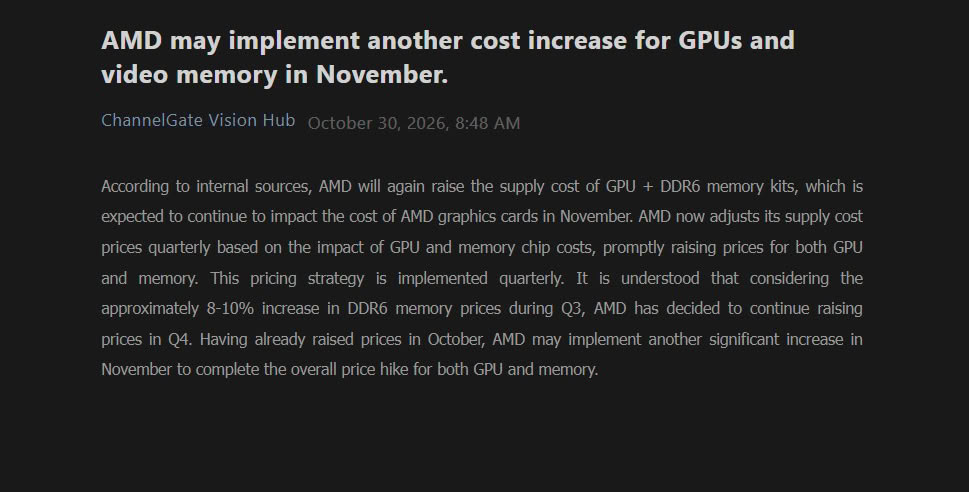
For readers following the graphics-card market on MyTechDailyNews General, the latest supply-chain signal is not about a new card or benchmark, but about a possible price-line change: AMD is reportedly weighing another increase to the price of Radeon GPU and GDDR6 memory bundles supplied to board partners. The move, if it happens, would come in November 2026—just one month after an October adjustment—and it points to the same global pressure squeezing PC hardware: memory chips are being pulled toward AI infrastructure faster than many graphics-card buyers expected.
What the report actually says
According to China's Bobantang hardware supply-chain forum, and as highlighted by VideoCardz, AMD is considering a November update to GPU plus GDDR6 memory kit pricing for graphics-card manufacturers. The information has not been confirmed by AMD, and no exact increase percentage has been released.
This matters because it is an upstream cost signal, not an immediate store-shelf price change. AMD supplies GPU and memory combinations to partners such as ASUS, Sapphire and XFX. Those partners turn components into finished Radeon graphics cards, then route products through distributors and retailers. If partner procurement costs rise, the effect may be passed through several steps before shoppers see a new retail price.
At the component level, GDDR6 supply has become more expensive. Supply-chain data cited in the report says GDDR6 prices rose by about 8% to 10% in the third quarter of 2026. AMD had already adjusted supply pricing on October 1. A further change in November would suggest that memory-cost pressure is not a short-lived blip.
The root explanation is the global build-out of AI capacity. Samsung, SK hynix and Micron are directing more production resources toward higher-margin products such as HBM and server DRAM, because AI servers and data centers demand them aggressively. GDDR6 and HBM are different memory categories, but they share part of the DRAM manufacturing pipeline, so capacity allocation changes can tighten graphics-card memory supply.
The longer view is even starker. Supply-chain chatter says GDDR6 spot prices have climbed several times their late-2025 level since late 2025. Graphics-card makers are now buying into a more volatile component market. AMD had kept partner-facing supply prices relatively steady for a stretch, but as prior purchasing arrangements reach their natural end, rising input costs become more visible in supplier quotes.
Radeon RX 9000 pricing is already moving
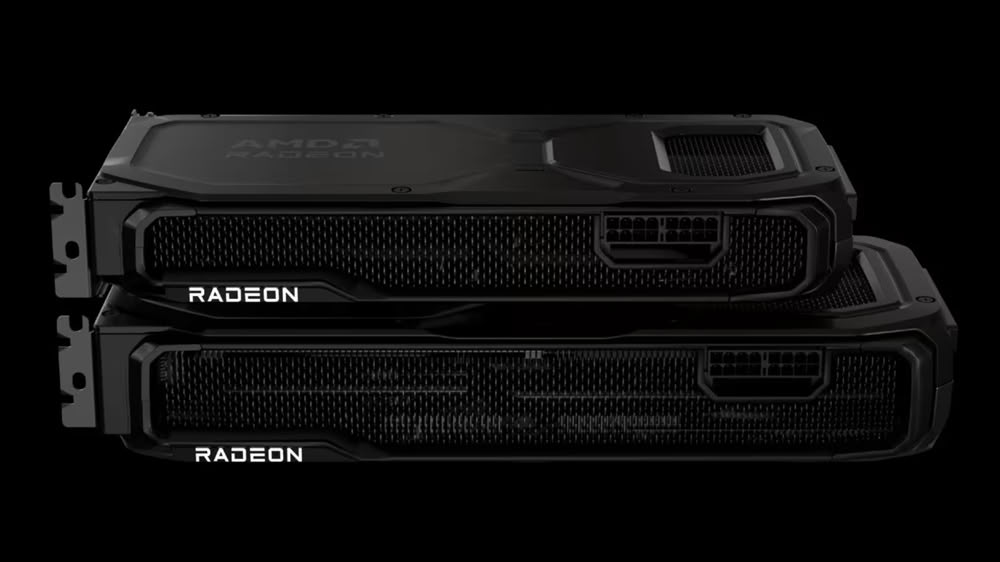
The Radeon RX 9000 series sits at the center of this story because the lineup uses RDNA 4 architecture and GDDR6 memory across the family. Some models carry 16GB of memory, and higher-capacity variants need more GDDR6 chips per card. That makes 16GB products especially sensitive when memory procurement prices move upward.
Retail tracking already shows price pressure. Hardware Unboxed surveyed graphics-card prices in 10 countries and reported that the average global retail selling price in October 2026 rose by about 10% month over month. The RX 9060 XT 16GB increased by 17%, while RX 9070 and RX 9070 XT each rose by about 12%.
Those retail numbers should be read as market outcomes, not as a direct copy of AMD's bundle prices. Between a GPU-and-memory quote and a consumer price tag, manufacturers choose board designs, manage inventory, set margins, and respond to local competition. A component-cost increase does not mean every card will rise by the same percentage.
| Price layer | What it covers | Reported signal |
|---|---|---|
| AMD supply kit | GPU plus GDDR6 memory sold to graphics-card partners | A November 2026 adjustment is under consideration, following an October 1 change; official confirmation is absent. |
| Memory input | GDDR6 pricing used by card makers | GDDR6 prices increased by about 8% to 10% in the third quarter of 2026; spot costs had earlier climbed several times since late 2025. |
| Retail market | Prices consumers see after distribution | In October 2026, average card prices across 10 countries rose by about 10%; RX 9060 XT 16GB rose 17%, while RX 9070 and RX 9070 XT rose by about 12%. |
Why a second November change would feel different
Timing is part of the concern. The market has already absorbed price changes in August and October 2026. The August supply-price increase was reportedly at least 10%. October then brought another adjustment. If November also changes supplier pricing, partners would be managing repeated cost increases within a compressed window, not reacting to one isolated quarterly fluctuation.
For AMD, passing higher memory procurement costs to partners is one way to protect its own profit position while memory remains tight. For the wider market, the practical limit is demand: if prices climb too quickly, buyers may postpone purchases, and competition from other GPU makers can shape how much higher card partners can go.
Common misconceptions to avoid
- A partner price adjustment is the same as a retail price increase. It is not. Retail cards pass through manufacturer margins, distribution, inventory turnover and regional promotions before a shopper sees the price.
- The November 2026 Radeon price hike is confirmed. The report is supply-chain sourced and not officially confirmed by AMD.
- Memory is the only cost pressure. Graphics-card pricing is also being influenced by GPU chip costs, advanced packaging, manufacturing expenses and the broader global demand from AI data centers.
- Every card will rise by the same amount. Cards with more memory, especially 16GB variants, may feel GDDR6 cost changes differently from lower-capacity models.
FAQ: what readers should know before reacting
Has AMD officially announced another Radeon price increase?
No. The story comes from China's Bobantang hardware supply-chain forum and was picked up by VideoCardz. AMD has not confirmed a November 2026 adjustment, and the exact magnitude has not been published.
What is AMD reportedly changing?
The reported change concerns the combined price of Radeon GPUs and GDDR6 memory kits sold to graphics-card partners, including companies such as ASUS, Sapphire and XFX. It is not announced as a direct increase to finished retail cards.
Why does GDDR6 memory matter so much?
GDDR6 is a key input for many Radeon cards. The RX 9000 series uses RDNA 4 and GDDR6 across the line, and 16GB models require more memory per unit. When GDDR6 becomes more expensive, manufacturers that rely on the full 16GB configuration can face a larger material-cost impact.
Which products are most likely to draw attention?
The RX 9060 XT 16GB, RX 9070 and RX 9070 XT are already visible in the Hardware Unboxed retail data, which reported gains of 17%, about 12% and about 12% respectively. These figures show consumer-side movement, while the AMD story is an upstream bundle-price signal.
Will November 2026 changes hit the store immediately?
Usually not. Manufacturers and retailers may still be selling cards made with earlier, lower-cost parts. New prices often need to work through production, shipping and inventory replacement. If the November adjustment is implemented, shoppers may notice more pressure during the December shopping season.
Action advice before you make a graphics-card purchase
- Separate rumors from confirmed pricing. Look for statements from AMD or named board partners before assuming a specific percentage increase will appear on shelves.
- Watch 16GB models closely. Because 16GB cards require more GDDR6, they can be the clearest test case for whether memory-cost pressure reaches retail pricing.
- Compare the full value, not just the headline price. A card's actual cost can vary by model, stock, bundle, retailer and local promotion, even when upstream memory pricing moves.
- Track the timing of supply-chain news. A November 2026 supplier change, if confirmed, would follow earlier moves in October and August 2026, so repeated short-term adjustments may be more significant than a single headline number.
Bottom line
The Radeon market is being squeezed from upstream, not because one vendor simply decided to raise prices on its own, but because global memory capacity is being pulled into AI-heavy products while graphics cards still depend on GDDR6. If AMD does move again in November 2026, the real test will be how much of that supplier-side pressure partners can absorb and how quickly the December season shows the result on store shelves.