
MyTechDailyNews General Guide: AMD Helion Rack Design Shapes Agentic AI Deployment Choices
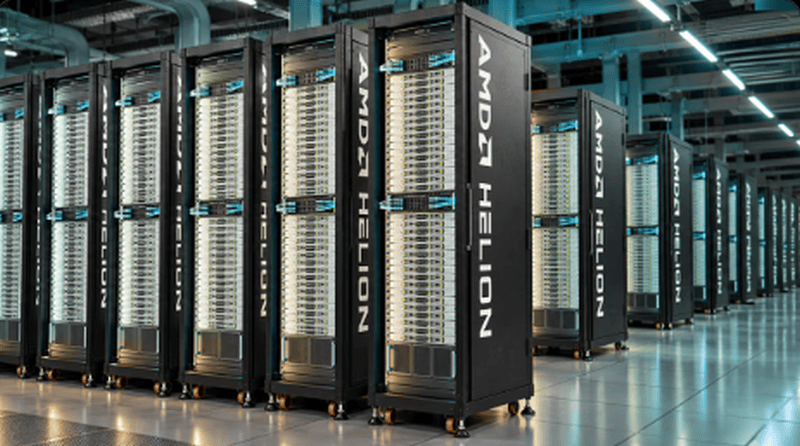
Agentic AI systems often draw attention when a new processor or model appears, yet the practical packaging of compute can matter as much for readers tracking tech news. MyTechDailyNews looks at AMD Helion as a middle layer between component choices and deployment planning: a reference design organized at the rack level and described as drawing on open-source hardware and software.
Its configuration story is not a single preset. The article frames a CPU-only version around hyperscale deployments and a CPU/GPU version around enterprises. It also points to Open Compute Project (OCP) alignment, an AMD EPYC based CPU side, AMD Instinct MI350 GPU nodes, a routing mechanism for inference, and a planned availability window in November 2026.
Quick Checklist for General Readers
- What it is: AMD Helion is presented as a rack-scale design for agentic AI infrastructure.
- Open architecture: The Helion 21-in. rack architecture is built to Open Compute Project (OCP) specifications.
- CPU path: A CPU-only rack can be powered by AMD EPYC processors that support up to 32,768 Zen 6 x86 CPU cores.
- CPU and GPU path: An all-in-one rack can combine general-purpose compute, AMD EPYC CPU nodes, and up to 16 AMD Instinct MI350 GPU nodes.
- Inference flow: A token router directs requests to frontier models in the cloud or to open-source models running locally in the rack.
- Community plan: AMD plans to contribute the Helion specification to OCP, allowing community development and adoption.
- Timing: Rack configurations are being developed with ecosystem partners for planned availability in November 2026.
Why the Rack Level Matters
For a general tech audience, the rack perspective helps explain why infrastructure news is not just a speed comparison. The stated aim is to let customers balance CPU performance, GPU performance, core density, and power consumption according to application requirements. That makes the design read like a configurable starting point rather than a fixed appliance.
Configuration Choices at a Glance
| Option | What the Source Describes | General Reader Takeaway |
|---|---|---|
| CPU-only | A CPU-only rack can be powered by AMD EPYC processors that support up to 32,768 Zen 6 x86 CPU cores. | Useful when a reader wants to focus on CPU density and general compute. |
| CPU/GPU | General-purpose compute, AMD EPYC CPU nodes, and up to 16 AMD Instinct MI350 GPU nodes are integrated in the all-in-one rack. | Useful when a reader wants a mixed accelerator and CPU layout. |
| Inference path | Inference requests are directed by a token router to frontier models in the cloud or to open-source models running locally in the rack. | Useful for understanding how local and cloud inference can be separated or combined. |
| Open sharing | AMD intends to contribute the Helion specification to OCP so the community can develop and adopt it. | Useful for readers following open community specification efforts. |
| Timing | With ecosystem partners, rack configurations are under development, and availability is planned for November 2026. | Useful for readers building a watchlist around the planned date. |
CPU-Only and CPU/GPU Configurations
The CPU-only option is described as suitable for hyperscale deployments. The processor side centers on AMD EPYC processors, with a stated ceiling of up to 32,768 Zen 6 x86 CPU cores.
The mixed option brings together general-purpose compute, AMD EPYC CPU nodes, and up to 16 AMD Instinct MI350 GPU nodes in a single rack. That layout is described for enterprise use.
Inference Routing in Plain Language
Another detail that makes the setup easier to picture is the token router. Inference requests are not assumed to follow one path. They are sent either to frontier models hosted in the cloud or to open-source models running locally inside the rack. For readers, that is a simple way to understand a hybrid inference environment.
Open Source and Community Contribution
AMD Helion is described as drawing on open-source hardware and software. AMD also intends to submit the Helion specification to Open Compute Project (OCP), so community development and adoption can continue outside the original company context.
Availability and Watchpoints
The article states that rack configurations are under development with ecosystem partners, with availability planned for November 2026. For general readers, this creates a short list of questions to watch: specification refinement, partner implementation, and OCP community adoption.
Common Misconceptions
It is only about AMD hardware
The stated content includes OCP alignment and community adoption, not just component brands.
It has one fixed configuration
It is described as configurable for CPU-only or CPU/GPU needs.
It is already available today
Availability is planned for November 2026, while configurations are under development.
FAQ for MyTechDailyNews Readers
Is AMD Helion a processor?
No. It is described as a rack-scale reference design for agentic AI infrastructure. AMD EPYC and AMD Instinct MI350 are named within that rack design.
What does OCP mean here?
OCP stands for Open Compute Project in this article. The Helion 21-in. rack architecture is tied to OCP specifications, and AMD plans to contribute the Helion specification to OCP.
Can it run models locally?
Yes. The article says open-source models can run locally in the rack, while inference requests can also be directed to frontier models in the cloud.
Who are the target deployment profiles?
The article identifies hyperscale deployments for CPU-only and enterprises for CPU/GPU.
When may it be available?
Planned availability is November 2026.
Action Suggestions for Readers
- Read infrastructure news from the rack perspective: look for CPU/GPU balance, core density, and power consumption mentions.
- Check whether an article distinguishes CPU-only and CPU/GPU configurations before comparing options.
- Use November 2026 as a milestone, not a launch date, because the article says configurations are under development.
- Watch the OCP route if you care about open community specification development.
Final Take for MyTechDailyNews Readers
AMD Helion may be best understood, at this stage, as a structured way to talk about agentic AI infrastructure. It connects a Helion 21-in. OCP-aligned rack design with AMD EPYC CPU options, AMD Instinct MI350 GPU options, token-routed inference, and a November 2026 availability plan. That combination gives general readers a compact map for following how open rack designs may be developed and adopted.