
A MyTechDailyNews Practical Guide: Ring Drone Cam and Rover Cam Setup, Limits, and Checklist
Amazon’s Ring launched the $250 Ring Drone Cam and the $1,000 Ring Rover Cam on Tuesday. This guide turns the launch into practical steps: what each robot watches, where they cannot go, how to test alarms and charging, and which household or business users should wait before buying.
What exactly did Ring announce?
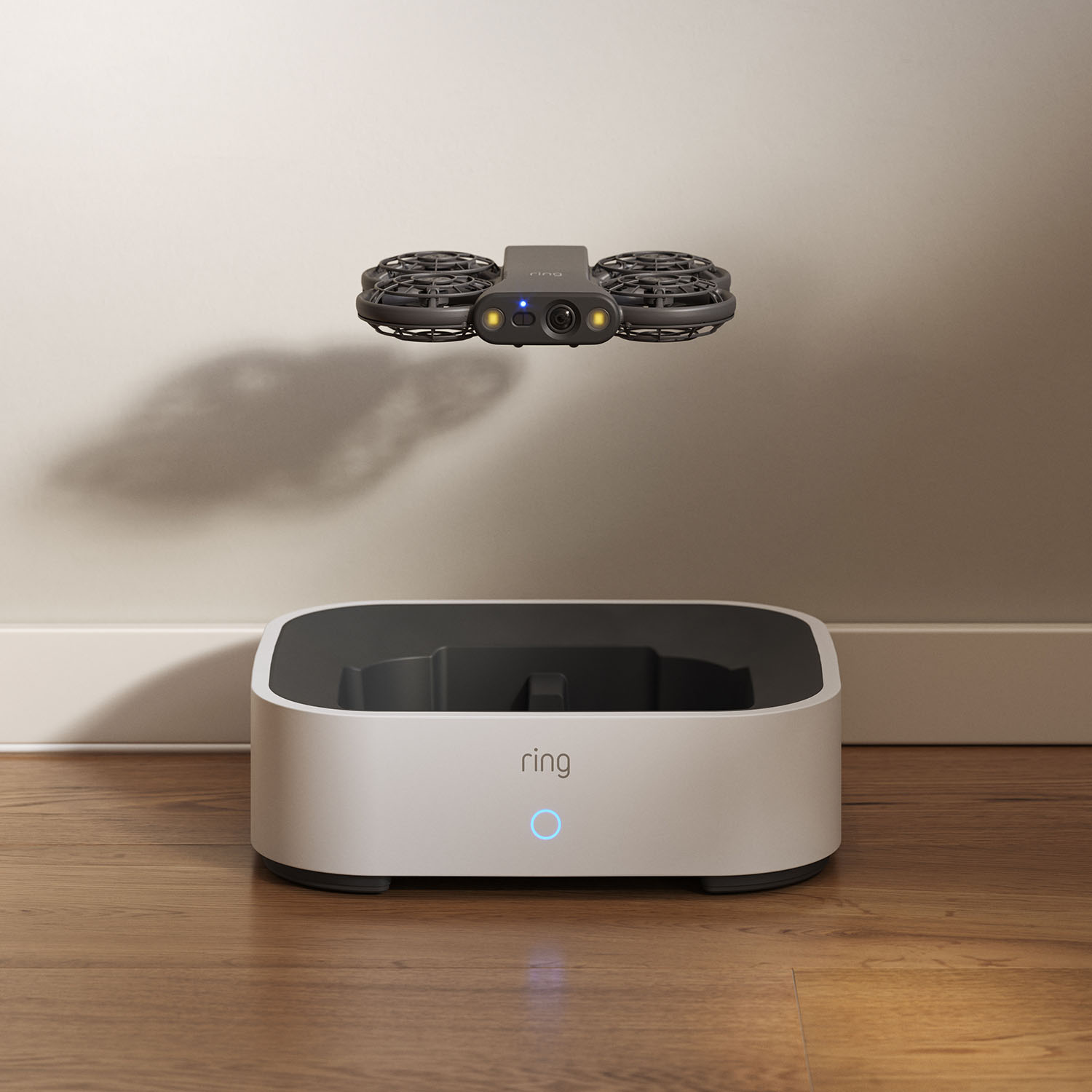
On Tuesday, Amazon-owned Ring introduced a small indoor drone that can fly from one room to another and capture footage in daytime or nighttime conditions. The book-size Ring Drone Cam is priced at $250. When an alarm or sensor is triggered on a window, door, or other home security device, it can fly a preset route to investigate suspicious activity, and users can also send it out on demand.
At a Monday demo in New York, Ring CEO Jamie Siminoff described it as a home monitoring tool with a built-in LED light that could also deter crime. “If someone is wandering around your house at night and your Ring doorbell motion detector goes off, imagine seeing a spotlight and something flying outside the window,” Siminoff said. “You probably would not enter that house.”
The machine can fly for up to eight minutes on each run, then returns to its charging base. Ring describes it as having two plastic-wrapped propellers and a loud humming sound when it takes off. Amazon’s official Ring Robotics announcement adds a retail detail: the Drone Cam is listed at $249.99, which matches the rounded $250 framing used in the launch summary.
Ring devices are also Amazon’s way of extending its smart-home reach beyond Echo smart speakers and Eero routers. Grand View Research estimates that this year’s smart-home market sales will be more than $200 billion, making the category important to Apple and Google as well.
That history gives the launch extra weight, and extra risk. Ring was acquired by Amazon in 2018 and became famous for doorbells, but it has faced privacy scrutiny tied to police cooperation. Earlier this year, it was examined again after a Super Bowl ad for Search Party, an AI pet-finder tool. It then canceled its integration with Flock Safety, a police technology provider that has also drawn backlash for automated license plate readers.
Ring first previewed this product in 2020 under the name Always Home Cam. Siminoff said he waited until Amazon could improve the design, sensors, and data processing before sending a drone camera into customers’ homes.
How should a home buyer use the Drone Cam?
The practical answer is: as a responder, not a continuous guard. The value is that one device can reach several spaces after a trigger, rather than asking for more cameras in every bedroom, hallway, and window. Siminoff captured that tension when he said, “People like indoor cameras, but they do not necessarily want them everywhere in the home.”
That makes the Drone Cam easier to judge as a checklist product. It is not enough to ask whether the camera moves; the useful question is whether your alert map, Wi-Fi coverage, charging spot, and family routines can support a flying device. For a multi-room apartment, it may be a smart single-camera alternative; for a quiet house with weak sensors and a cluttered layout, the novelty may cause more friction than safety.
A launch-day checklist for households
- Confirm that every routine flight path starts and ends at the charging base.
- Test which Ring doorbell, window, door, and sensor alerts should launch it, and which should stay silent.
- Map “do not enter” zones before the first flight, especially near pets, open stairwells, fragile shelves, and children’s rooms.
- Accept the noise: eight minutes is short, but the propeller hum may be louder than a fixed camera in a quiet room.
- Check privacy defaults: Ring says privacy is the default setting for the drone and robot, and LEDs flash while recording.
What is new about the Rover Cam business version?
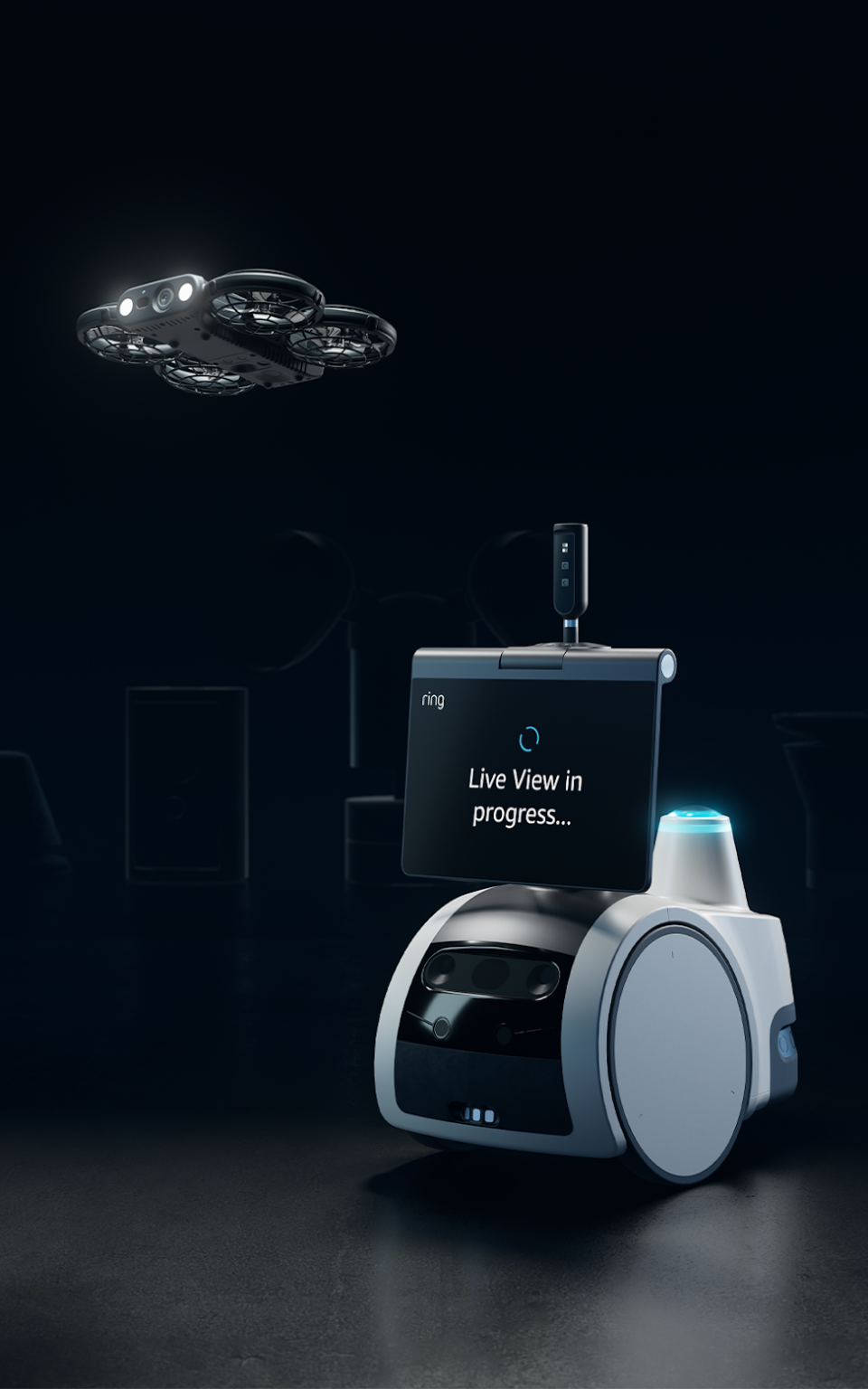
Ring also launched the Ring Rover Cam, priced at $1,000. It repurposes Amazon’s Astro home robot for commercial patrolling in offices, warehouses, and other workplaces. Ring says it “borrowed the best parts of Astro” and calls it “a robot built for security.”
That connection to Amazon’s home-robot history matters: the Astro line was introduced in 2021, but its commercial lifecycle was brief and received few upgrades. The Rover Cam keeps a familiar format: a display mounted on a two-wheel base, with a retractable periscope camera. It also includes a built-in siren, two-way audio, and a light column that shines toward the ceiling to help users track where the robot is.
For buyers, the useful upgrade is the planning data. Amazon’s Ring Robotics materials, along with launch coverage from Bloomberg, indicate that Rover Cam can cover up to 5,000 square feet and run for about 30 minutes per patrol. That does not make it a full-time guard. It means a store or warehouse can send a moving camera to a sensor-triggered point instead of relying only on fixed views.
| User type | Good fit | Weak fit |
|---|---|---|
| Small home | Drone Cam, if doorbell and sensor alerts already work well. | Buying it before testing charging locations or route clutter. |
| Store or office | Rover Cam for after-hours checks, alert response, and visual verification. | Expecting it to replace staffing in complex or multi-floor layouts. |
| Security-first buyer | Both devices if privacy lights, LED deterrence, and preset patrol routes are understood. | Assuming “autonomous” means unrestricted, long-duration monitoring. |
What limits should owners and buyers know?
The most important limit is airspace, not price. Siminoff said that, under rules from the United States Federal Aviation Administration, the Drone Cam cannot fly outside; the regulation restricts drone operation unless the craft remains within the operator’s visual line of sight. “We have already told customers not to do that because it is illegal,” Siminoff said. “We also set protections so it cannot fly outside.”
The launch timetable also depends on approval and production. Ring says Ring Drone Cam will ship in the United States on January 27, pending approval from the Federal Communications Commission. Ring Rover Cam will start shipping to users on December 16. For businesses, that gap matters: Rover Cam arrives sooner, while Drone Cam is the one with the outdoor rulebook and regulatory caveat.
What should you do next?
If you are a home user, the next step is not to decide whether drones are fun. Decide whether your existing Ring alarms are reliable enough to move a flying camera. Test your doorbell and window sensors, list the rooms the drone should serve, and ask who in the household will react calmly to a loud, moving light in a hallway at night.
If you run a business, use the Rover Cam as a small pilot. Map the most expensive blind spot, time the patrol route against the battery life, and compare the cost of a robot visit with the cost of a guard, a false alarm response, or a missed incident after closing. Exact retail prices from the official announcement—$249.99 for Drone Cam and $999.99 for Rover Cam—make this easier to model than the rounded launch numbers.
FAQ
Is Ring Drone Cam a normal consumer drone?
No. It is an indoor security device that flies between rooms and returns to a charging base. The FAA-related outdoor limit is a core difference from recreational drones.
Does the $250 price include a complete security plan?
Not by itself. The drone works best when paired with Ring alerts, a usable route, a charging location, and privacy settings that everyone in the home can recognize.
Can Rover Cam cover a whole warehouse?
The published coverage figures suggest up to 5,000 square feet and about 30 minutes per patrol, which is useful for focused checks but not unlimited coverage.
When can buyers expect delivery?
Ring says Rover Cam ships December 16. Ring Drone Cam is slated for January 27 in the United States, pending Federal Communications Commission approval.
Reference sources
- Amazon’s Ring Robotics announcement
- Bloomberg launch coverage of Ring Drone Cam and Rover Cam
- Wired report on Ring’s AI-powered robotics launch
- Grand View Research smart-home market context
The question now is not whether a camera can move, but whether moving cameras make people feel more protected or simply more watched.