
AI Server Demand Reshapes PCB Supply and Consumer Tech Prices: MyTechDailyNews Explainer
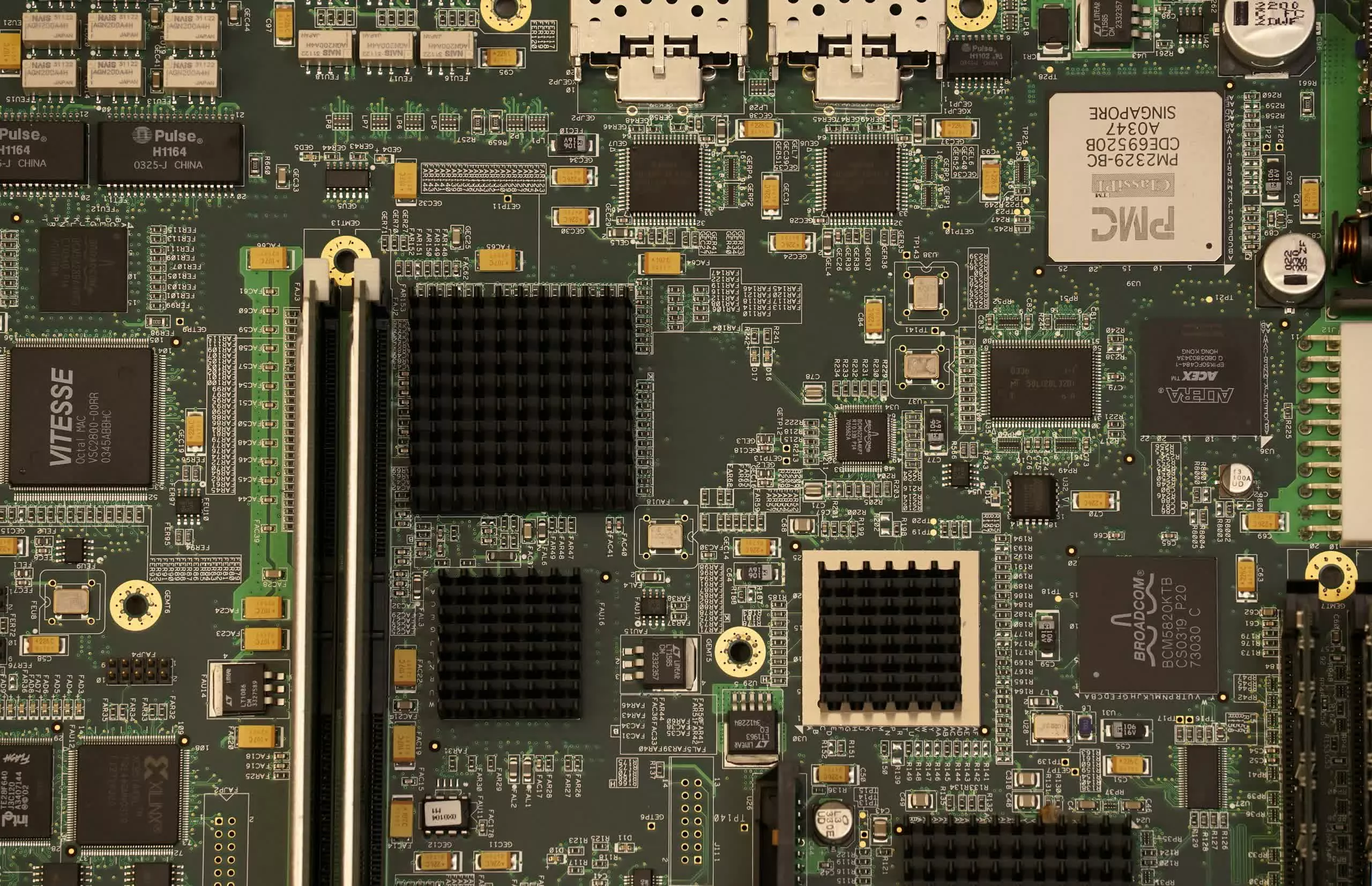
At first glance, the PC market looks like it should be getting easier. If global demand for personal computers cools, suppliers should have less pressure. Yet the industry is now seeing a different pattern: boards used in laptops, desktops, and graphics cards are becoming harder to secure because AI server builders are taking up manufacturing capacity. That single shift can influence the price of a home computer, the availability of a medical device, and the delivery promise a brand gives for a new model.
The story is not just about artificial intelligence being popular. It is about how a high-volume, high-margin segment can change the economics of an entire supply chain. MyTechDailyNews breaks down what is happening, why ordinary consumer devices are caught in the middle, what buyers should watch, and which common assumptions no longer hold.
Why a Slower PC Market Still Feels a Tighter Supply Chain
Reports from Nikkei Asia describe a difficult planning question for HP and Dell. The issue is not whether consumers will buy enough PCs in 2027. The issue is whether manufacturers will be able to secure enough printed circuit boards, usually called PCBs, to build the products they plan to sell. A manager at a United States PC maker said the company could not obtain enough PCBs to meet production needs, even while expecting global PC shipments to possibly keep falling next year.
That combination is unusual. In older market cycles, weaker end-device demand tended to reduce pressure on parts. A PC brand might sell fewer machines, and suppliers would compete harder. Today, the constraint is being created by a different customer group: AI infrastructure buyers. They consume high-end board capacity, and their projects are often backed by large budgets and long deployment schedules. The result is that traditional electronics makers can face scarcity even when their own sales outlook is flat or lower.
What Makes an AI Server Board So Different From a PC Motherboard
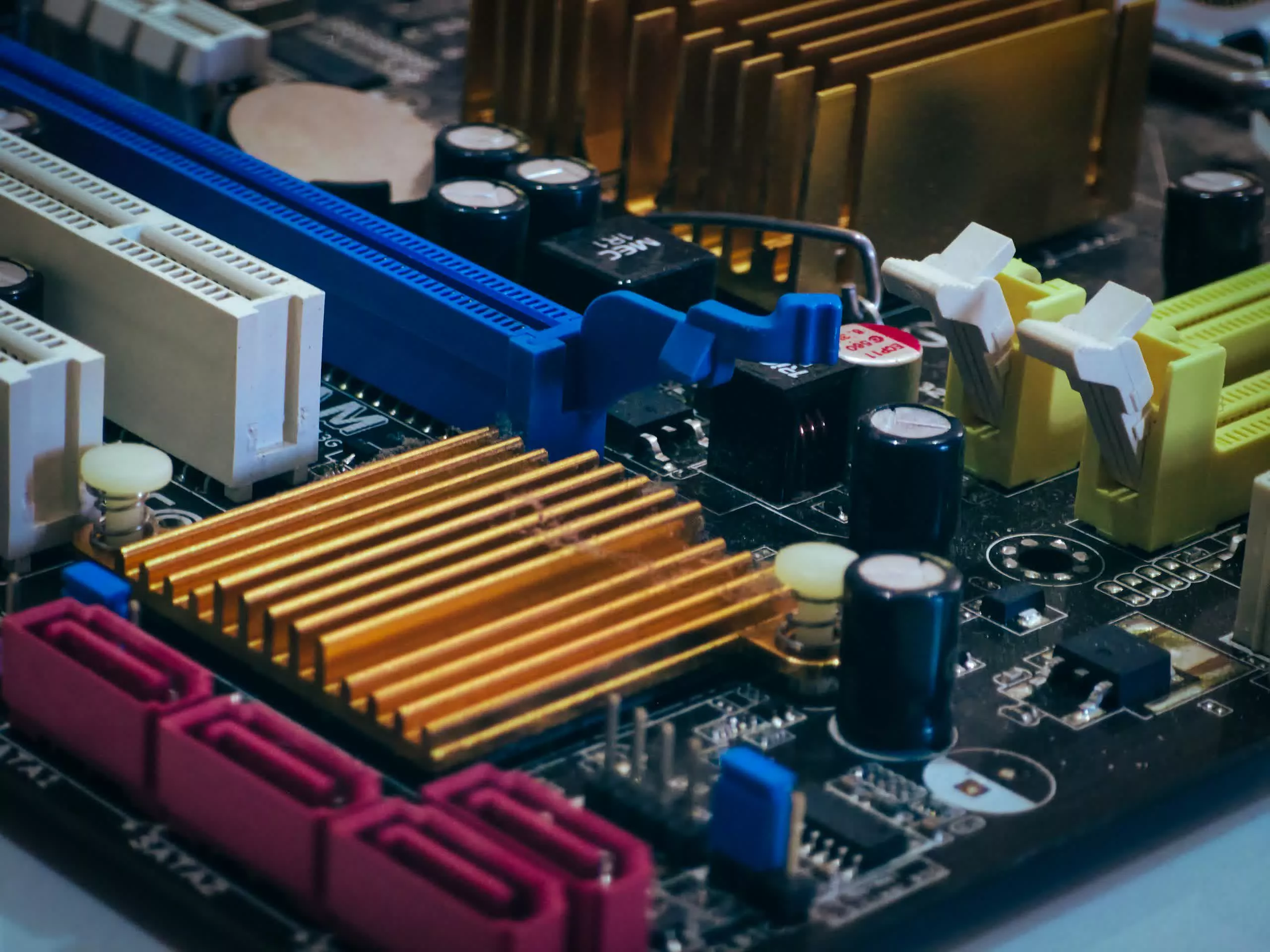
To understand the squeeze, it helps to compare the work a board has to do. An ordinary desktop motherboard connects a central processor, memory, storage, power circuitry, and expansion cards. It is complex, but it is often built on a relatively conventional multilayer PCB design.
An AI server is a different challenge. It has to move huge amounts of data between many GPUs, CPUs, memory modules, and high-speed interconnect links. The board needs to protect signal quality, manage heat, and maintain stable electrical behavior. To do that, manufacturers often use boards with dozens of layers, low-loss copper-clad laminate materials, and special glass fiber construction.
Those boards are harder to make, and they also tend to command higher unit prices. For a PCB maker, that makes them attractive. One advanced AI server board may consume machine time and raw material that could have been used for many consumer-grade boards. At the same time, AI customers often have the purchasing power and willingness to pay to secure capacity. So production lines that once made desktop motherboard, notebook, or graphics card PCBs can be redirected toward server-related work.
The Real Bottleneck Is Not Just Circuit Boards
The pressure moves upstream to copper-clad laminate, or CCL, the base material used to make PCBs. A typical CCL sheet combines glass fiber cloth, resin, and copper foil through lamination. Once the sheet is in the PCB factory, circuit patterns are made on its surface, and multiple layers can be stacked to form the final board.
According to Nikkei Asia, one Taiwan PC manufacturer said the price of CCL is now at least 12 times the level seen in July. That data point should be treated as one company’s market feedback, not proof that every grade of material has risen by the same amount. Still, it points to a rapidly worsening raw-material situation.
The longer supply picture is even more sobering. One major global CCL supplier already has orders booked into 2030. The supplier plans to expand capacity to three times the current level before 2028, but the existing backlog remains huge. The question is no longer only whether PCB makers want to build more plants. It is whether upstream material suppliers can deliver the inputs fast enough.
PCB suppliers themselves are extending delivery windows. One supplier said the lead time for a substantial portion of its products has doubled. Another said that an order placed now may not be delivered until the second half of 2028. Some orders may stretch to 30 months. For PC companies, that timing is difficult because product development, component ordering, and manufacturing schedules must be planned well ahead. If boards arrive late, whole systems cannot be assembled, even if the brand already has CPUs, GPUs, and memory.
Expanding production is not only a financial decision. Factories need equipment, building space, stable material supply, and skilled workers. The PCB industry is also competing for experienced engineers and production technicians, and the shortage is pushing pay higher. Technical roles tied to PCB work have seen salary increases of 20% to 30%. That raises the cost of expansion, and it means a newly finished plant may not operate as quickly or efficiently as a simple spreadsheet forecast would suggest.
How the Shortage Spreads Beyond Computers
Canon said this week in Japan that parts of its production have been constrained since August this year because of a shortage of circuit boards and related components driven by the AI sector. The company expects its medical equipment business to lose about 900 billion Japanese yen in sales this year. That detail matters because it shows the issue is no longer confined to PC or gaming hardware. Products that depend on complex boards, including medical devices and industrial electronics, are also exposed.
The board problem also arrives while the PC industry is already dealing with memory pressure. Since 2026, prices for DRAM and NAND flash have continued to rise, forcing manufacturers to rethink specifications and pricing. Research firm Gartner has suggested that by 2028, PCs priced below $500 may gradually disappear. If boards, memory, and other parts all cost more, the budget segment becomes especially fragile.
Graphics cards show the consumer-facing version of the same dynamic. In parts of the United States market, Nvidia’s GeForce RTX 5080 has been seen at retail close to $2,000, far above its original official suggested price. The card shortage was not only about chips; PCB cost and availability are now part of the pressure. A computer may have the right processor or graphics chip on order, but without the board to connect it all, the final product cannot ship.
It is also worth noting that a circuit board may not look like a major cost item on a bill of materials. Its importance is structural. Motherboards, notebook main boards, and graphics card PCBs are the physical system that links processors, memory, power modules, and other components. In that sense, a “small” part can be a hard stop.
Chip packaging substrate is a related but separate area. Nvidia has been working with specialist substrate manufacturers to secure advanced packaging and chip substrate capacity. The partners mentioned include Japan’s Ibiden, South Korea’s Samsung Electro-Mechanics, and Taiwan’s Unimicron. Unimicron plans to raise related capacity by 2.5 times within the next three years. Packaging substrates and ordinary PCBs are connected through similar industry capabilities, but they are not fully interchangeable. AI chips’ hunger for advanced substrates is also tightening the broader circuit-board ecosystem.
What 2027 May Mean for Everyday Tech
For 2027, the uncomfortable lesson is that softer consumer demand may not automatically bring cheaper hardware. If AI server builders continue to absorb high-end PCB capacity, traditional electronics makers may still have to compete for parts. The most immediate product categories to watch are desktop motherboards, notebook boards, and graphics card PCBs, because they are already in the same supply pool.
No PC vendor has yet announced a specific final retail-price increase caused only by this board issue. But the market already feels cost pressure from memory, solid-state storage, and GPUs. If PCB lead times stay long and material prices stay elevated, the room for price cuts in consumer electronics becomes smaller.
From a wider industry view, the episode reveals a second face of AI expansion. AI is not only competing for the most advanced GPUs, high-bandwidth memory, and cutting-edge wafers. It is also pulling in resources that once seemed too ordinary to worry about: boards, copper, glass fiber, factory hours, and skilled technicians. The future supply of everyday technology may depend not only on brand design or software demand, but on who controls physical manufacturing capacity.
Quick Checklist: What to Watch If You Are Buying or Planning a Device
- Low-price PC plans: If you are considering a budget computer, watch for the risk that models below $500 may become less common, based on Gartner’s prediction for 2028.
- GPU shopping: Compare official launch pricing with current retail. A GeForce RTX 5080 near $2,000 in some United States channels is a warning sign that scarcity can move prices quickly.
- Delivery promises: If a company says a custom or enterprise order may take 30 months, treat that as a signal of long hardware cycles, not a minor logistics delay.
- Medical or industrial equipment: Buyers should ask about component sourcing, especially after Canon pointed to shortages affecting production since August this year.
- 2027 planning: Product managers need earlier supplier agreements and more conservative availability assumptions.
Common Misconceptions
| Misconception | Why it is incomplete |
|---|---|
| Weaker PC demand means cheaper parts. | Global PCB capacity can be redirected by AI infrastructure demand, so supply can tighten even as consumer demand softens. |
| The problem only affects servers. | Desktops, notebooks, graphics cards, medical devices, and industrial electronics all rely on circuit boards or related components. |
| Memory and GPU prices are the only cost risks. | Now CCL, PCBs, and packaging substrates are also under pressure. |
| Capacity expansion will fix the issue quickly. | New factories face equipment, material, and skilled-worker constraints, plus salary rises of 20% to 30%. |
| Substrate capacity is just another name for PCB capacity. | They are related, but not fully interchangeable; securing AI chip substrates still increases competition across the industry. |
Action Advice for Consumers and Tech Teams
For ordinary consumers, the practical answer is to be less surprised by price volatility and to plan refresh cycles with more buffer. If you need a laptop, desktop, or graphics card, do not assume that a slower retail season will automatically produce better availability. Compare listings, track retail prices over several days, and be cautious about claims of unusually low stock availability for popular components.
For product teams, the message is to avoid a single supplier mindset. The HP and Dell planning concern for 2027 is a reminder that demand forecasting is no longer enough. Teams should map their board and material requirements earlier, ask suppliers about realistic delivery windows, and treat long lead times, even 30 months, as possible for some categories.
For businesses that use medical devices or industrial electronics, procurement should ask vendors how PCB shortages could affect service and parts. Canon’s warning about production restrictions since August this year and the expected loss of about 900 billion Japanese yen in medical equipment sales this year is not just a company story. It is an example of how an AI-driven resource race can reach products that people assume are unrelated.
FAQ
Is this shortage really about AI, or just a normal supply cycle?
The normal cycle is still present, especially in memory and storage markets. What makes this round different is that AI server demand pulls high-end PCB and CCL resources, while those same manufacturing pools also serve desktops, notebooks, and graphics cards. The result is a shortage that can appear even when global PC demand is weak.
Why do circuit boards matter so much if they are not glamorous?
Because they are the physical connection layer. A PC can have a CPU, GPU, and memory modules, but the system still needs boards to link chips, power, and peripherals. For AI servers, boards also carry high-speed links and heat-sensitive requirements, making them harder and more expensive to produce.
Will low-cost PCs really disappear?
Gartner’s prediction says that by 2028, PCs below $500 may gradually disappear. That does not mean every model will vanish overnight. It means that rising parts costs, including memory and boards, can make very low price points harder to sustain.
Does the Nvidia example prove graphics cards will all be expensive?
It shows one pressure point, not a rule for every card. GeForce RTX 5080 prices close to $2,000 in some retail channels illustrate how memory, chips, and boards can interact. A model’s actual price can still change with demand, regional inventory, and promotions.
Can manufacturers solve this by just building more factories?
Factories help, but they are not enough. The bottleneck includes CCL materials, advanced board designs, equipment, long qualification cycles, and skilled PCB engineers and technicians. That is why some supplier lead times have doubled and why an order placed now may run into the second half of 2028.
The final takeaway for MyTechDailyNews readers is simple: the next tech price change may not come from a new chip launch or a viral feature. It may come from a plain-looking board. The AI build-out is now rewriting the rules for everyday electronics, from a $500-class PC to a hospital imaging machine, and that shift may last well into 2027 and beyond.