
AI Search Is Splitting Ad Budgets: A MyTechDailyNews Playbook for Google, Meta and ChatGPT Spend
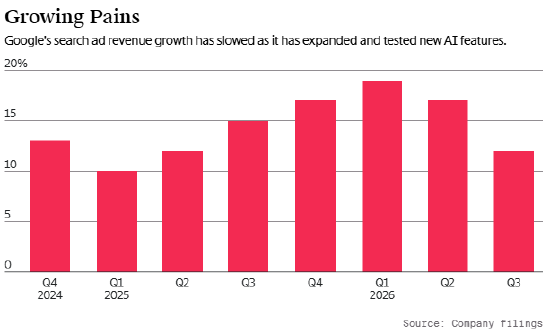
Short answer first: Google's search advertising growth slowed to 12% in the third quarter from 17% in the second, and the company's own chief business officer points at AI chatbots as the reason people no longer start their research on a results page. AI summaries and AI Mode earn less per query than classic text ads, so media buyers are quietly re-spreading money toward Meta and running pilot budgets inside ChatGPT. Treat this as a reallocation moment, not a fire drill: confirm your own conversion data before you move a dollar.
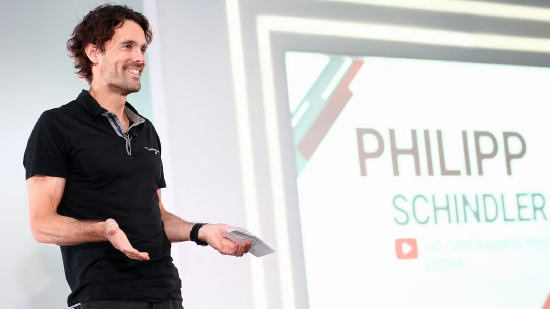
Philipp Schindler, Google's chief business officer.
What exactly happened on October 29?
The stock move told the story. On October 29, the day after Google's earnings report, parent company Alphabet's shares fell nearly 13%. The full-year growth trend bent: in the third quarter, search advertising's annual growth rate slipped to 12% from 17% in the second quarter. Outside coverage of the print put Google's "Search & other" line at roughly $63.35 billion for the quarter, below the ~15% growth many analysts had modeled.
Schindler put his finger on user behavior rather than demand. "I would happily have invested more in Google, but I think this search traffic has been diverted into the scenario where people do their research themselves with large models," he said on the earnings call. In plain terms: the question that used to open a browser tab now opens a chat window.
For more than twenty years, Google's grip on search plus its automated ad auction built one of the most profitable advertising businesses ever assembled. Today the company's own AI roll-out is eating into it. Over the same period Meta's ad revenue grew at more than twice the pace of Google's search ads, and OpenAI has entered the advertising market.
Why does AI search earn Google less money?
The core issue is that AI answers behave like a different ad slot — cheaper, scarcer and harder to buy. Here is the practical difference between the two surfaces:
| Buying dimension | Classic Google Search ads | AI Overviews and AI Mode |
|---|---|---|
| Trigger | Keyword the user typed | Long prompts and multi-turn conversations |
| How you buy | Standalone search campaigns | Bundled with search; no separate AI-only purchase |
| Opt-out | Set your own keyword and placement rules | Advertisers cannot choose to be excluded from AI features |
| Reporting | Search-only performance report | Merged with traditional search; no standalone report while AI scales |
| Ad density | Mature auction | Deliberately fewer ads to protect user experience |
| Buyer intent | Often close to a purchase | Often still researching, so conversion probability is lower |
Google describes the behavior gap itself: prompts typed into AI Mode run about three times longer than a traditional search, with richer context and deeper questions. Instead of typing "tent", someone asks which tent to buy for a one-week hike in the Sierra Nevada in September. That is a great research moment and a mediocre buying moment.
Fred Vallaeys, chief executive of ad-management software vendor Optmyzr who spent nearly a decade inside Google's advertising organization, argues that this browsing style means shoppers are not checkout-ready, so ad clicks convert less often. Using Optmyzr's book of 21,000 ad accounts — a great many of them small-business accounts — he calculated that in the third quarter, conversion rates on Google ad clicks across all platforms, search included, fell 1.4% from the second quarter. Return on ad spend, meaning the revenue generated for every one dollar of ad money, dropped 2.9%, a fall for the second consecutive quarter after a 3.8% dip in the second quarter.
Cost adds insult. Advertisers report that Google shows fewer ads in AI Mode than in traditional search. Over the past year that pushed cost per click higher: fewer slots, the same number of bidders, and an automated auction that reads the scarcity as a reason to raise prices.
On the organic side, independent research from Ahrefs covering 300,000 keywords found that an AI Overview on the page was associated with a 34.5% lower click-through rate for the number-one organic result, and the firm's December 2025 update put that gap at 58%. Fewer clicks leaving Google means fewer retargeting audiences coming back to you — a second-order cost most media plans do not yet carry.
How did we get here? A short timeline
Before this quarterly earnings report was released, Google had already pushed AI summaries and AI conversational features out at scale as alternatives to classic search, and kept experimenting with how ads could fit inside them.
- 2016 — search traffic completes its migration from desktop to mobile. Until now, that was the last big structural change in search.
- May 2024 — AI Overviews launch: AI-generated content sitting above the results.
- Nearly a year after that — AI Mode arrives, Google's ChatGPT-style answer experience.
- Several months after each launch — ads begin appearing inside both products.
The risk is quantified by the size of the prize: an annual $224.5 billion search advertising business. For several consecutive quarters, search revenue showed no visible weakness; growth only began to fade as Google's AI features climbed in usage. Part of the slowdown is deliberate — Google is throttling ad density so AI search does not feel ad-cluttered — and part is teething trouble, since the company is still working out how to place and price ads in a conversation instead of a keyword list.
There is precedent for the bounce-back. When Meta launched Reels in February 2022 as its answer to TikTok, its ad growth hit the same wall; a year later, discount policies and AI tools won advertisers back and revenue growth recovered. As AI Mode and AI Overviews usage keeps climbing, Google's ad growth may follow a similar curve.
What Google is doing about it
"We are taking a measured approach, prioritizing the best user experience, which builds a durable foundation for customers and for our business. Our advertising experiments in AI Overviews and AI Mode are progressing well, and we are now scaling monetization with ad formats that deliver verifiable return on investment for advertisers," a Google spokesperson said in a statement.
Management keeps pitching the upside: AI helps decide which queries should trigger an ad, which landing page a click should reach, and can auto-generate ad variants. In public, Google is also shipping tooling — new reports that surface the queries that triggered an ad, plus creative tools such as Asset Studio, which leans on the Gemini Omni and Nano Banana models to produce image and video assets. Measured chief strategy officer Nick Stoltz summed it up: "These features are essentially about adapting to the search paradigm shift that AI has brought."
Google is also expanding the surface itself: in the days around the earnings print the company said it was pushing ads in AI Mode into ten additional markets and starting to test ads inside AI Mode's follow-up answers in the US.
Underneath the product work, buying and data plumbing are moving too. Advertisers are feeding Google richer product descriptions so its AI can judge which conversations their ads belong in, according to Victor Batista, global search lead at the London-based digital marketing agency Jellyfish. Batista says many advertisers now weight impressions over click-through rate. "The center of value has moved from clicks to visibility. Plenty of searches end without any click at all, and brands are competing to be the thing AI recommends in its answer," he said.
People familiar with the matter say Google's corporate development team is also weighing acquisitions of AI ad-creative startups, since tools such as Higgsfield, Runway and Typeface are winning budgets that used to sit with traditional agencies. Google has paid Hightouch to steer advertisers toward that startup's customer-data sharing tool, because AI has amplified an old blind spot: Google often does not know what an advertiser's customer has already bought, and many smaller advertisers never send that data over. Google has struck partnerships with Adswerve, CustomerLabs, Datahash, Fifty-five, Jellyfish, Lytics, Tealium, Treasure Data and Zapier to help advertisers pipe first-party data into its ad systems.
What advertisers and agencies say
Six advertisers and agencies described a growing frustration: budgets are drifting to other platforms, Meta first among them. Like Google, Meta offers automated creative tooling, but its newer AI products — for example the Muse agent — do not pitch ads against the main feed, since those ads sit alongside short videos and social updates rather than competing with them.
"This year, genuinely workable alternatives to Google have appeared — ChatGPT ads and Meta, for instance. We reallocate budget according to where the performance shows up," said Farhad Divecha, chief executive of marketing agency AccuraCast, who buys media for a portfolio of brands.
Reality check on the shiny new channel: OpenAI only began testing ads in ChatGPT's free and Go tiers on January 16, 2026, so the inventory is early. Industry reporting in October 2026 said the count of advertisers buying ChatGPT ads had roughly tripled and October spend was expected to rise about 40% month over month — while most of that money was still test money, typically 1% to 5% of a brand's annual ad budget. Scaling test budgets is not the same as winning share of wallet.
Step by step: how to re-budget across Google, Meta and ChatGPT
- Freeze one baseline. Pull 90 days of Google Ads data by campaign, then split it into brand terms, non-brand terms, and shopping feeds. You need to know which slice actually pays the bills before anything moves.
- Rebuild your own attribution. Because AI answers break the old search-click-purchase chain, turn on first-party capture: post-purchase surveys asking "how did you first hear about us", server-side tagging, and CRM export back into the ad platforms through a data partner such as Hightouch, Lytics, Tealium, Treasure Data or Zapier.
- Set an exposure ceiling. Put a hard cap on how much of the annual budget can sit inside bundles you cannot opt out of. Most buyers land between 1% and 5% for new AI surfaces and about 10% for the slice of search budget under review.
- Send Google better product data. Detailed titles, attributes, price, stock and availability give Gemini a fair chance to place you inside a conversational answer — it is matching on context now, not on a keyword you chose.
- Run one clean AI-surface test. Isolate a product line, cap spend, define a primary metric (assisted conversions, not last click), and let it run four to six weeks before judging.
- Open a ChatGPT lane the official way. Start with profile presence before spend: how to claim your business in ChatGPT if you are a local or consumer brand, then layer paid tests on top.
- Log visibility, not just clicks. Track how often your brand appears inside AI answers alongside traditional click metrics. The shift Batista describes is real, and reports built only on click-through rate will misread what 2027 looks like.
A quick checklist before you shift any money
- Do I know my current blended cost per acquisition on Google, including the AI surfaces bundled inside it?
- Can I see AI performance separately? If not, which proxy metric will I report to my finance lead?
- Has my conversion rate moved more than 1.4% quarter over quarter? If yes, investigate before reallocating.
- Do I have a working test budget cap (1%–5%) for Meta AI placements and ChatGPT ads?
- Are my product feeds complete enough for conversational matching?
- Does my landing page work for a user arriving mid-research, not mid-checkout?
Common misconceptions worth clearing up
- "Google search is collapsing." It is not. Growth slowed to 12% from 17% — deceleration, not decline, on a base of roughly $224.5 billion.
- "AI ads are just keyword ads in a chat window." They are triggered by long prompts and multi-turn context, cannot be bought separately, and cannot be opted out of.
- "ChatGPT ads will replace my search budget this year." The channel is months old, with test-level money behind it; there is no evidence yet of meaningful Google search budget shifting to it.
- "Fewer ads means cheaper ads." The opposite happened over the past year: fewer AI slots with the same bidders pushed click prices up.
What to watch next
Three signals will tell you whether this is a wobble or a rewiring. First, whether Google agrees to break out AI Overviews and AI Mode reporting — advertisers asked, and the answer so far is "not while it scales". Second, whether AI Mode ads keep multiplying across markets and answer turns, which is the only way that surface can grow revenue per query. Third, whether Meta's pace holds: its third-quarter ad revenue of $63.1 billion, up 26% from $50.1 billion a year earlier, ran more than twice Google's search growth rate.
So the open question I keep turning over: when the search box becomes a conversation, the metric that matters moves from clicks to being recommended. If your brand cannot be seen inside an answer, does it even exist to the next generation of shoppers?
FAQ: questions advertisers keep asking
Is Google Ads still worth the money?
Yes, with eyes open. Search is still the largest conversion engine for most brands, and Google remains highly profitable at scale. What changed is the growth rate and the reporting opacity of AI surfaces, so validate performance with first-party data rather than trusting a blended number.
Why do my cost per click and ROAS look worse since AI features rolled out?
Two mechanical reasons: Google is showing fewer ads in AI Mode, which tightens the auction, and AI queries are longer research questions from people who are further from a purchase. Vallaeys' analysis of 21,000 ad accounts put the click conversion rate down 1.4% and return on ad spend down 2.9% in the third quarter.
Can I buy Google's AI search ads separately from normal search?
No. Advertisers cannot purchase AI-surface placements on their own, and cannot choose to stay out of ads inside AI features. Google says the AI ad data stays merged with traditional search reporting while the products scale.
How much should I put into ChatGPT ads right now?
Enough to learn, not enough to matter on the profit and loss statement. Testing is the norm, usually 1% to 5% of an annual budget. OpenAI started serving ads to free and Go users on January 16, 2026, so benchmarks are still moving; judge on assisted conversions rather than last click.
Which platform should I test against Google first?
Meta is the default second home — its scale is proven and its newer AI products, such as the Muse agent, run beside short video and social updates instead of cannibalizing the main feed. That is also why its ad growth ran more than twice as fast as Google's search ads this quarter.
Sources
- Google — Ads in AI Mode (official advertiser announcement)
- Reuters — OpenAI to test ads in ChatGPT's free and Go tiers (January 16, 2026)
- Stacked Marketer — Alphabet third quarter: Search & other at $63.35 billion, up 12%
- Sina Finance — Meta third-quarter ad revenue $63.1 billion, up 26%, versus Google Search up 12%
- Ahrefs — AI Overviews reduce clicks by 58% (December 2025 update)
- Jin10 — ChatGPT advertiser count triples; October spend up 40% month over month, mostly test budgets