
AI Memory Demand Drives Samsung Electronics to $80B Quarterly Operating Profit: MyTechDailyNews Q3 Breakdown
By Sarah Chen, MyTechDailyNews General
A major AI supply-chain story has moved from the factory floor to the earnings table. The latest third-quarter results, also referred to as Q3 performance, show how memory chips made the headline profit possible while higher component costs squeezed consumer hardware. For readers following MyTechDailyNews, the practical question is not only how much profit Samsung Electronics reported, but where that profit came from, why smartphones struggled, and what the company is promising next.
The Big Picture: A Profit Milestone With Uneven Effects
Global demand for AI memory underpinned the quarter. Samsung Electronics reported consolidated revenue of 195.3 trillion won (~$146 billion) and operating profit of 107.4 trillion won (~$80 billion). The company said it became the first technology company globally to exceed 100 trillion won (~$75 billion) in quarterly operating profit, a milestone that can be summarized as $80B scale. The results show AI infrastructure spending shaping hardware economics across global supply chains. The same AI-driven component prices also pressured mobile margins, and the announced shareholder-return plan did not satisfy investor expectations.
As MS Hwang, research director at Counterpoint Research, said: “Another record-breaking quarter, beating consensus estimates,” underscoring that semiconductor profitability reached an exceptional level even as finished consumer set divisions fell into an operating loss.
A Tale of Two Divisions: Components Versus Consumer Devices
The report drew a clear line between component manufacturing and finished consumer electronics. Device Solutions (DS) semiconductor division produced 147.1 trillion won (~$110 billion) in revenue and 106.5 trillion won (~$80 billion) in operating profit. By contrast, Device eXperience (DX), covering smartphones, televisions, and home appliances, recorded an operating loss of 0.8 trillion won (~$0.6 billion) on revenue of 52.1 trillion won (~$39 billion).
That split is important for general readers because it shows why one technology giant can look extremely profitable in parts while feeling pressure in products people buy every day. The component business captured value from the AI build-out; the consumer-device business absorbed rising memory costs.
Why Memory Prices Became the Decisive Variable

Memory pricing widened the gap between the semiconductor and consumer device businesses. According to Counterpoint Research, standard DRAM pricing rose from the historical range of 20-30 cents per gigabit to $2 per gigabit, expanding the global DRAM market to $200 billion. Samsung reported operating margins of 79% for DRAM and 72% for NAND flash. As the high-bandwidth memory market grows, HBM4 prices are expected to reach $4 per gigabit.
Those higher memory prices also raised bill-of-materials pressure across mobile manufacturing. Mobile eXperience (MX) and Networks generated 37.7 trillion won (~$28.21 billion) in revenue but posted an operating loss of 0.6 trillion won (~$0.45 billion).
Hwang explained that the consumer-electronics impact was not temporary in the near term: “The [consumer electronics] MX division continues to suffer from high memory pricing,” he said, adding: “Since low-end models are expected to continue losing money, Samsung may scale back its volume contribution, implying further correction in market volume dynamics in the supply chain.”
In the presentation before the earnings call, Samsung Mobile VP Daniel Araujo said the business aims to “mitigate profitability risks through efficiency improvements” and “improve our product mix centered on flagships.”
HBM Momentum and the Race for AI Capacity
Samsung's results aligned with SK Hynix, which posted third-quarter revenue of 104.62 trillion won (~$78 billion) and operating profit of 83.33 trillion won (~$62 billion).
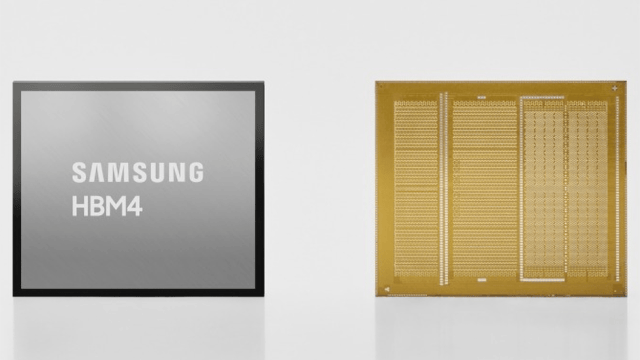
SK Hynix said “it significantly scaled up sales of HBM4” as product competitiveness improved, while managing its “product mix, with focus on AI products, amid capacity constraints.”
During the earnings call, Jaejune Kim, EVP of Memory Business at Samsung Electronics, said the company has secured multi-year supply agreements with 10 key customers. Competitor SK Hynix stated that its HBM capacity is fully sold out through 2029, while Samsung confirmed its HBM capacity is currently sold out through 2027.
According to Counterpoint Research, Samsung is expected to gain ground in advanced memory. Hwang said on SK Hynix results: “We anticipate that Samsung will surpass SK Hynix from the HBM4 generation, leading the market share in 2027,” while noting the competitive shift expected as HBM4 ramps.
Capital Returns, Investor Expectations, and Market Reaction
Despite high operating income, Samsung's share price fell during the earnings call after the capital allocation plan met expectations. The company announced a third-quarter cash dividend of 30 trillion won (~$22 billion) as part of an estimated total shareholder return plan of 90 trillion won (~$67 billion) to 110 trillion won (~$82 billion) for 2026.
Samsung CFO Soon-Cheol Park said long-term capital deployment will remain aligned with industry expansion. He noted that memory demand will far exceed supply due to robust AI investment and that AI infrastructure investment continues to grow.
For investors, the result suggests that record earnings alone may not change share-price expectations if the distribution plan matches what the market already assumed. Hwang said: “Shares declined during the earnings announcement as shareholder returns offered no upside surprise,” and the episode highlights the real challenge of navigating an equity market with elevated expectations.
Frequently Asked Questions
What made this quarter so important?
The quarter showed a first: Samsung Electronics reported 107.4 trillion won (~$80 billion) in operating profit and said it became the first technology company globally to exceed 100 trillion won (~$75 billion) in quarterly operating profit. The broader story is AI memory demand, represented by the headline $80B profit.
If profits were so high, why did the stock fall?
The company’s capital-return plan met expectations but did not surprise investors. The third-quarter cash dividend of 30 trillion won (~$22 billion) sat inside a total shareholder return plan of 90 trillion won (~$67 billion) to 110 trillion won (~$82 billion) for 2026.
Who benefited most within Samsung Electronics?
Device Solutions (DS) benefited because it produced 147.1 trillion won (~$110 billion) in revenue and 106.5 trillion won (~$80 billion) in operating profit. Memory pricing was the decisive driver.
Quick Checklist: What to Watch Next
- Memory prices: the move from 20-30 cents per gigabit to $2 per gigabit is the central economic signal.
- Market size: global DRAM is now described as a $200 billion market.
- Margins: 79% for DRAM and 72% for NAND flash show exceptional component profitability.
- HBM4: expected pricing of $4 per gigabit may reinforce the importance of AI memory.
- Supply commitments: multi-year agreements with 10 key customers, sold-out capacity through 2029, and sold-out capacity through 2027 point to an unusually tight AI-memory market.
- Consumer hardware: watch how Samsung Mobile balances flagship focus against low-end pressure.
Common Misconceptions
- Myth: One giant company means every product line wins.
The reality is mixed: the semiconductor side delivered record profit, while Device eXperience (DX) recorded an operating loss of 0.8 trillion won (~$0.6 billion). - Myth: Higher AI demand always improves phone profitability.
The opposite appeared in this quarter: Mobile eXperience (MX) and Networks posted an operating loss of 0.6 trillion won (~$0.45 billion) because memory costs rose. - Myth: A record profit guarantees a share-price jump.
The market reaction centered on capital allocation, not the operating profit alone. Hwang’s comment shares declined during the earnings announcement as shareholder returns offered no upside surprise, illustrates that expectation management matters.
Action Suggestions for Readers Following the Story
- Separate the AI component cycle from the consumer device cycle.
When reading technology earnings, check whether the profit comes from chips, software, devices, or services. In this case, Samsung Electronics shows a clear split: Device Solutions (DS) thrived while Device eXperience (DX) struggled. - Track memory pricing as a cost signal for devices.
A rise from 20-30 cents per gigabit to $2 per gigabit can influence smartphone, PC, and appliance costs. If memory prices remain elevated, manufacturers may shift emphasis toward flagship products. - Watch supply agreements, not just spot demand.
The mention of 10 key customers, capacity sold out through 2029, and current sold-out capacity through 2027 suggests that AI memory supply is being secured over multi-year horizons. - Read shareholder-return announcements carefully.
A company can report record operating profit and still see shares fall if cash-return plans match, rather than exceed, expectations.
The MyTechDailyNews takeaway is that AI memory demand has moved from a specialist supply-chain topic into a mainstream technology-news story. The headline number is striking, but the more useful lesson is the uneven impact: Samsung Electronics generated $80B-level quarterly operating profit through memory strength while its consumer-device side managed margin pressure, product-mix shifts, and investor expectations.