
MyTechDailyNews General: AI Hurricane Forecasts Move From Early Tests to a First-Rank Tool
By Sarah Chen
MyTechDailyNews’s General desk: On October 26, National Public Radio (NPR) reported that hurricane forecasters increasingly use AI, and this month the Atlantic season’s first hurricane showed one AI model beating traditional track forecasts.
A Real-World Test in Early October
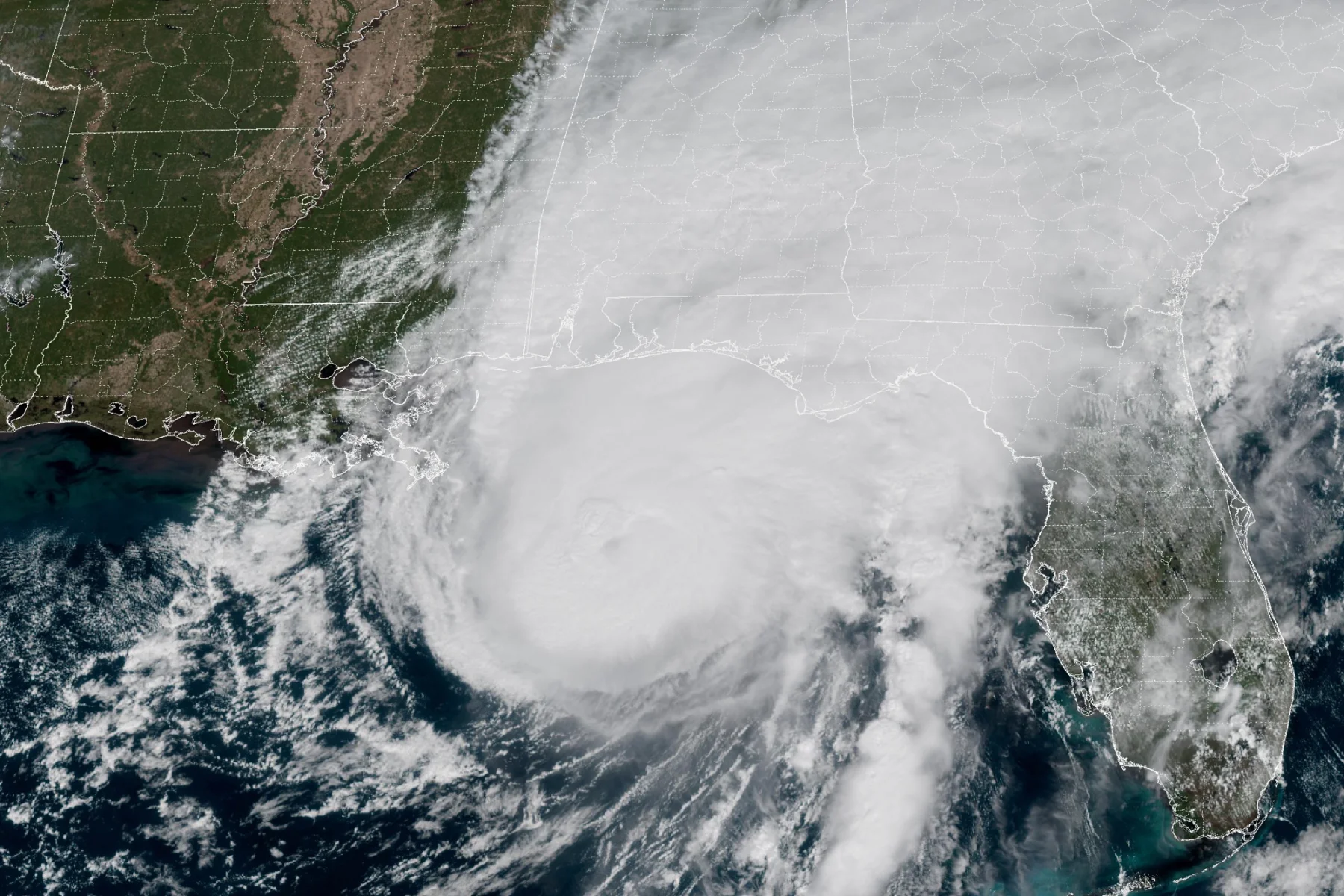
By early October, Hurricane Isaias made landfall near Destin, Florida, as a Category 2 storm. Conventional models initially kept it moving west toward southeastern Louisiana, but Google DeepMind’s model said from the start it would hit the western part of the Florida Panhandle.
“Especially Google DeepMind, it has truly proven itself as a gold-standard model over the past few years,” said Michael Lowry, a Miami-based hurricane specialist who advised the United States Federal Emergency Management Agency and the National Hurricane Center. “That model is the best-performing computer model we have ever seen; it is far ahead. That is simply how it is.”
The United States National Hurricane Center added the GoogleDeepMind model to official forecasts last year for the first time. University of Miami researcher Brian McNoldy said that by the end of the 2025 Atlantic hurricane season it was already among the best for track and intensity. New models usually need several years of polishing. “This is not something we are used to — a new model arriving and quickly becoming the best model,” McNoldy said. “It essentially ranked first as soon as it appeared, and that is a remarkable achievement.”
Physics Models and AI Models Use Opposite Methods
| Traditional models | AI models |
|---|---|
| Use physics equations and live satellite or aircraft data such as temperature, humidity, pressure and wind shear. | Learn from thousands of past hurricanes and related atmospheric records. |
| More interpretable because they follow known laws. | Can look like black boxes; many designers are not meteorologists but software engineers developing neural networks. |
Lowry noted that most designers are not meteorologists: “They are software engineers working on neural network development.” He added that AI models depend on the current picture: “Besides the current picture, the AI model actually knows nothing about the atmosphere. Beyond that, it does not rely on the governing equations of atmospheric motion — the laws of physics — to make forecasts.”
“We do not know why they forecast correctly, and we do not know why they forecast incorrectly,” Lowry said. During storms, millions of people may rely on forecasts, so opacity worries experts. “This makes us a little uncomfortable, because we want to know why you can get the right answer,” McNoldy said. “And I think we do not know — at least I do not know.”
Two Leading Models, Two Remaining Weaknesses
Lowry said many AI weather models remain untested. The two most accurate so far are Google DeepMind’s model and the model developed by the European Centre for Medium-Range Weather Forecasts, which is based in the United Kingdom, though each has flaws. On Isaias, the Google DeepMind AI model beat physics models on track but did not do as well on intensity. An Associated Press photo from October 10 showed people in Destin recovering items from a collapsed boat house after the storm.
Humans Still Turn Model Swings into Guidance
National Hurricane Center teams mix verified models, AI and traditional. “Each storm has different forecasting challenges,” director Michael Brennan said. “That is why we use an ensemble approach, mixing the best models.” During active storms, updates are issued every six hours, and models can change sharply between two updates, so forecasters must make the result actionable.
“One of the major values human forecasters provide is continuity,” Brennan said. “We use our expertise and understanding to turn hurricane forecasts into hazard information, which is what people really need to focus on.”
Brennan said the Google DeepMind model still needs improvement; its team regularly provides feedback. Google did not respond to NPR’s inquiry. He added that forecast progress has always changed: “The future has always been changing,” and “It has never been just one thing driving these advances.” Not long ago, forecasters could not predict intensity reliably within two days; now better models and data have cut error about half compared with Hurricane Katrina. “In terms of intensity forecasts, the error is about half what it was during Hurricane Katrina,” Brennan said.
Lowry said AI’s update speed is remarkable: models can improve in months or even weeks, while traditional models update at most once per year. “The skills and hurricane-prediction advances they make in one year are something we used to need 10 years, or even more than a decade, to achieve,” he said. Still, he is not anxious: “For me, I have not had some kind of existential crisis because of AI. If anything, I think it is a blessing for our industry.”
Common Misconceptions
- AI models “understand” the atmosphere: the report says they mainly use the current picture plus historical patterns.
- A correct track means a complete forecast: Isaias showed intensity can still be a weak spot.
- All AI models are reliable: many are untested, and two lead so far.
FAQ
Why did Google DeepMind draw attention?
It entered official forecasting for the first time and quickly became ranked first among models.
Why do forecasters still use physics models?
Because every storm has different problems, and ensembles give more stable decisions.
Who should readers trust during a storm?
The official hazard information produced by human forecasters, supported by model updates.
Action Advice
- Compare track and intensity separately.
- Follow National Hurricane Center updates every six hours.
- Expect model changes between two updates.
- Act on human hazard guidance, not one model alone.