
Robots Before Engineers? MyTechDailyNews Weighs ABB's Automated Electrical Inspection Against the Manual Rounds It Would Replace
By Sarah Chen · General desk, MyTechDailyNews · Tech Daily
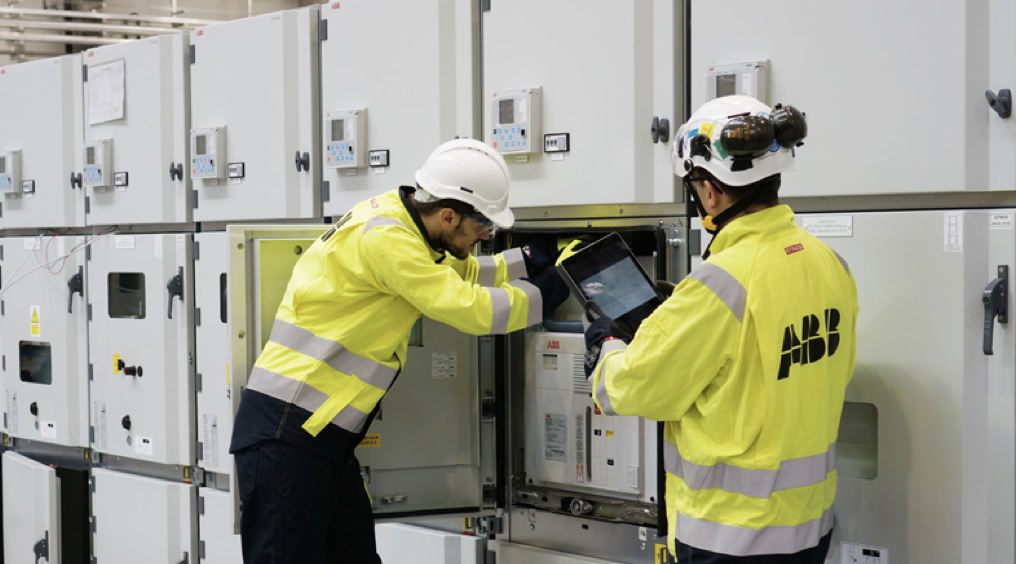
There is a habit in electrical maintenance that is so old nobody calls it a decision any more: somebody reports a problem, a qualified engineer walks into the room, looks, and then decides what happens next. ABB is now asking the uncomfortable question behind that habit — whether the first person through the door should be a person at all — and the answer it offers is not "robots instead of engineers" but "information before exposure."
That distinction matters if you are trying to work out what to buy, what to trial and what to ignore. Below, we compare three practical routes to inspecting energised electrical gear — the traditional walkdown, periodic handheld survey rounds, and robotic platforms with AI-assisted analysis — then score where each one wins, where it loses, and which sites should not be in a pilot yet.
The short version
- ABB frames its push as a sequencing change: get thermal, acoustic and visual data out of a hazardous environment first, so the engineer who eventually enters is making decisions with the full picture rather than the first glimpse.
- Some of this is already purchasable — ABB's Air Gap Inspector robotic crawler inspects large motors and generators with the rotor still in place — while much of the electrical-service application layer remains at prototype stage.
- For ordinary readers, the trade-off is not "jobs vs. robots": it is upfront integration cost and engineering effort versus fewer people standing close to live gear.
Why "exposure" is the word to focus on
Electrical infrastructure has quietly become a business-critical asset: when it stops, production, heating, cooling and data all stop with it. ABB argues that rising expectations for uptime are pushing service work in two directions at once — safer, and rethought from the first step.
"Exposure" is not just a feeling here. Under NFPA 70E, work on or near energised equipment must be preceded by an arc-flash risk assessment, and the standard defines an arc-flash boundary: the distance from an exposed live part at which incident energy equals 1.2 cal/cm², as summarised in OSHA's public guidance on protecting employees from electric-arc flash hazards (OSHA 4472). In plain terms, there is a ring around live gear where the hazard stops being theoretical. A robot that can see inside that ring from outside it changes the order of operations — the assessment no longer has to happen at arm's length.
Take the example ABB itself uses: a live switchgear room. Today, a qualified engineer may have to enter to judge its condition, frequently with thin information about what is inside. The expertise is indispensable; the problem is that the most consequential decisions get made before the fullest picture exists.
Three ways to inspect the same room, side by side
| Approach | Who is exposed | Data quality & repeatability | Cost & readiness | Where it makes sense today |
|---|---|---|---|---|
| Manual engineer walkdown | A person enters first, often to assess rather than to fix | Rich judgement, but angle, distance and time of day vary, so trend comparison is weak | Lowest capital outlay; highest hidden cost in risk, PPE and possible downtime | De-energised and locked-out assets; obvious faults; unfamiliar or improvised sites |
| Periodic handheld survey (IR camera, ultrasound) | Technician on a scheduled round, repeated for trending | Snapshot-based and operator-dependent; hard to revisit the exact same measuring point | Low-to-medium cost; widely available skills and kit | Accessible gear, compliance-driven rounds, steady-load plants |
| Robotic platform + AI-assisted analysis | Exposure moves to set-up and recovery; the engineer enters with data already in hand | Thermal, acoustic and visual capture from hard-to-reach points; fixed geometry makes cycle-to-cycle comparison practical | Highest cost; some products on the market, much of the electrical-service layer still in development | Live switchgear, confined or hard-to-reach spots, high-consequence assets you cannot afford to de-energise |
A note on that repeatability column: inspection-robot suppliers explicitly market the fact that a platform captures thermal readings from identical points every cycle — same angle, same distance, same height — which is exactly what a human carrying a handheld camera cannot guarantee. The principle behind it is not exotic; it is simply that trending requires geometry you can trust. (Vendor-stated capability, e.g. SMR Robotics substation inspection platform.)
What ABB says is real already — and what is not
ABB is careful on this point, and buyers should be too. Suitable robotic platforms exist commercially and are improving fast; the harder job is bending general-purpose robotics to the specialised requirements of electrical service work. That is where its research and development effort sits: combining service expertise, software development and engineering knowledge into an application layer so platforms can operate in complex, safety-critical electrical environments and plug into wider asset management systems. Much of that work is still at prototype stage, and ABB states plainly that the aim is not to adopt robots for their own sake.
Two concrete data points help calibrate the claim:
- A fielded example: ABB's Air Gap Inspector is a super-slim robotic crawler that travels in the air gap between the rotor and stator of large motors and generators, visually examining the stator core, rotor core and windings with the rotor still in place — work that traditionally meant pulling the rotor. (Source: ABB motion services, air gap inspection.)
- The market around it: research firm Fact.MR valued the global inspection robot market at USD 7.2 billion in 2025, rising to USD 7.8 billion in 2026 and forecast at USD 18.6 billion by 2036, a 9.0% CAGR, with crawler-type units accounting for roughly 27.4% of product demand. That is a mature enough category for maintenance budgets to take seriously, but still fragmented enough that integration is the real cost. (Source: factmr.com.)
Where the value actually shows up: the AI leg
Cameras and crawlers are not the product; insight is. ABB's position is that the worth of automated inspection comes from what it lets a team do next — collect thermal imaging, acoustic monitoring and visual data remotely, then analyse it far faster than traditional routes allow. AI is described as the critical enabler: converting large volumes of inspection data into actionable recommendations so service teams can spot potential issues earlier, prioritise inspection activity, and arrive at the site better prepared and with more context about asset condition.
The same "earlier warning" logic is visible in ABB's live work adjacent to inspection. In a news release dated 17 June 2026, ABB and Danish utility Ørsted described an AI-based fault-prediction pilot at Avedøre Power Station, with ABB's Søren Bagge Skou characterising the problem as faults that build up over time but are usually discovered late, leaving little room to respond — the target being earlier warning and more time to act, and a shift from periodic inspection toward earlier detection, faster diagnosis and better-informed maintenance decisions. ABB said it would support Ørsted through the first year of the pilot. (Source: new.abb.com.) It is a useful signal for readers weighing adoption: the analytics side of this stack is being trialled on real grid assets now, while the physical robot side is still maturing.
The honest trade-offs — where a robot is the wrong answer
- Integration cost is the hidden line item. Adapting general-purpose technology so it is genuinely useful in a high-voltage switchroom or a live substation needs sustained investment in research, software and digitalisation. Buying the platform is the smaller half of the bill.
- Safety-critical, highly specific environments punish generic kits. ABB concedes that marrying humans and technology will not be straightforward.
- Low-risk, accessible assets rarely justify it. If the panel is de-energised under lockout and in clear sight, a two-hour manual survey beats a two-week robot trial.
- Data without a decision loop is overhead. Remote capture only pays off if findings flow into asset management systems and change what the crew does.
- Do not budget it as headcount reduction. ABB explicitly rejects framing inspection technology as a cost-cutting measure; the stated objective is achieving more with the same people, more safely.
Fit test: four scenarios scored
- Live switchgear in a plant that cannot be shut down — strongest fit. The cost of exposure and of downtime both dominate, so "visibility before exposure" earns its keep.
- Large motors and generators needing internal visual checks — already served by existing crawler-based inspection services, with the rotor left in place.
- Confined, awkward or unreachable mounting points — good fit for thermal, acoustic and visual capture from positions no human surveyor can hold steadily.
- Clean, low-voltage, easily reachable distribution boards — weak fit for now; a scheduled handheld survey remains the rational choice.
Three misconceptions worth killing early
- "This is about replacing field-service engineers." ABB's own read is the opposite: human judgement is irreplaceable because of environmental complexity and the stakes of each decision. Engineers still choose what to inspect, interpret findings and recommend the course of action — automation just spares them the noise and danger of repetitive, high-risk or hard-to-access tasks, and hands them richer information from the outset.
- "Automation is a productivity tool first." It is better read as a risk-reduction tool: helping teams achieve more with the same resources through better tools, better information and better support.
- "The good stuff is science fiction." The hardware is shipping; what remains in development is the electrical-specific application layer, and the direction of travel is not in doubt.
Buyer's checklist: what to settle before a pilot
- Name the single hazard you are trying to remove — arc-flash exposure, confined-space entry, working at height on a substation structure.
- Confirm the asset class is one where a platform exists or is credible (live gear, large rotating machines, hard-to-reach points).
- Decide what data must be captured: thermal, acoustic, visual — and who interprets it.
- Check the integration path into your asset management system before, not after, the demo.
- Define the comparison baseline: same measurement points, same frequency, as your current survey method.
- Write the "human still decides" rule into the workflow, including sign-off on recommended actions.
- Time-box the trial; ABB's own Ørsted fault-prediction work includes support through a full first year, which is a realistic horizon for a meaningful evaluation.
- Keep an escape hatch: if the pilot cannot shorten decision time or reduce entry, stop and revisit in 12 months.
FAQ
Is this available to buy now, or a research project?
Both, depending on the job. Robotic inspection services of the Air Gap Inspector type are commercially offered, and general inspection robots are an established product category. What is still largely prototype, per ABB's own description, is the electrical-service-specific application layer that lets platforms operate in complex, safety-critical environments and integrate with asset management systems.
Does it mean fewer electricians on site?
No — not on the stated intent. The pitch is that fewer people are exposed to the first, most dangerous phase of an assessment, while the skilled judgement remains human.
Why not just a drone?
Because most of the value here is indoor, close-quarters and repeatable. Confined switchgear rooms give aerial platforms little room, and trending depends on capturing the same point from the same geometry each cycle — which favours crawlers and ground platforms.
What is the biggest failure mode?
Buying hardware before agreeing what decision it changes. Data collection that never reaches the crew, or never alters the plan, delivers cost without the safety or uptime return.
Should a general reader care?
Indirectly, a lot. Fewer intrusive shutdowns, faster diagnosis of faults that currently reveal themselves as outages, and field-service crews taking fewer risks are exactly the kinds of infrastructure changes that show up as steadier power and fewer surprise interruptions.
Action recommendations
- This week: pull your last 12 months of electrical service records and flag every visit that began with an assessment of unknown conditions in energised gear — that list is your pilot candidate pool.
- This month: ask your service provider whether inspection data is captured at repeatable geometry, and whether it is stored where it can be compared over time.
- This quarter: scope one bounded trial on a single high-consequence asset, with an explicit exposure-reduction target and an integration requirement written in.
- Next 12 months: review whether earlier detection changed any outage outcome before expanding to a second site.
Read as a buying decision rather than a technology demo, ABB's argument holds up narrowly and honestly: automated inspection is worth it where exposure is high, access is awkward and the asset cannot be stopped — and worth postponing everywhere else. The part to watch is not the robot, but the layer that makes its data usable by a human crew before they open the door. When that lands, the measure of success will be mundane and reassuring: the engineer who eventually walks in already knows what is waiting.
Got a tip or a question about this story? Reach the MyTechDailyNews General desk at hello@techdaily.com.
Reporting and comparison by Sarah Chen, Tech Daily.