
The 2026 Trimble Construction Innovation Awards, Explained: What Six Winning Teams Actually Did With Technology
By Sarah Chen · MyTechDailyNews
Short answer: Six organizations and educators took the 2026 Trimble Construction Innovation Awards because they connected existing hardware and software into one shared data flow, then measured what it saved. Trimble recognized winners in four construction categories plus two educators, including a first outstanding educator prize covering K-12 and higher education, and each winner received a complimentary pass to Trimble Dimensions, November 9-11, 2026 in Las Vegas.
For readers who never set foot on a jobsite, that is still a useful story: it is a public, audited dataset of what "digital transformation" looks like when it works — how long tasks took before and after, how much money stayed in the business, and which mistakes to avoid.
Why these construction awards matter to ordinary tech readers
Because the wins are expressed in hours and dollars, not adjectives. The broader backdrop makes the numbers more interesting. Goldman Sachs Research reported in February 2026 that productivity in the US construction industry fell by 30% between 1970 and 2024, while productivity across the wider economy more than doubled (goldmansachs.com). On the labor side, the Associated Builders and Contractors estimated on January 15, 2026 that the sector needs about 349,000 net new workers in 2026 just to meet demand (abc.org). Fewer people plus flat output is the exact problem the award entries are trying to solve.
Trimble announced the 2026 winners from the annual programme that recognises North American industry trailblazers using advanced Trimble hardware and software to improve construction workflows, productivity and workforce development.
Is the win about buying tools — or about plumbing them together?
It is about plumbing. Trimble CEO Rob Painter put it plainly in a mid-2026 interview on the Bricks & Bytes podcast: the famous "construction productivity is flat" chart measures the industry at a total level rather than task by task, task productivity is now largely solved, and system productivity — the handoffs between people and systems — is the real unlock (news.trimble.com). A consumer-tech analogy: ten apps on a phone that refuse to sync are not a productivity system, while one shared calendar that everyone trusts is.
Every 2026 company winner matches that pattern. None of them reported a single heroic device; all of them reported a continuous flow of information that let errors surface before they became expensive.
What each company winner did, step by step
| Category | Winner | Bottleneck attacked | Headline measured gain |
|---|---|---|---|
| Connected ecosystem | F+F Mechanical — North Haven, Connecticut | Estimating, modeling, fabrication and field teams working from separate versions of the truth | 10–30% increase in overall productivity on projects |
| Process transformation | Wade Trim — Detroit, Michigan | Field survey data lagging behind design revisions | Surveying scope finished 10% under budget; data management efficiency +25%; survey rework −20% |
| Project success | Land to Sand Site Services — Currituck, North Carolina | Steel components fabricated far from the concrete they had to fit | A 3/16-inch mismatch caught early; rework and an estimated eight-month delay avoided |
| Workforce achievement | HEI Civil — Castle Rock, Colorado | Manual hiring paperwork and lien-release accounting | Onboarding cut to 15–30 minutes; 1,125 staff hours and $35,000 saved per year; lien work down 88% |
Connected ecosystem: F+F Mechanical (North Haven, Connecticut)
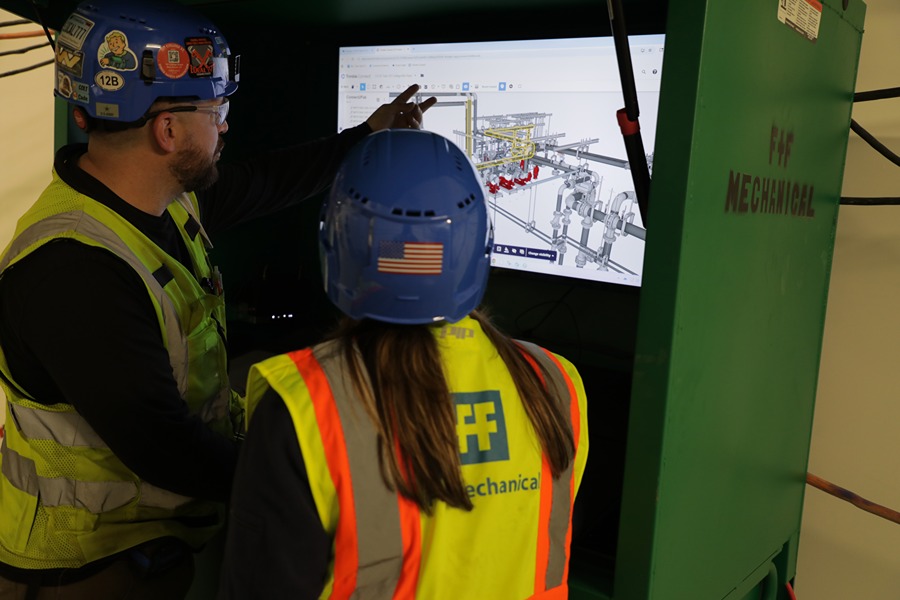
The mechanical contractor links jobsites, the office and its fabrication shops in real time through connected Trimble solutions such as Trimble Connect and ProjectSight, a pattern that matters most on complex MEP installations.
The practical result: shared data and real-time feedback join estimating, project management, modeling, fabrication and field operations, so issues are resolved before fabrication starts. Installation accuracy improves, manual measurements and rework fall, and cross-department visibility produced a 10–30% increase in overall productivity on projects.
Steps any team can copy:
- Pick one live project and make a single shared data space the only accepted source of truth.
- Invite the shop and the field crew into the same model review, not just the design team.
- Set a "stop before fabrication" rule: no component is cut until open issues are closed in the shared record.
Common pitfall: teams buy the platform but keep emailing drawings as attachments, which quietly rebuilds the version problem the platform was supposed to remove.
Process transformation: Wade Trim (Detroit, Michigan)
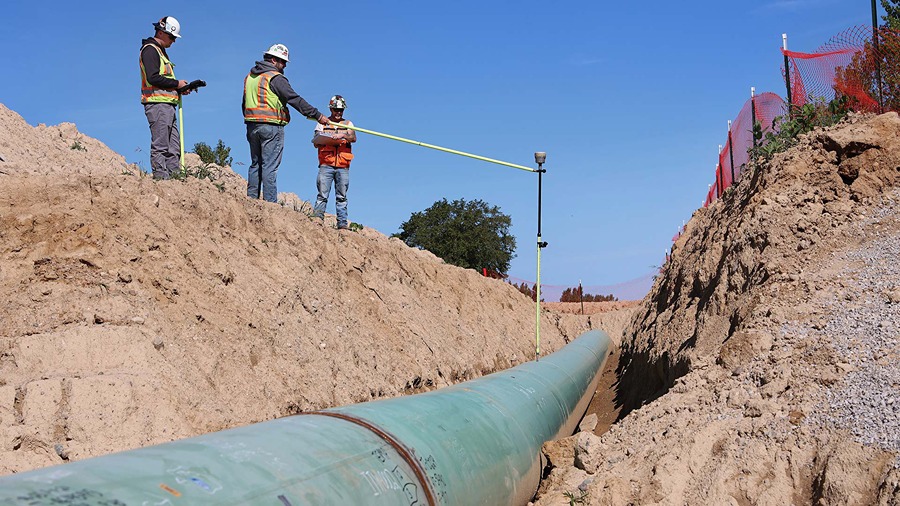
On a $550 million, 55-mile natural gas pipeline, Wade Trim rebuilt its survey and data management workflow around Trimble Access, Trimble Connect and a cellular-connected Global Navigation Satellite System base-station network, tying field data, current construction plans, design revisions and office processing into one loop.
Survey crews, engineers and the client's geographic information system team kept working from current information through construction, closeout and restoration. The firm finished its surveying scope 10% under budget, improved data management efficiency by 25% and reduced survey rework by 20%.
Steps any team can copy:
- Measure your rework rate before you change anything; without a baseline, a 20% improvement is invisible.
- Replace file hand-offs with live positioning and cloud sync at the crew level.
- Keep the same data path running through closeout and restoration, when most projects stop feeding the model.
Project success: Land to Sand Site Services (Currituck, North Carolina)
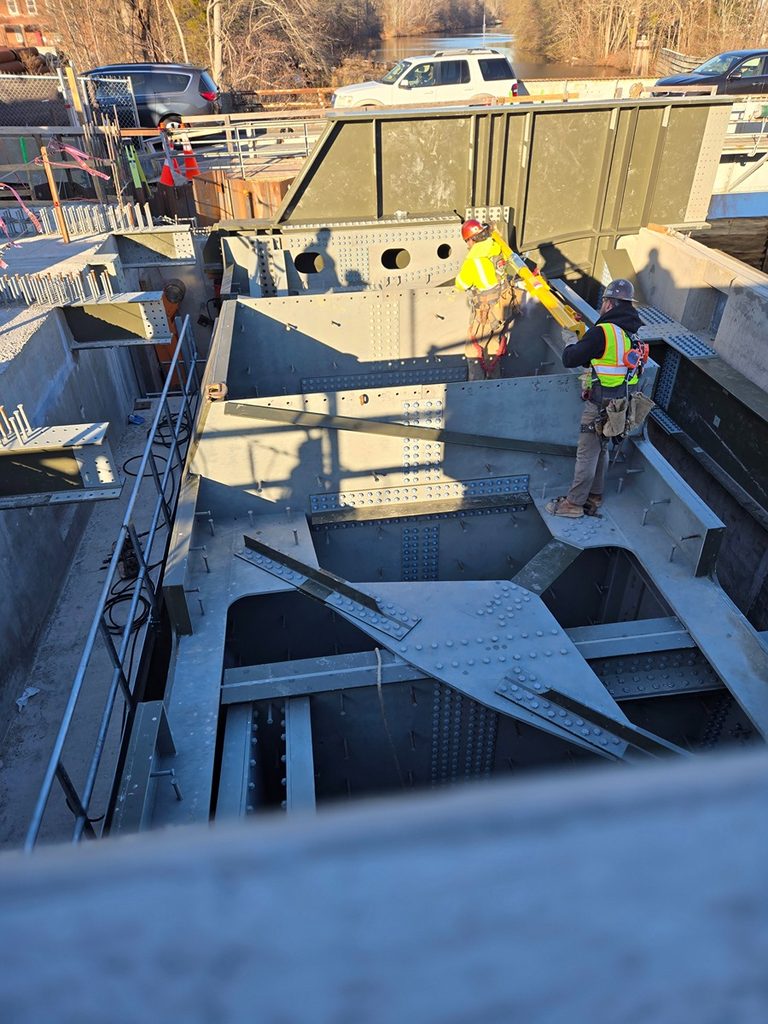
This is the clearest illustration of cheap data averting expensive concrete. At the site of a complex drawbridge replacement in Virginia and at the steel fabrication site in Canada, Land to Sand used Trimble scanning and 3D modeling on both ends, then found a critical 3/16-inch dimensional discrepancy in components during fabrication.
Because the mismatch surfaced early, supporting concrete geometry could be adjusted before installation. Components fit, rework plus an estimated eight-month delay were avoided, and the team has since scaled the habit — capture reality early, compare it with design intent, communicate the difference, and act while correction is still manageable.
Checklist for your own version of this save:
- Scan as-built conditions at agreed checkpoints, not only at the end.
- Overlay scan data against the design model and publish the delta in a place reviewers can see.
- Define a tolerance threshold that automatically escalates to the designer — 3/16-inch is not a rounding error when steel and concrete meet.
- Ship the finding with a proposed fix, so the correction happens while it is still cheap.
Workforce achievement: HEI Civil (Castle Rock, Colorado)
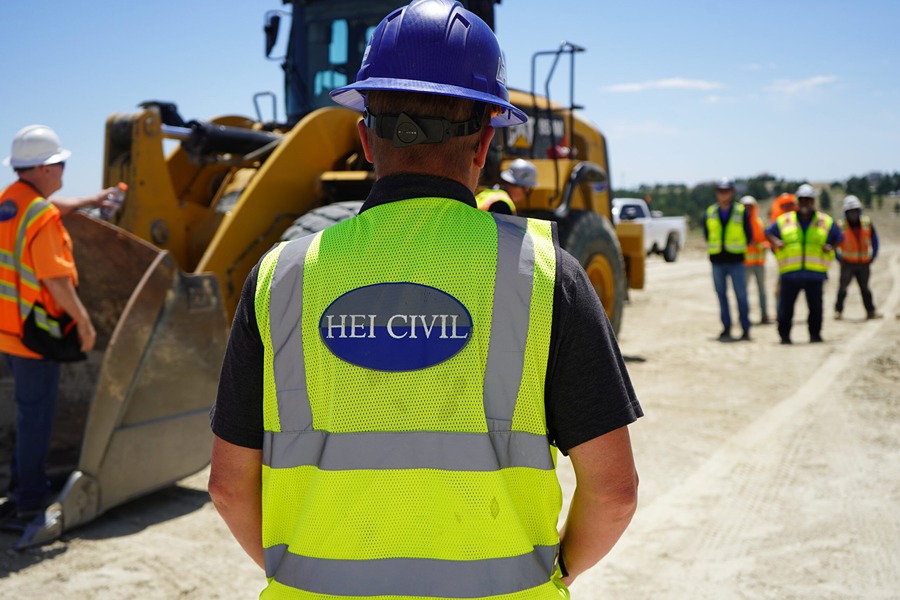
The most relatable win of the group happens far from any crane. Ashley Rivera, HEI Civil data and automation director, used Trimble financial management systems to design and build an integrated applicant tracking system with Trimble Spectrum, streamlining hiring and onboarding across four entities and three states.
Processing time fell from 1–2 hours to 15–30 minutes per employee, saving approximately 1,125 staff hours and $35,000 in labor costs each year. Automation also reshaped the vendor lien release workflow: processing time dropped from 16 hours to 2 hours per lien (88%), and 14 hours of skilled accounting time per lien can now be reassigned to more valuable work.
Why this matters beyond construction: it is the classic back-office automation playbook — find the task that repeats in every subsidiary, time it, then rebuild it once centrally.
Where the next workforce comes from: the educator prizes
The programme added a new outstanding educator category, recognizing K-12 and higher education teachers who prepare the next generation of industry leaders through innovative technology integration and career advocacy.
Virtual jobsites for K-12 students
Abiola Akanmu, a Virginia Tech construction professor, uses the Trimble XR10 with HoloLens to build an immersive virtual construction-site experience that introduces K–12 students to technology-enabled construction careers. Simulated scenarios and interactive demonstrations with laser scanners and drones do the recruiting work that a site visit used to require; since 2023 the initiative has reached thousands of students across multiple regional outreach events.
Hands-on scanning inside the curriculum
In higher education the honour was shared. Abiola Akanmu also brings the Trimble X7 scanner, RealWorks and the Trimble XR10 HoloLens into her construction curriculum so students learn real-world data capture and analysis — processing point-cloud data for volume calculations and site condition assessments, and using mixed reality to explore virtual jobsite operations. That connected learning experience links classroom instruction with industry research and university outreach, including scanning the historic Norfolk & Western 611 locomotive to investigate clearance concerns.
Jon Elliott, an associate professor at Colorado State University, teaches practical Scan-to-BIM workflows with Trimble X7 and X9 laser scanners, FieldLink, RealWorks and SketchUp. In graduate and undergraduate coursework, students capture jobsite data, verify field installations and perform quality control in direct collaboration with industry partners, connecting advanced geospatial technology to real problem-solving so they arrive industry-ready.
Five misconceptions this year's winners quietly disproved
- "New hardware means new productivity." The gains came from continuous information flow — the same Trimble Connect thread runs through F+F Mechanical and Wade Trim.
- "Only the field team needs the data." HEI Civil's biggest saving was in hiring paperwork and lien accounting, not in the field.
- "Precision findings are too small to matter." A 3/16-inch mismatch was worth months of schedule.
- "Automation kills jobs." Freed hours at HEI were reassigned to more valuable work, not deleted.
- "Classroom tech is a demo, not training." Students at Virginia Tech and Colorado State University produced volume calculations and clearance findings on real objects.
How to apply, and what the entry process actually asks for
Eligibility is broad: every company in North America that uses Trimble technology for architecture, engineering and construction projects could submit applications for the Construction Innovation Awards. Winners were chosen by a panel of Trimble judges, trade media journalists and past award-winning companies — which tells you what the entry needs: numbers a journalist can repeat and a workflow a peer recognises.
Working checklist for a credible entry:
- Match your story to a category (Connected ecosystem, Process transformation, Project success, Workforce achievement) before writing anything.
- Record a before/after metric for one task — duration, cost, rework rate or accuracy.
- Name the workflow gap, not the product list.
- Show repeatability: Land to Sand scaled its scan-compare-act habit to additional projects; that is exactly the kind of evidence a jury rewards.
- Educator entries: document reach (Akanmu's programme has touched thousands of students) plus a real artefact, such as the Norfolk & Western 611 locomotive scan.
- Diary the dates. Trimble set a nominations deadline of August 14, 2026 for the 2026 cycle, later extended to Aug. 21 in the company's own application reminders (see the Trimble entries announcement). Winners received a complimentary pass to Trimble Dimensions, the annual user conference held at The Venetian Resort in Las Vegas.
Do this next: a 30-day action plan
- Week 1 — baseline. Time three recurring tasks end to end. HEI Civil's lien workflow started as a measured 16 hours per lien, which made the later 2 hours per lien provable.
- Week 2 — choose one hand-off. Fix the single point where information changes hands (design to shop, field to office, HR to finance).
- Week 3 — put the data in one place. Adopt a shared model and issue log, the same function Trimble Connect and ProjectSight serve at F+F Mechanical.
- Week 4 — install a checkpoint. Schedule a scan-or-compare step before anything irreversible is fabricated or poured, the practice that saved Land to Sand an eight-month delay.
- Ongoing — track hours reclaimed and money kept, and review quarterly; aim to be able to state a gain in the 10–30% range or in hard dollar terms.
Runners-up worth benchmarking
Trimble also recognised three additional companies as runners-up in this year's awards programme: Plateau Excavation, DBM Vircon and American Excavating. For a general reader, the useful signal is that the shortlist reaches well beyond the winners — the connected-workflow pattern is spreading across earthworks, digital modelling and excavation services, not just one showcase project.
Frequently asked questions
What did the 2026 Trimble Construction Innovation Awards actually honour?
Four construction categories and two educators. The programme singled out North American trailblazers using advanced Trimble hardware and software to improve construction workflows, productivity and workforce development, and added a new outstanding educator category for K-12 and higher education teachers.
How much were the reported gains?
F+F Mechanical reported a 10–30% increase in overall productivity on projects. Wade Trim finished surveying 10% under budget with data management efficiency up 25% and survey rework down 20%. HEI Civil saved about 1,125 staff hours and $35,000 a year while cutting per-employee processing from 1–2 hours to 15–30 minutes.
Do you have to be a customer to be recognised?
Applications were open to every company in North America that uses Trimble technology for architecture, engineering and construction projects, so the entry bar is workflow evidence rather than project size.
What do winners receive?
A complimentary pass to Trimble Dimensions, November 9-11, 2026 in Las Vegas, where the same connected-workflow themes are demonstrated on the show floor.
Can non-construction readers borrow any of this?
Yes — the transferable method is measure one repeated task, connect the systems that touch it, insert an early checkpoint before irreversible work, and re-measure. Those steps are industry-neutral, which is why the lien-release automation at HEI reads like any back-office IT ticketing upgrade.
References and further reading
- Trimble awards and programme details, including the entries announcement and judging panel: news.trimble.com and trimble.com — for more information, visit trimble.com.
- Trimble Dimensions 2026 user conference overview (November 9-11, 2026, The Venetian Resort, Las Vegas): trimble.com.
- Goldman Sachs Research, "Productivity Stagnation in the Construction Industry" (February 2026): goldmansachs.com.
- Associated Builders and Contractors news release on the 2026 workforce need (January 15, 2026): abc.org.
Have a workflow change worth the same kind of numbers? Reach the MyTechDailyNews team at hello@techdaily.com — we cover connected-industry stories from the reader's point of view, and Tech Daily publishes the practical breakdown as soon as the audited results are public.