
MyTechDailyNews Consumer Electronics: Trump Mobile T1 Teardown vs HTC U24 Pro at $749
A recently shared teardown gives MyTechDailyNews Consumer Electronics readers a clear way to think about the Trump Mobile T1 before paying $749. YouTube creator Zack Nelson, of JerryRigEverything, opened the device and concluded that its internal layout is closely aligned with the HTC U24 Pro, a phone from 2024. For buyers, the question is not only “what is inside,” but whether a re-skinned hardware platform deserves a new-product price.
What the T1 teardown actually showed
The report says the T1 was announced in June 2025 but only reached the market in June 2026. During that time, its positioning and specification story did not become a true high-end flagship, while the price moved from $499 to $749. The device lists a 6.78-inch AMOLED screen with 120Hz, a Qualcomm Snapdragon 7 Gen 3 chip, 512GB of storage, a 50-megapixel main camera, an 8-megapixel ultra-wide camera, a 50-megapixel telephoto camera with 2x optical zoom, a 50-megapixel front camera, and a 5000mAh battery.
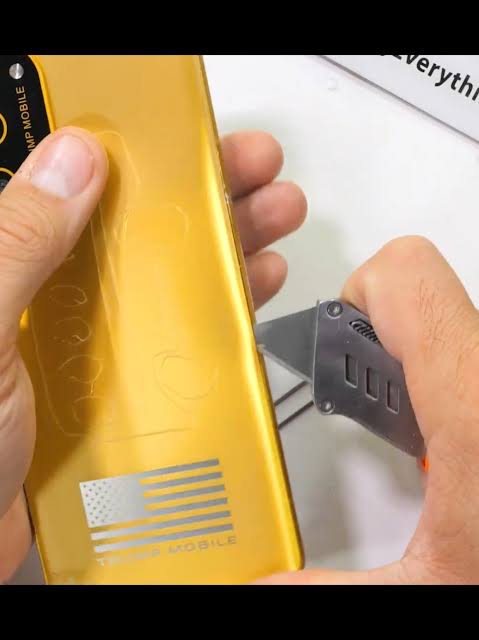
The more important part is the comparison. Nelson found that the T1 mainboard can be installed in the HTC U24 Pro and the phone can boot normally; the same is reported in reverse. That test gives concrete support to the idea that the two devices share a hardware platform. The visible differences are mainly external: the gold finish, an adjusted camera area, and a flag-style marking whose stripe count does not match the 13 stripes normally used for a United States flag.
The durability portion also matters for consumer electronics decision-making. In JerryRigEverything’s scratch and bend checks, the T1 remained intact and did not show obvious structural damage during bending. In other words, the device’s build did not fail the basic tests, even though its originality is under scrutiny.
How the T1 and HTC U24 Pro compare
| Consumer decision point | Trump Mobile T1 | HTC U24 Pro | Why it matters |
|---|---|---|---|
| Timing | announced June 2025, sold June 2026 | from 2024 | Price moved from $499 to $749. |
| Mainboard | reported to boot when installed in the other phone | reported to boot when its board is installed in the T1 | Strong evidence of shared hardware platform. |
| Battery | 5000mAh | 4600mAh | Larger battery is a tangible difference. |
| Charging | up to 30W | up to 60W | Charging speed may matter to daily use. |
| Exterior | gold body, adjusted camera area, flag-style mark | 2024 HTC design context | Differences are mainly visible, not internal. |
| Durability | survived scratch and bend test | not described as the failure point in the report | Build reliability alone does not prove originality. |
Why the overlap matters for purchase timing
The earlier iFixit analysis is consistent with the same conclusion: CT scanning and component comparison showed similar mainboard layout, component positions and screw placement. It also identified practical differences in battery and charging: T1 5000mAh with up to 30W, HTC U24 Pro 4600mAh with up to 60W. Some memory components come from different suppliers, but the overall hardware relationship remains close.
The production story needs careful wording. Trump Mobile previously emphasized United States-related identity, and the similarity has made observers ask about actual design and manufacturing origin. However, hardware similarity alone does not prove where a phone was produced or assembled. Claims about United States assembly cannot be fully confirmed by the teardown results. A possible industry explanation is an original design manufacturer (ODM) platform shared by different brands, with exterior changes, configuration choices and branding adjusted afterward. The report does not identify a definitive supplier, so buyers should treat that as a context note, not a fact.
For consumer electronics, value is not only benchmark specs. It is also differentiation, design intent, service, and whether a buyer should wait. If the core hardware is nearly the same as a two years ago model, the T1 must justify its $749 price through clear practical advantages. That is the key decision question this article answers.
Common misconceptions to avoid
- Myth: “A passed bend test means the phone is original.” The teardown says the T1 survived bend testing, which suggests structural reliability, but it does not establish new internal hardware design. Reliability and originality are separate consumer electronics questions.
- Myth: “Interchangeable mainboards prove the manufacturing location.” The report says no. Board swapping supports shared hardware design, not proof of final assembly.
- Myth: “A gold shell is a new product.” The changed camera region and other exterior tweaks are differences, but they do not change the basic internal hardware conclusion reported by Nelson and iFixit.
- Myth: “The 120Hz screen and Snapdragon 7 Gen 3 list make it flagship-like.” The master article notes that the paper specifications are not the controversial part; the issue is product positioning and pricing when the internals are close to a prior model.
FAQ: quick answers for buyers
- Is the Trump Mobile T1 just an HTC U24 Pro? The safest answer from the reported evidence is: the T1 is closely related to the HTC U24 Pro. The teardown shows similar structure and interchangeable boards, but the report does not call it a legal or corporate copy.
- Which one has better battery charging? The T1 has a larger 5000mAh battery but supports up to 30W; the HTC U24 Pro has a 4600mAh battery but supports up to 60W.
- Does the $749 price match the specs? The article cannot answer with benchmark-only certainty. It raises the question: if the core hardware is close to a 2024 platform, buyers should ask what extra practical value justifies the price.
- Can I rely on the “United States” branding shown on the device? The flag marking includes a stripe count that does not match the 13 stripes normal for a United States flag, and the manufacturing origin claim is not fully supported by hardware similarity alone.
- Should I wait for a better buy? The report does not provide sales-channel discounts, but it says the price rose from $499 to $749 and the positioning is questioned, so waiting may be sensible for price-sensitive readers.
Action advice for buyers
- Before spending $749, compare the T1 against phones with newer hardware platforms, not only against its own listed specs.
- If you are a Trump Mobile supporter and want the product, treat the purchase as a brand-preference decision rather than a hardware-innovation decision, because the teardown evidence emphasizes overlap with the HTC U24 Pro.
- If you care about charging speed, note the practical difference: T1 5000mAh/up to 30W vs U24 Pro 4600mAh/up to 60W.
- If you care about durability, the scratch and bend results are positive so far, but do not let that answer replace checking service terms, return policy and firmware support.
- If you are looking for a true flagship, do not assume “premium price” equals “new platform”; this report shows that pricing and internal differentiation can diverge.
For MyTechDailyNews Consumer Electronics readers, the T1 story is less about shock and more about a simple buying rule: a phone should be judged by whether its internals and experience feel new enough for the price. The JerryRigEverything and iFixit evidence says “closely related” more clearly than “new.” Until a stronger practical advantage is demonstrated, the most sensible consumer response is to compare carefully, wait for price clarity, and avoid paying a 2026 premium for what looks, at the hardware level, like a two years ago design.