
iPad mini Buyer's Check: OLED, A20 Pro and 18.9Wh Specs for ConsumerElectronics at MyTechDailyNews
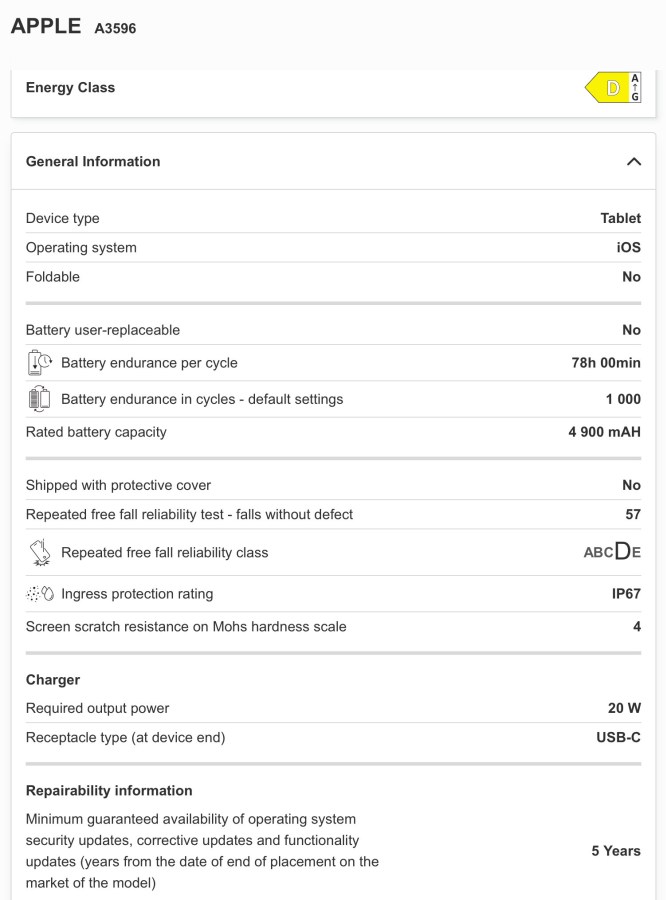
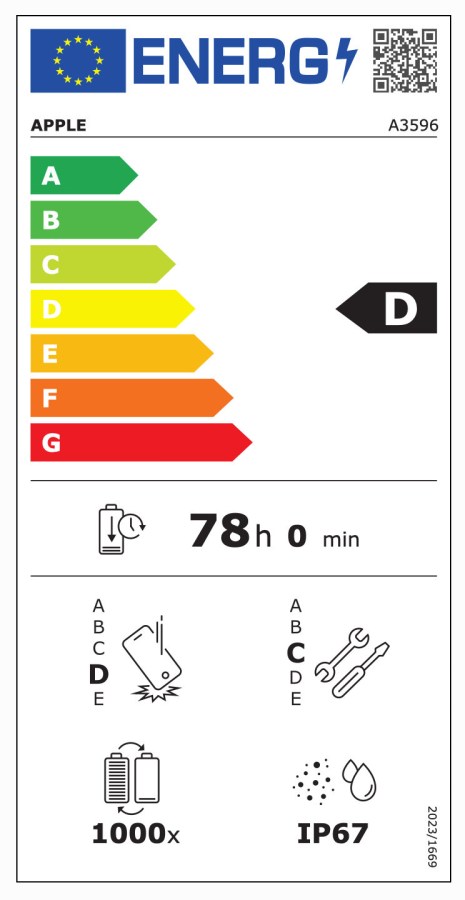
The updated iPad mini reads like a portable media, reading and note-taking tablet for shoppers who care about everyday handling, screen quality and price, not only raw battery labels. The most consumer-facing changes center on an OLED display, an A20 Pro processor, a smaller and lighter body, and a battery rating listed as 18.9Wh, which converts to about 5078mAh.
How the new iPad mini changes the buying decision
For a normal buyer, the practical question is not whether Apple lists capacity in Wh or mAh. It is whether the tablet feels easier to hold, whether the screen improves everyday video and reading, whether the charger can restore enough power quickly, and whether the storage choice avoids a regret. The information released so far suggests the upgrade is aimed at refinement rather than a radical capacity jump.
Battery: the number Apple gives and the number people talk about
The new tablet's battery is rated at 18.9Wh. When that rating is converted by nominal voltage, it is approximately 5078mAh. Apple still does not present the main official battery specification as a mAh figure, so the mAh value is best treated as an estimate used for comparison, not the company's usual public label.
The description also says the battery capacity is close to the previous generation. That matters because some readers may see the 5078mAh conversion and assume endurance has changed sharply. The more reasonable consumer takeaway is that capacity is not the headline change; the display, chip, body and sound approach are.
Core upgrades buyers can see or feel
- OLED display: first adoption in this iPad mini line, which is the kind of change people may notice in dark content, contrast and general viewing.
- A20 Pro processor: performance improvement is positioned as part of the main hardware refresh.
- Apple Pencil support: still part of the product story, so note-taking and sketching users should not assume the accessory direction is abandoned.
- Acoustic Display: a speaker-focused change integrated into the display structure.
- USB-C charging with higher-power support: the official charging example says a 35W or higher adapter can reach about 50% in 30 minutes.
Portability comparison table
The body-size table gives the clearest direct comparison available from the release details.
| Item | New iPad mini | Previous iPad mini |
|---|---|---|
| Thickness | 5.4 mm | 6.3 mm |
| Weight | 255 g | 297 g |
| Battery capacity | 18.9Wh, about 5078mAh | Close to the new model's capacity |
| Display change | OLED | Not described as the OLED step used here |
| Chip | A20 Pro | Not described as A20 Pro |
| Apple Pencil | Supported | Support continued from the earlier direction |
The 5.4 mm and 255 g figures are useful for one-hand holding, commuting, travel packs and bedside reading. The previous 6.3 mm and 297 g model is already described as the older baseline, so the new size path is more compact.
Sound and display structure
The Acoustic Display item is one of the less conventional changes. Apple describes it as putting the speaker system further into the screen construction. The stated benefit is stronger bass and higher volume output. For shoppers who watch shows, listen to podcasts or use the tablet in a hotel room, kitchen or commute, sound quality can be an easier daily win than a small battery number.
Connectivity and network
The updated model moves to Wi-Fi 7, and the cellular version supports 5G connectivity. The description also says Apple uses its own in-house connectivity solution for the cellular path. This is not something most buyers need to benchmark deeply, but it matters if choosing cellular over Wi-Fi only or comparing long-term network features.
Charging and battery-life positioning
The charging port is USB-C, and the device supports higher-power chargers. Apple's official example is 35W or higher, with about 50% charge restored in 30 minutes. This gives a practical rule for accessories: if your existing charger is below 35W, you may not reach the advertised fast-charge target, even though the tablet can still charge.
The overall endurance positioning is described as staying close to Apple's earlier official expectations. That is the key reason buyers should avoid treating the 18.9Wh and 5078mAh figures as proof of a major battery-life breakthrough.
Price and storage: how to choose without overbuying
The starting price is $699. The storage list includes 128GB, 256GB and 512GB. This is where many consumer mistakes happen, because the right capacity depends on how much content stays offline and how long the buyer plans to keep the device.
| Storage | Best fit | Decision note |
|---|---|---|
| 128GB | Streaming, web, notes, light reading, occasional documents | Lowest cost, but users with large local media or many projects may feel tight. |
| 256GB | General family use, offline videos, larger document sets, photos and notes | Often the practical middle choice for shoppers who want fewer storage tradeoffs. |
| 512GB | Heavy offline libraries, creative capture, long travel use, large apps | Best if local storage is the main reason, but only buy it if the budget still fits. |
Common misconceptions
- 5078mAh is not the official headline metric. The official battery value is 18.9Wh, and the mAh figure is a conversion.
- A thinner body does not mean the battery has jumped. The capacity is described as close to the previous generation.
- OLED plus A20 Pro are meaningful upgrades, but they do not turn every task into a major win. Buyers should match them to how they use the tablet.
- The 35W, 30 minute, about 50% note is a fast-charge example, not a promise of full recovery in half an hour.
- A $699 start does not answer the total cost question by itself. Storage and cellular choice still matter.
FAQ for ConsumerElectronics readers
Is the new iPad mini mainly about battery?
No. The published battery details are 18.9Wh and about 5078mAh, but the upgrade story leans on OLED, A20 Pro, Acoustic Display, lighter size and charging behavior.
Is 18.9Wh better than 5078mAh?
They describe different units of the same battery data point. 18.9Wh is the official-style energy rating, while 5078mAh is an estimated charge-capacity conversion.
Should I wait for a cheaper version or buy now based on specs?
There is no price-drop information in the current spec release. Buyers should decide based on whether the OLED display, A20 Pro, 5.4 mm and 255 g size, $699 starting price and storage options fit their needs.
Which charger is worth considering?
A 35W or higher USB-C adapter is the key reference because Apple's charging example says about 50% in 30 minutes with that power level.
Action advice before ordering
- Choose storage by actual local content habits: 128GB for light use, 256GB for general use, 512GB for heavy offline files.
- If you care about screen quality and sound, treat OLED and Acoustic Display as the likely daily visible benefits.
- If you already own Apple Pencil accessories, check compatibility with your specific Pencil support plans before buying, but the product line continues Apple Pencil support.
- If you need fast topping-up, look at 35W or higher USB-C charging.
- If portability is the priority, the 5.4 mm thickness and 255 g weight are the clearest reason to favor the new model over the earlier size profile.
Conclusion
For ConsumerElectronics readers at MyTechDailyNews, the updated iPad mini is best understood as a compact upgrade rather than a battery revolution. The most useful decision points are OLED, A20 Pro, Apple Pencil continuity, Acoustic Display, 18.9Wh and about 5078mAh, 5.4 mm and 255 g size, USB-C charging with 35W for about 50% in 30 minutes, and the $699 entry price with 128GB, 256GB and 512GB storage choices. If the buyer wants a lighter screen-and-sound tablet for media, reading and everyday notes, this spec list makes sense; if the buyer expects a huge jump in battery life, the published data does not support that.