
MyTechDailyNews ConsumerElectronics: Memory Price Jumps Are Keeping Used Phones Expensive
Memory price increases are no longer only a supply-chain story. In this year's smartphone market, they are changing what buyers see on the store shelf and in the used-phone aisle. For MyTechDailyNews readers tracking deals, the practical signal is clear: well-kept handsets are holding value better than usual, and some popular models have moved back up in price.

What buyers are seeing at Huaqiangbei
CCTV Finance reported that, recently, trading in Huaqiangbei, a phone-market hub in Shenzhen, Guangdong, became unusually active. Sellers said 99-new units and only-opened boxes were being snapped up quickly, while merchants actively sought inventory.
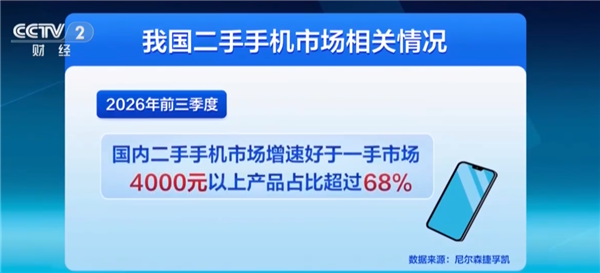
Market data for the first three quarters showed that devices with an average price above 4000 yuan accounted for more than 68% of China's second-hand smartphone market. That mix matters: high-end models dominate the resale conversation, so price swings in that segment are more visible to everyday buyers.
Why a year-old flagship may not feel cheap
Under normal conditions, a used smartphone becomes cheaper as it ages. A drop of around 20% within one year is not unusual for many popular models. This year, the pattern has weakened. Memory cost pressure has kept resale prices firmer, and selected devices have shown price rebounds instead of continuous decline.
Apple's iPhone 15 Pro Max is one example cited by Huaqiangbei sellers. After touching the low end of the range where a unit was available at just over 3000 yuan last year, merchants now quote 4300 yuan to 4400 yuan, an increase of about 500 yuan.

New versus nearly new: a simple value check
For consumers, the appeal is still the gap between a new device and a gently used one. The reported advantage of 99-new or only-opened units is not enormous, but it can be practical: they are generally 500 yuan to 1000 yuan below the new-device price. Currently, demand for these units is strong, so the window for finding a clean example may move faster than usual.
| Buying choice | Why it may work now | What to watch |
|---|---|---|
| New smartphone | Full warranty, latest software, predictable packaging | Price may be higher if memory costs are passed into retail |
| 99-new used phone | Typical discount of 500 yuan to 1000 yuan; stronger demand can mean better resale later | Check battery health, network locks, warranty transfer, return window |
| Only-opened unit | Looks closest to new, often attractive when stock is tight | Ask for proof of purchase and seller policy before paying |
Why memory is pushing both new and used prices up
TrendForce, a market research firm, said in a February report this year that memory's share of a smartphone's bill of materials has risen from its earlier 10% to 15% range to 30% to 40%. That changes cost structure: if a component that was once a modest slice now consumes a larger share, brands have less room to absorb price pressure.
The firm also said continued increases in storage cost are squeezing manufacturers' margins. The consumer-facing result can be higher phone prices or adjusted configurations and product lineups.
FAQ
Does this mean every used phone is getting more expensive?
No. The report centers on popular, higher-end models and the condition categories sellers and buyers notice most: 99-new and only-opened devices.Is 4000 yuan the cutoff for used phones?
It is the average price level highlighted in the market data for the first three quarters, not a rule for every transaction.Why does memory affect phone resale?
When memory makes up 30% to 40% of the production cost, the economics of both new devices and supply of usable used units can shift.
Common misconceptions
- Used prices should always fall steadily. The market can move upward when supply is tight and component costs rise, as seen with the iPhone 15 Pro Max example.
- All nearly new phones are the same bargain. The value depends on condition, origin, local warranty support, and whether the model is actually in demand.
- Hardware specs alone decide the deal. Price, seller policy, and future resale potential matter for ordinary buyers more than technical details that do not change the purchase decision.
Action advice for shoppers
If your target is a flagship, start by comparing the current used price against the new price. When the gap is only around 500 yuan, be sure the used seller offers a clear return path and proof of purchase. When the gap reaches 1000 yuan and the phone is 99-new, it may be more defensible for a value-focused purchase. If you can wait, watch configuration changes from manufacturers caused by memory cost pressure; that can affect which model offers the best practical value. In this market, the smartest move is not to chase the oldest depreciation story, but to check whether the model you want is already showing signs of firmer resale prices.