
M6 MacBook Pro Buying Guide: 12-Core CPU, Dual 16-Core Neural Engine and a US $1,999 Start
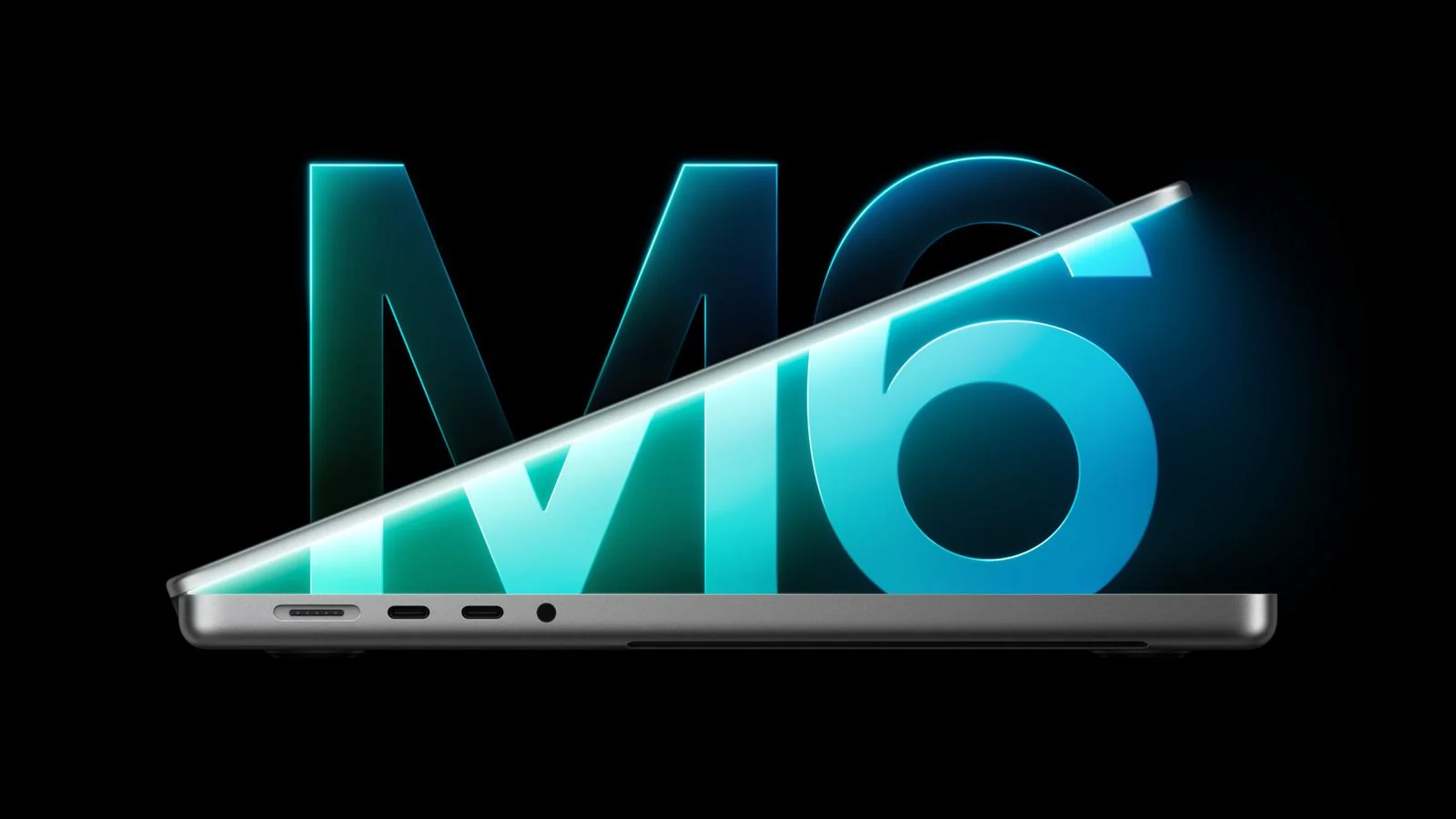
Every MacBook Pro launch reopens the same question for shoppers: does this update change how the machine behaves in everyday use, or only how it reads on a spec sheet? The new 14-inch MacBook Pro built around M6 sits in the middle. Apple has redrawn the core layout, doubled the neural engine and moved the radios to Wi-Fi 7 and Bluetooth 6, while leaving the body, the starting storage and the professional price band where they were. Preorders open October 28, retail availability follows on November 6, and the US starting price is $1,999. Here is the decision-focused walk-through: what actually changed, what did not, and who should spend now.
The structural headline: a different CPU recipe
The center of gravity this generation is the M6 chip, and its CPU configuration has been re-divided. M6 uses a 12-core CPU architecture made up of 2 super cores, 4 performance cores and 6 efficiency cores. The M5 it follows runs a 10-core CPU arranged as 4 super cores plus 6 efficiency cores. Beyond the higher core count, the distribution of core types itself has been adjusted, aiming for a more balanced result between heavy-load performance and day-to-day energy use.
| Comparison item | M6 | M5 |
|---|---|---|
| CPU | 12-core CPU architecture: 2 super cores, 4 performance cores, 6 efficiency cores | 10-core CPU: 4 super cores, 6 efficiency cores |
| GPU | 12-core GPU | 10-core GPU |
| Neural engine | Dual 16-core neural engine system, 32 cores in total | 16-core neural engine |
| Memory bandwidth (24GB or 32GB memory) | 170GB/s | 153GB/s |
How much faster, in real use
On the graphics side, M6 pairs its CPU with a 12-core GPU, where M5 offers a 10-core GPU. Apple's own comparison figures state that, versus M5, M6 lifts graphics performance by up to 30% and speeds up the processing of artificial intelligence workloads by up to 25%. Those gains are expected to surface in graphics rendering, video processing, gaming and some local artificial intelligence tasks — the places where a buyer notices export bars and frame rates rather than core counts.
On-device AI gets the heaviest investment
AI compute is the second focus. M6 adopts a dual 16-core neural engine system with a combined total of 32 cores, replacing the single 16-core neural engine used in M5. Apple has also added extra neural accelerators inside the GPU to raise the efficiency of running artificial intelligence models on the device.

Apple's position is that M6 will further improve the MacBook Pro's ability to run Apple Intelligence features and local large language models. Compared with handing data over to cloud servers, running models locally reduces reliance on a network connection for some tasks and can help protect user privacy. Real-world results, however, still depend on model size, unified memory capacity and how well software has been optimized for the new hardware.
Memory bandwidth: a useful bump with conditions
Memory bandwidth also shifts. For 24GB or 32GB memory configurations, M6 reaches 170GB/s against 153GB/s on M5, an increase of about 11.1%. Higher bandwidth lets the CPU, GPU and neural engine reach shared data faster, which matters most for graphics computing and artificial intelligence workloads. One caution for buyers: Apple tied this improvement only to the 24GB and 32GB memory versions, so it cannot be assumed across all configurations.
Wireless and external displays
- Wi-Fi 7 and Bluetooth 6. The new 14-inch MacBook Pro supports both, delivered through Apple's self-developed N1 wireless chip. Where the router and network environment are compatible, Wi-Fi 7 can bring higher transfer capability and lower latency, while Bluetooth 6 further updates the wireless connection standard.
- Two external screens. The new MacBook Pro can drive two 4K external displays at refresh rates up to 165Hz. The previous generation's supported 144Hz falls below that figure, which gives multi-screen office work, video editing and high-refresh monitors a little more flexibility.
What Apple deliberately left alone
Storage configuration is unchanged. The new 14-inch MacBook Pro still starts from a 1TB solid-state drive. Because Apple had already removed the 512GB entry configuration from the previous generation back in March 2026, this release is not a jump from 512GB to 1TB; it simply continues the existing storage arrangement.
Against the internal hardware changes, the cosmetic story is minimal. Apple says the other configurations of the new 14-inch MacBook Pro basically carry over the previous generation's design; this update does not introduce a fully redesigned body and does not add the long-rumored OLED touchscreen.
On price and cadence, the US starting price is $1,999, with preorders beginning October 28 and official launch on November 6. Some consumers were hoping for a cut on an entry-level MacBook Pro, but the new model remains positioned squarely in the professional laptop market.
Where the lineup goes next
This is not the end of the MacBook Pro refresh. The market has consistently expected a high-end MacBook Pro with an OLED display, touch operation and a redesigned body. Those models, however, are expected to arrive on M5 Pro and M5 Max chips rather than jumping straight to M6 Pro and M6 Max versions.
Earlier coverage also indicates Apple may skip M6 Pro and M6 Max entirely and introduce the M7 series of high-performance chips in 2027. If that plan holds, the standard M6 MacBook Pro could have a relatively short product cycle, with the truly large design changes saved for the next generation of high-end models.
Common misconceptions
- "Storage just doubled." The 512GB entry tier was already discontinued in March 2026, so a 1TB solid-state drive start is continuity, not a new bonus.
- "Everything is 30% faster." The up to 30% figure is Apple's graphics comparison against M5, and the 25% applies to artificial intelligence workloads; neither is a whole-system multiplier.
- "The bandwidth gain covers my machine." The 170GB/s figure and its increase of about 11.1% are quoted only for the 24GB and 32GB memory versions.
- "Local AI means no internet is needed." Offline behaviour still depends on model size, unified memory capacity and software optimization for the new hardware.
- "This is the redesign we were promised." There is no OLED touchscreen and no redesigned body in this update.
- "The whole line is on M6 now." The expected OLED and touch high-end models are slated for M5 Pro and M5 Max, not M6 Pro or M6 Max.
Action recommendations
- Coming from an Intel machine or an early Apple Silicon Mac: this is the strongest upgrade case, since more CPU and GPU cores, stronger neural processing and the new wireless standards together can feel like a real generational step.
- Already using an M5 MacBook Pro: treat it as a measured call. Weigh the up to 30% graphics headroom and the artificial intelligence improvements against the upgrade cost and against the apps you actually run.
- Buying for graphics or on-device AI work: the memory-bandwidth increase is documented for 24GB or 32GB configurations, which is where the change is most relevant.
- Waiting for the redesigned hardware: if you specifically want an OLED display, touch control or a new body, this release is not it; those changes are attached to the next high-end models.
- Hoping for a cheaper entry: that did not happen here, since the new model still sits in professional territory at $1,999 in the United States.
- Planning the purchase window: preorders start October 28 and launch lands November 6. Confirm your router supports Wi-Fi 7 before expecting faster wireless, and check your monitor specs if you want the two 4K external displays at up to 165Hz.
FAQ
What exactly changed in the CPU?
M6 uses a 12-core CPU architecture: 2 super cores, 4 performance cores and 6 efficiency cores. M5 uses a 10-core CPU made of 4 super cores and 6 efficiency cores.
How large are the performance jumps?
Apple compares M6 with M5 at up to 30% higher graphics performance and up to 25% faster processing of artificial intelligence workloads, alongside a 12-core GPU versus a 10-core GPU.
Is the neural engine really doubled?
In core terms, yes: M6 deploys a dual 16-core neural engine system totaling 32 cores, replacing M5's 16-core neural engine, and additional neural accelerators sit inside the GPU.
Does the bandwidth improvement apply to every model?
No. Apple quotes 170GB/s for 24GB or 32GB memory against 153GB/s on M5 — an increase of about 11.1% — and that covers only the 24GB and 32GB memory versions.
What wireless standards and display support does it offer?
The new 14-inch MacBook Pro supports Wi-Fi 7 and Bluetooth 6 via Apple's N1 wireless chip, and can drive two 4K external displays at refresh rates up to 165Hz, versus the 144Hz supported by the previous generation.
Price, dates and starting storage?
US pricing starts at $1,999, preorders open October 28 and launch is on November 6, with the machine still starting from a 1TB solid-state drive.
Should I wait for the next big change?
If the deciding factor for you is a redesigned body or an OLED display, the reports point to future high-end models on M5 Pro and M5 Max, and possibly a move straight to the M7 series in 2027 instead of M6 Pro or M6 Max.
Written by Sarah Chen for the MyTechDailyNews Consumer Electronics desk. Reach the editorial team at hello@techdaily.com.