
MyTechDailyNews Consumer Electronics Guide: iPhone Duo Tear-Down, Repair Costs, Price Breaks and Buying Timing
If you are deciding whether the iPhone Duo should become your next everyday phone, the useful questions are not speculative. They are concrete: where the display may fail, what an out-of-warranty repair would cost, and whether the early price movement has changed the buying math. This consumer-electronics guide turns a recent teardown into a practical checklist.
Where the screen faults are clustered
Many reported cases look alike. A vertical black line or crack can appear near the middle of the inner screen, close to the hinge, while the right half of the panel shows horizontal bright lines.
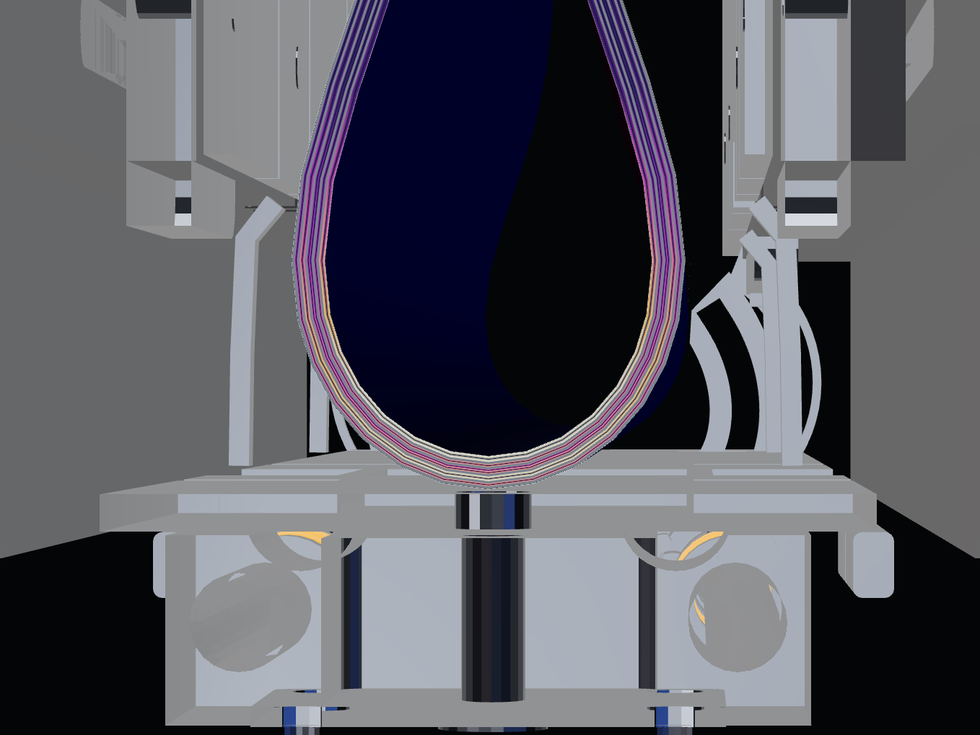
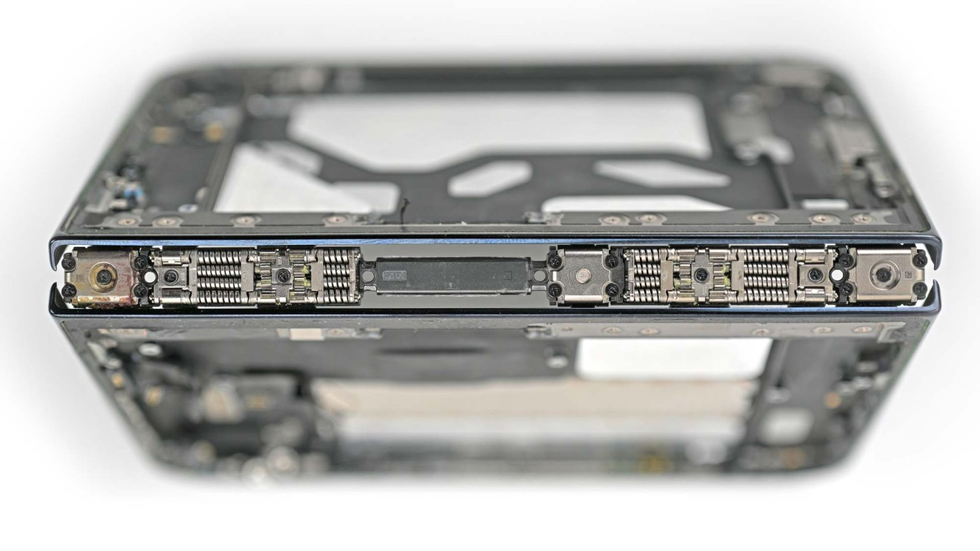
The iPhone Duo uses a waterdrop-style folding layout. Gears, springs and several linked metal joints guide the screen through its bend. An arc-shaped rail inside the hinge helps those joints follow a planned path, which is intended to reduce the stretch and compression placed on the display during folding.
iFixit overlay and the lower-central hinge area
iFixit compared photographs of faulty screens supplied by consumers with a 3D model of the hinge. The visible anomalies clustered in the lower-central hinge region, near the channel for the flexible display cable and the junction with the central support structure.
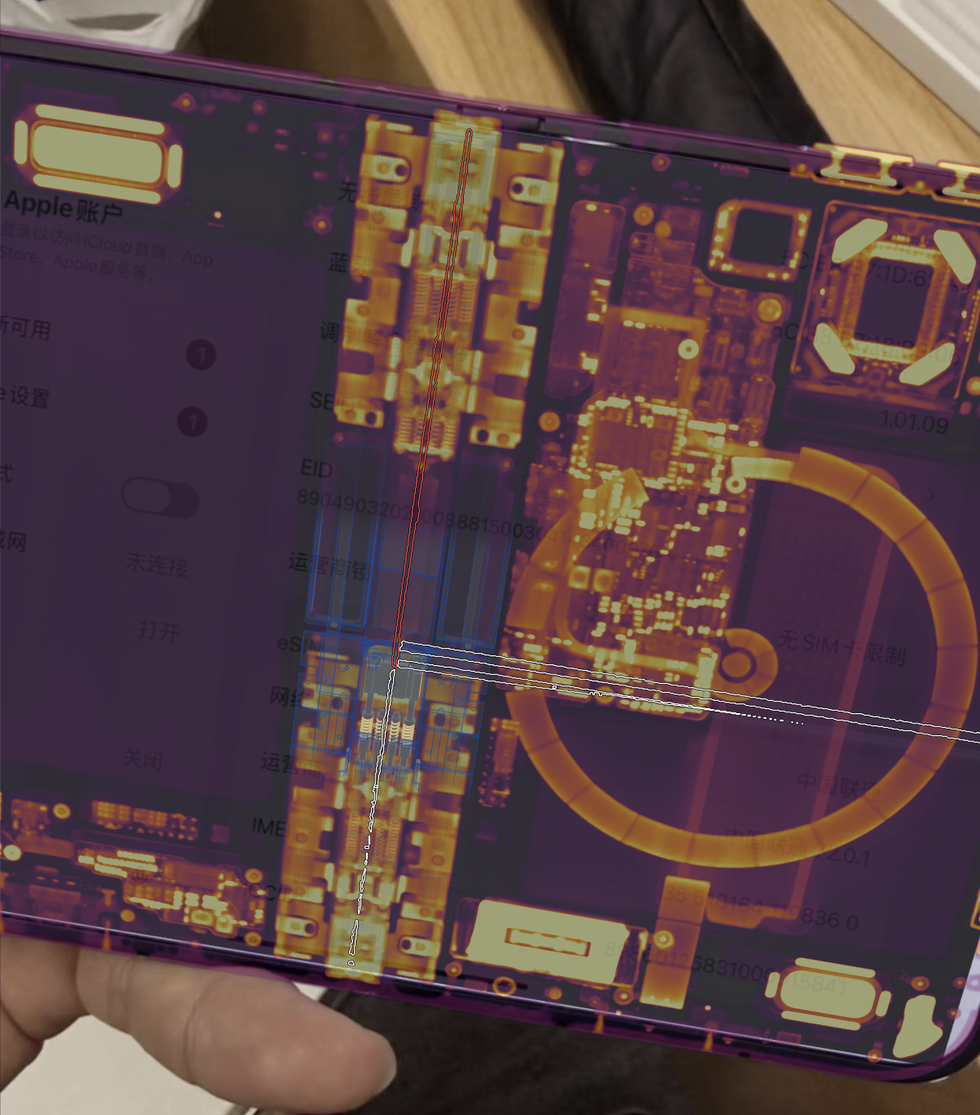
Because that area contains multiple structural edges, the amount of support available to the screen changes as the phone folds. iFixit therefore treats the cause as potentially plural, not as a single confirmed defect. One suspicion is that the central pivot, or another moving part near it, catches during opening or closing.
A local-stress explanation
The teardown group also raised another possibility: when the phone is closed, the central support post may not sink as far as the design intends. If so, the curved panel can experience local pressure, creating stress concentration near the problem area and pressing on the display cables.
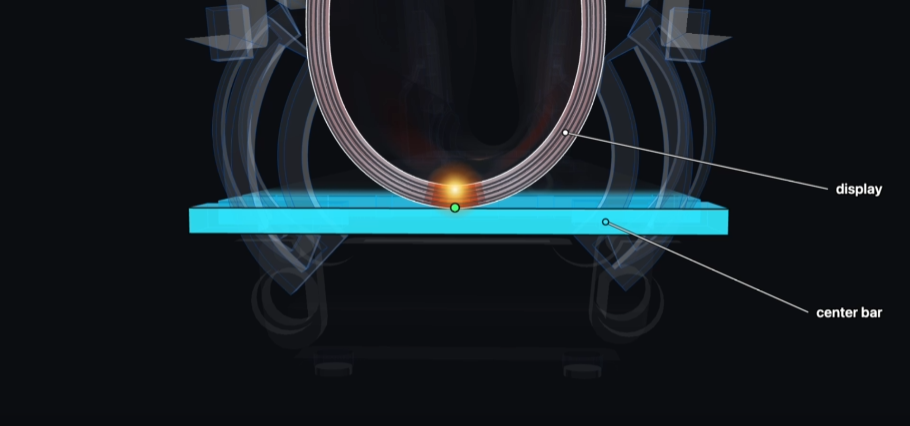
It is important to separate diagnosis from visibility. iFixit has not established the exact cause of the display failures. It noted that the true damaged zone may be smaller than the affected visual area, because a tiny electrical-connection problem can disturb an entire pixel row or column.
Repairability score and what makes it difficult
iFixit assigned the device a provisional 5 repairability score, using a full mark of 10, and described the result as the highest it has given to any foldable smartphone so far.
How the structure affects repair
| Teardown finding | Consumer meaning |
|---|---|
| The outer screen can be removed as a complete unit | One common repair path is less obstructed than expected for a foldable phone. |
| The inner-screen surround uses clip-style frames | The frame is less likely to be broken when opening the device. |
| The nano-texture protective layer above the inner screen can be replaced separately | Surface protection issues may not require replacing the OLED panel beneath them. |
| Replacing the whole inner screen requires multiple adhesive layers and precise reinstallation | Major display work remains complex, even if the frame clips help. |
| Repairing the hinge requires removing the flexible screen and its support structure | Hinge service is the main reason the repairability score is not higher. |
Repair costs in China and AppleCare+ effect
Apple's China website lists an estimated out-of-warranty inner-screen repair of 7998 yuan. That is close to half of the 15999 yuan starting price, which makes the foldable's main repair exposure unusually visible. An outer-screen repair is listed at 3198 yuan. If AppleCare+ is purchased, the two service fees drop to 628 yuan and 188 yuan.
| Repair item | Estimated out-of-warranty price | Price with AppleCare+ | Buyer takeaway |
|---|---|---|---|
| Inner screen | 7998 yuan | 628 yuan | The largest cost exposure and the main reason coverage matters. |
| Outer screen | 3198 yuan | 188 yuan | Lower than the inner screen, but still material for a phone in this price range. |
Early launch pricing: three days and break below launch price
During the early launch period, the iPhone Duo appeared to break below launch price in some secondary channels within three days.
| Channel or market | Model and observation | Price or condition | Difference |
|---|---|---|---|
| Pinduoduo | 256GB version | 15799 yuan after subsidy | 200 yuan lower than the official 15999 yuan price |
| Pinduoduo | 512GB version | 17799 yuan after subsidy | 200 yuan lower than official pricing |
| Dewu | 256GB version after premium narrowed | 16238 yuan | 239 yuan higher than official pricing |
| Trade-in quote seen by Blue Whale News | 512GB version | 17950 yuan | 49 yuan below official price |
| Other trade-in models | Resale premium | Around 200 yuan | Small premium compared with earlier expectations |
The key point for buyers is that a falling resale number and a still-tight supply signal can coexist. That combination usually creates uncertainty, not a simple conclusion that the product is either failing or overpriced.
Supply-chain reports and official-channel waits
At the same time channel prices softened, some orders on Apple's official site still indicated waiting until January 2027. On October 26, Taiwan's Economic Daily cited supply-chain information saying the first batch had been insufficient and that Apple had asked suppliers to accelerate production. The report mentioned a possible 30% order increase.
According to that report, this year's stocking plan may rise from about 6000000 units to 8000000 to 10000000 units. It added that 2027 shipments could reach 33000000 units. The same article said the immediate bottlenecks are hinge-related component supply and the difficulty of final assembly, so any capacity improvement depends on easing those constraints.
How the seller-side response affects buying timing
On the same day, Apple customer support responded to questions about third-party prices by suggesting that platform subsidies or shop discounts may explain some differences. It also said official prices are relatively stable, and that some third-party channels may have enough inventory while fewer consumers are purchasing, which can lower quotes.
For long official-site delivery windows, support described two possible ways to shorten waiting time: production capacity increases, or earlier customers canceling their orders. It said quite a few customers have already canceled.
Consumer decision matrix
| Your situation | More practical approach | Reason |
|---|---|---|
| You cannot wait | Compare Pinduoduo, Dewu and official delivery windows before paying. | Recent prices vary from 15799 yuan to 16238 yuan for the 256GB example. |
| You want lower repair anxiety | Treat AppleCare+ as part of the real purchase price. | Inner and outer screen fees with coverage are 628 yuan and 188 yuan. |
| You worry about the hinge fault reports | Consider waiting until more independent service reports are available. | iFixit has not confirmed a single cause for the display problems. |
| You are tracking price stability | Monitor both secondary-market quotes and official delivery dates. | Break below launch price and January 2027 waiting can happen in the same market. |
Common misconceptions to avoid
- A concentrated fault location does not automatically mean every iPhone Duo will fail.
- A repairability score of 5 is not simply “bad”; it is relative to other foldables and should be read with the cost table.
- Lower AppleCare+ fees reduce monetary risk, but they do not erase the labor complexity of replacing an inner screen or hinge.
- Resale and trade-in price movement alone does not reveal demand or production health; official waiting dates and supply reports tell a different part of the story.
- Subsidized third-party prices are not necessarily defective pricing; they can reflect channel discounts, platform subsidies or weak buyer interest at that moment.
FAQ: what a consumer should ask before buying
What did iFixit actually find?
iFixit found reported screen problems around the lower-central hinge area and suspected possible central-pivot binding or local stress when the central support post does not settle correctly. It did not name one confirmed cause.
Why does the 5 score matter?
With a perfect score of 10, a provisional 5 indicates a foldable that is more serviceable than many previous models, while still leaving hinge and full inner-screen work as major challenges.
Is the repair cost high relative to the phone?
Yes. The 7998 yuan inner-screen figure is close to half the 15999 yuan starting price. The 3198 yuan outer-screen figure is lower, but still substantial.
Did the price really fall that quickly?
The reports describe a break below launch price within three days of the early launch period, with Pinduoduo subsidy prices of 15799 yuan and 17799 yuan and a Dewu price of 16238 yuan.
Should I buy now or wait?
If your need is urgent, compare the listed channel prices and decide whether coverage changes the economics. If your need is flexible, waiting gives you more information about fault frequency, production relief and whether January 2027 wait estimates improve.
What should I inspect first if the phone arrives?
Check the inner screen near the central lower hinge for vertical lines or cracks, then open and close the hinge repeatedly while watching the right half of the display for horizontal bright lines. Document any issue early.
Action checklist for buyers
- Set a ceiling price before ordering. Use the official 15999 yuan reference, then compare with 15799 yuan, 17799 yuan, 16238 yuan and trade-in data such as 17950 yuan.
- Decide whether AppleCare+ should be included. For the two main screen repairs, it turns 7998 yuan and 3198 yuan into 628 yuan and 188 yuan.
- Check the promised delivery date. If an official order points to January 2027, compare it with immediate third-party availability and any seller conditions.
- Record unboxing state. Photograph the inner screen edges, central hinge zone and right-side display before folding heavily.
- If a line or crack appears, pause repeated opening and closing, then use repair estimates and coverage options as your budget guide.
- Recheck supply news before paying a premium. Reports about 30% order increases, 8000000 to 10000000 units and 33000000 units can change scarcity perceptions quickly.
Bottom line for consumer readers
The iPhone Duo now sits in a rare buying state: a teardown has made the failure pattern visible enough to guide decisions, a repairability score has made the service challenge concrete, and the first secondary prices have made the value question immediate. For consumers, the practical answer is to treat coverage, delivery windows and fault-location reports as part of the price, not as afterthoughts.