
Small Tablet, Big Trade-Off: The 2026 Apple iPad mini, OLED Size and A20 Pro Power Against 60Hz
For readers comparing compact tablets on MyTechDailyNews, the newest iPad mini is less a simple spec update and more a decision test: Apple launched it this week with an 8.5-inch OLED display and A20 Pro silicon, yet the screen still runs at 60Hz, and that gap has already become the main talking point.
Why the Refresh Rate Overshadowed the OLED Upgrade
The launch is officially about a smaller, lighter iPad mini that still fits a big-screen feel, because the 8.5-inch OLED panel moves the display material forward. The friction appears when buyers compare that display choice with the rest of the current market. Android devices have widely pushed higher refresh rates, and many shoppers now judge fluidity at a glance rather than only judging sharpness.
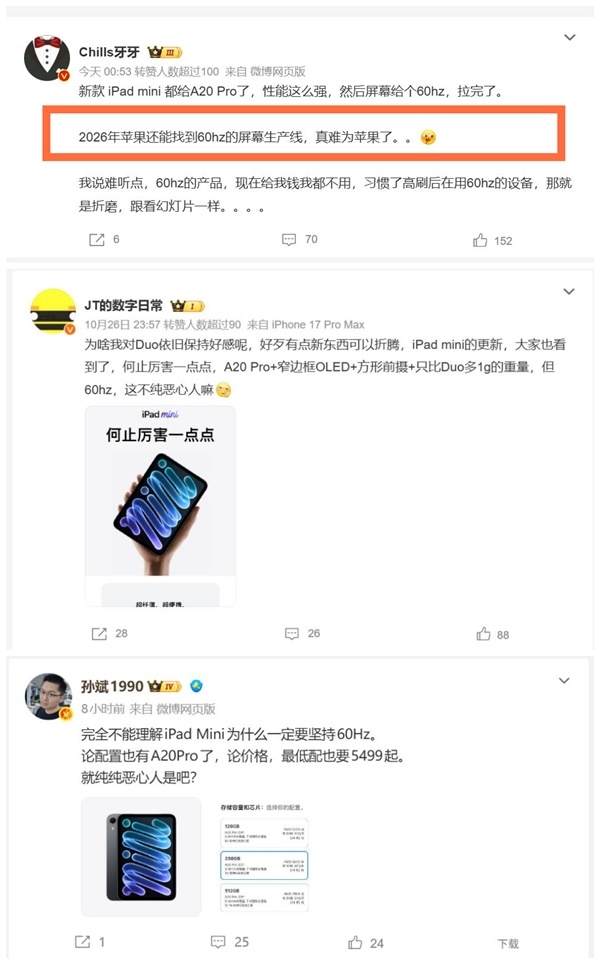
The new iPad mini carries an A20 Pro chip, a very strong performance signal, but the panel remains 60Hz. Some commentators joked that 60Hz production in 2026 is still somehow possible, while users accustomed to smoother displays said the step backward can feel like watching a slideshow. That reaction is less about raw processing power and more about the daily sensation of swiping, scrolling and animating between apps.
The mini Series' Knife Work: Portability First, Smoothness Second
The mini series is positioned as a portable flagship, and the 2026 model makes the trade-off unusually clear. The product brings OLED color and contrast potential, a large-for-its-class 8.5-inch display, and A20 Pro internals, while the refresh-rate limit keeps it separated from the smoothest premium tablet experiences. This is the kind of segmentation often described as knife work: it preserves lightweight portability, but it does not deliver ultimate smoothness.
For a reader whose priority is carrying a tablet everywhere, reading, taking notes, playing casual games, or using the device in tight spaces, the mini series positioning may still feel attractive. For a reader who has moved away from 60Hz displays, the same positioning can feel like a conspicuous compromise.
Hardware and Release Facts You Can Check Against the Listing
- Display size: 8.5 inches, with OLED material and a 60Hz refresh rate.
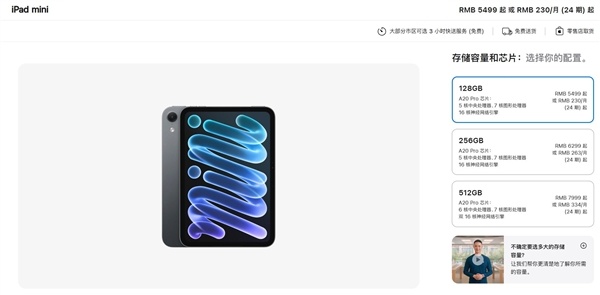
- Processor: A20 Pro.
- Storage options: 256GB and 512GB, with optional nano-texture glass available for those storage versions.
- Camera setup: rear 12-megapixel wide camera, front 12-megapixel Center Stage camera.
- Unlock method: side fingerprint recognition.
- Pre-order date: October 29.
- Release date: November 6.
- Color options: two colors, Starlight and Midnight.
Comparison Table: Is This a Portable Buy or a Smoothness Wait?
| Buyer situation | Why the 2026 iPad mini may work | Where the 60Hz decision becomes more important | Practical next step |
|---|---|---|---|
| You mainly read, jot notes, or carry a tablet in a bag. | The mini series already emphasizes lightweight portability, and the 8.5-inch OLED display gives a more substantial viewing surface while keeping a small tablet identity. | Long scrolling sessions can still feel less fluid than on high-refresh devices, even if the chip is powerful. | Compare it against your current screen habit before treating OLED as automatic premium comfort. |
| You play games on a compact device. | A20 Pro suggests the product is not positioned as a weak hardware tablet. | Game smoothness is partly a display experience, and a 60Hz refresh rate can make motion feel more limited than the silicon might imply. | Do not assume processor strength solves display refresh; decide whether you value screen motion as much as app and system speed. |
| You want front camera video features for calls or recording. | The front 12-megapixel Center Stage camera is a clear consumer-facing upgrade item in the launch list. | Refresh rate does not directly answer camera quality, so the purchase should be split into display feel versus camera usefulness. | Check whether Center Stage behavior matters enough for your daily video use before letting 60Hz dominate the whole decision. |
| You are upgrading from an older 60Hz tablet. | The OLED material, 8.5-inch size, A20 Pro, storage choices, cameras, fingerprint unlock and two colors are all visible spec advances in the new mini series device. | The step back may be smaller because you already live with 60Hz. | Focus on whether the larger compact OLED and other hardware features justify moving, rather than comparing the fluidity to a device you already use. |
Common Misconceptions to Set Aside Before Choosing
- A powerful chip does not automatically create a powerful screen sensation. The A20 Pro can support responsive performance, but the display is still 60Hz.
- OLED is a display material change, not a universal motion upgrade. The launch information keeps the refresh rate at 60Hz, so contrast and fluidity are separate conversations.
- The mini series is not trying to remove the trade-off; it is highlighting it. The knife work line separates lightweight portability from ultimate smoothness, and buyers need to pick which side matters more.
- Nano-texture glass is tied to the 256GB and 512GB options as an available choice, so storage selection is not only about capacity but also about surface treatment preference.
- Two colors does not mean two different levels of performance. Starlight and Midnight are cosmetic choices.
FAQs for Normal Buyers
Did Apple really launch an iPad mini in 2026 that still uses 60Hz?
Yes. The launch this week centers on an 8.5-inch OLED display and A20 Pro hardware, but the refresh rate remains 60Hz, which is why the device has become controversial.
Why are people comparing it with Android tablets?
Because Android devices have helped make higher refresh rates a common consumer expectation. The comparison does not erase Apple's strengths in the mini series, but it puts the 60Hz choice under a brighter shopping light.
Who benefits most from the A20 Pro mention?
Buyers looking for a compact iPad mini with strong underlying hardware may care about the A20 Pro. However, everyday smoothness still depends on the 60Hz screen, so the chip alone should not decide the purchase.
Should I wait until November 6?
Pre-orders start October 29, and the release date is November 6. If you want hands-on evidence of how the 8.5-inch OLED looks and how much the 60Hz limit bothers you, waiting until the device is in users' hands may be safer than ordering on spec alone.
Which storage should I think about?
The listed options are 256GB and 512GB. If the nano-texture glass matters to you, choose between those storage tiers first, because that option is linked to the 256GB and 512GB versions.
Action Advice: Buy It for the Right Reasons
- Write down the one feature that will make you use the device daily: the 8.5-inch OLED compact screen, the A20 Pro hardware, the 12-megapixel Center Stage camera, the two color choices, or the side fingerprint unlock.
- If you spend a lot of time scrolling on high-refresh devices, treat the 60Hz refresh rate as a real test point, not a small footnote.
- If your use is mostly portable reading, light gaming, note taking, or living inside the mini series ecosystem, the device's lightweight portability may still be the strongest reason to consider it.
- Choose storage based on how much you keep locally, and decide separately whether the optional nano-texture glass on 256GB or 512GB is worth prioritizing.
- For launch timing, compare the October 29 pre-order step with your willingness to wait for real use impressions before the November 6 release.
The 2026 iPad mini asks buyers a very consumer-facing question: can a compact OLED tablet feel modern when its motion standard remains 60Hz? If you want lightweight portability and strong hardware, it may still have appeal; if you want ultimate smoothness on every scroll, the knife work is exactly what you need to understand before deciding.