
MyTechDailyNews Consumer Electronics Guide: Twelve South AirFly View, Price, Pairing Screen, and Buying Considerations
If you are weighing whether a Bluetooth audio bridge for wired sources belongs in your travel or everyday setup, the latest AirFly View from Twelve South changes the product in one visible way: it adds a single built-in screen. That screen is designed to show icons and step prompts while you pair Bluetooth headphones or earbuds. The underlying use case remains devices that lack Bluetooth but provide a 3.5mm headphone jack, such as aircraft seat entertainment systems, as well as other wired audio output devices.
What the screen is supposed to solve
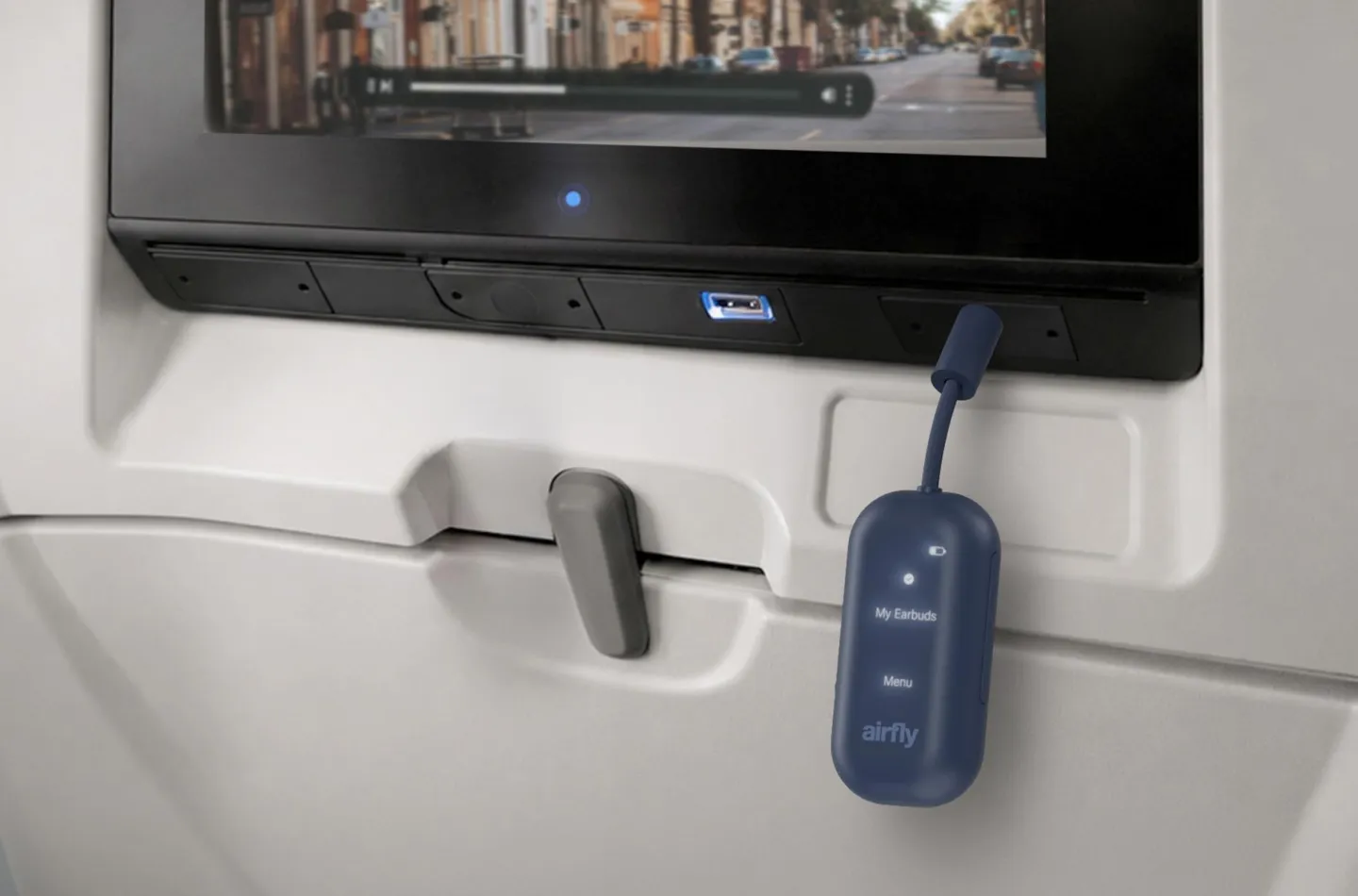
The core claim is not about adding a new audio input or changing the 3.5mm source requirement; it is about making pairing less guessy. AirFly View uses the built-in screen to guide the user through pairing with visual instructions. The screen also becomes a status surface: it can show the connected headphone or earbud name and the remaining battery level. When the device is idle, the screen dims. When it is connecting or being paired, the screen displays operating guidance. That combination matters most for people who want the adapter to behave like a simple accessory rather than a gadget that requires hunting through settings after each new pair.
Because the listed changes center on pairing instructions and on-screen status information, the audio path still begins with a 3.5mm connection from the source device. The product does not change the fact that the source must be a wired output device or a wired headphone-jack environment.
Price, included accessories, and language support
Price is a practical starting point for consumer-electronics decisions, and AirFly View is listed at 79.99 USD. It went on sale on October 27. The package includes a storage case and an adapter that lets the device’s short 3.5mm plug connect to an aircraft dual plug headphone interface. For buyers who use the in-flight scenario, that included adapter is part of the value proposition; for buyers who only need a generic wired-output bridge, the case and dual plug adapter may be less relevant, but they are still stated contents of the box.
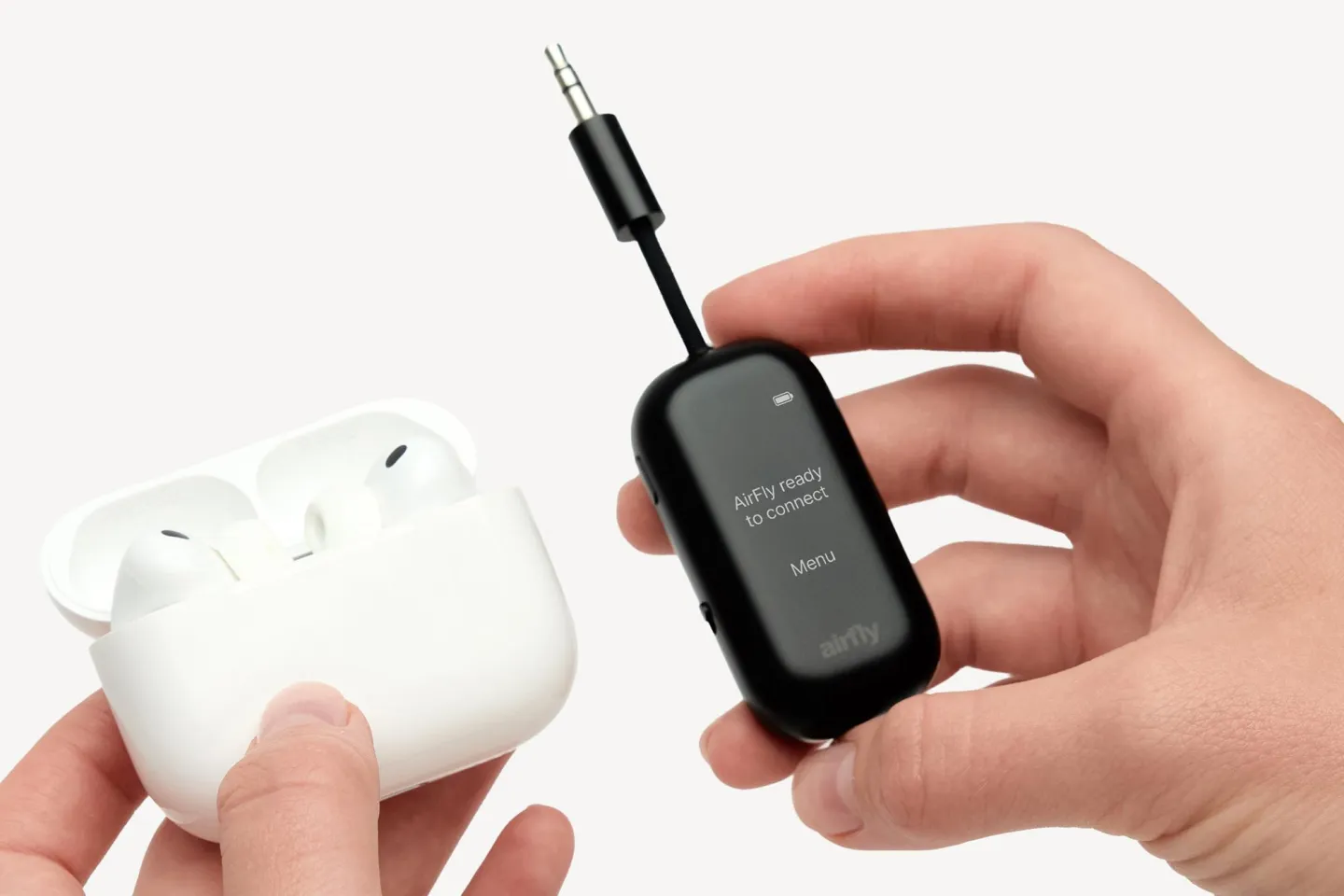
Language support is another consumer-facing detail. The screen supports 24 languages, including Japanese, Arabic, Portuguese, and Polish. That does not describe sound quality or latency; it describes how visible the pairing guidance can be for different regions and households. If more than one person in a household may use the adapter, or if the buyer plans to use it while traveling, language coverage is a small but practical consideration when deciding whether the screen is the reason to choose this model.
Decision comparison table
| Buying question | What the AirFly View listing states | How it should affect a consumer decision |
|---|---|---|
| Do I need a source with Bluetooth? | No; it targets devices without Bluetooth that have a 3.5mm headphone jack or other wired audio output. | Useful only if the source can provide audio through 3.5mm; it does not remove the wired-source requirement. |
| Will the new model make pairing easier to follow? | It adds a built-in screen that shows icons and step prompts during pairing. | The screen is the main selling point, so it matters if pairing clarity is the reason to consider it. |
| Can two people listen at once? | One adapter can send audio to two pairs of Bluetooth headphones at the same time. | That makes it relevant for shared in-flight entertainment, not only solo listening. |
| Should I buy it mainly for Auracast? | It supports Auracast, but real use depends on compatible headphones, and compatible products are still not many. | Buy for the stated pairing screen and 3.5mm bridge features, not as a guaranteed broadcast hub. |
| What comes in the box? | Storage case plus an adapter for aircraft dual plug headphone interfaces. | Check whether those accessories match your use case before treating the price as simple hardware cost. |
| What can I see while using it? | Remaining battery and connected headphone or earbud names; 24 languages on screen. | Handy for confirming connections and battery state during travel. |
Battery, shared listening, and on-screen status
AirFly View is rated for up to about 16 hours of use. The screen can display remaining battery, which gives a quick way to check whether the adapter is likely to complete a long listening block, especially when paired with aircraft entertainment. Battery numbers are consumer decision factors because a wireless bridge that dies before arrival is not useful even if pairing is simple; however, the listing only provides the nominal figure, so the practical question is whether that length fits the buyer’s usual listening window.
The listing also states that one adapter can transmit audio to two pairs of Bluetooth headphones. That matters for the most concrete use case: two people using one wired source. If the source is a seatback system, two travelers can share entertainment without needing two adapters. This is a clear differentiator, and it also sets a limit: the stated dual-headphone feature is not the same as broad multi-listener broadcast.
Auracast: a supported feature, not a blanket compatibility promise
The device also supports Auracast broadcast audio. In theory, that can allow more compatible headphones to receive the same audio source. The practical caveat is equally important: use depends on whether the headphones support Auracast, and the listing notes that compatible products are still not many. For ordinary shoppers, that means Auracast should be treated as a forward-looking option rather than a certainty. If a buyer’s decision rests on Auracast, the safer path is to verify that the intended headphones support it before assuming the adapter alone solves shared listening beyond the stated one adapter to two pairs of Bluetooth headphones.
FAQ: quick answers for buyers
- Q: Is AirFly View a new kind of audio output?
A: No. The listed change is a built-in screen for pairing guidance and status display; the audio source is still connected through a 3.5mm interface. - Q: What devices can it connect to?
A: Devices without Bluetooth that have a 3.5mm headphone jack, such as aircraft seat entertainment systems, and other wired audio output devices. - Q: How much does it cost and when did it go on sale?
A: It is listed at 79.99 USD and went on sale on October 27. - Q: What is included in the package?
A: A storage case and an adapter for connecting the short 3.5mm plug to an aircraft dual plug headphone interface. - Q: Can it show battery and connected device information?
A: Yes. The screen can show remaining battery and the name of the connected headphones or earbuds. - Q: How many Bluetooth headphones can use one adapter?
A: One adapter can transmit to two pairs of Bluetooth headphones at the same time. - Q: Is Auracast the same as shared listening for many people?
A: Not necessarily. It supports Auracast, but compatible products are still not many and use depends on the headphones.
Common misconceptions to avoid
- Assuming the screen changes the audio source. It does not: a 3.5mm wired source is still required.
- Reading Auracast as guaranteed multi-listener support. The listing says compatibility depends on the headphones, and compatible products are still not many.
- Treating the aircraft adapter as universal. The included adapter is described as helping the short 3.5mm plug connect to an aircraft dual plug headphone interface; buyers using other wired outputs should match the connection to their own source.
Action advice before buying
- Confirm the source you want to use has a 3.5mm audio output or headphone jack. AirFly View is built for wired-source scenarios, not Bluetooth-free environments where no wired output exists.
- If your main need is two people listening from one aircraft entertainment source, prioritize the stated feature of one adapter transmitting to two pairs of Bluetooth headphones.
- If you want clearer pairing prompts, judge the product by the built-in screen and its step-by-step guidance. That is the central change in the listing.
- If you are comparing travel convenience, check that the included storage case and dual plug adapter match the way you will use it in an aircraft cabin.
- If you are buying primarily for Auracast, pause and verify whether your headphones support it; the listing already warns that compatible products remain limited.
- Remember the price context: 79.99 USD is the listed price, and the October 27 sale date tells you when it became available.
For most shoppers, the decision comes down to fit. Twelve South AirFly View is not presented as a major audio-path change; it is an AirFly wireless audio adapter with a built-in screen that shows pairing guidance, battery, and connected device names. Its strongest consumer reasons are the 3.5mm wired-source bridge, the included case and aircraft dual plug adapter, up to about 16 hours of rated use, and the ability to connect one adapter to two pairs of Bluetooth headphones. Auracast adds breadth in theory, but not in practice for every headset. If those conditions match how you listen, it is worth evaluating as a convenience-focused accessory; if the wired 3.5mm source requirement or limited Auracast compatibility is a deal-breaker, the listing gives enough reason to look elsewhere.