
MyTechDailyNews Communications: EU's Pan-Arctic Subsea Cable Plan for Greenland and Continental Europe
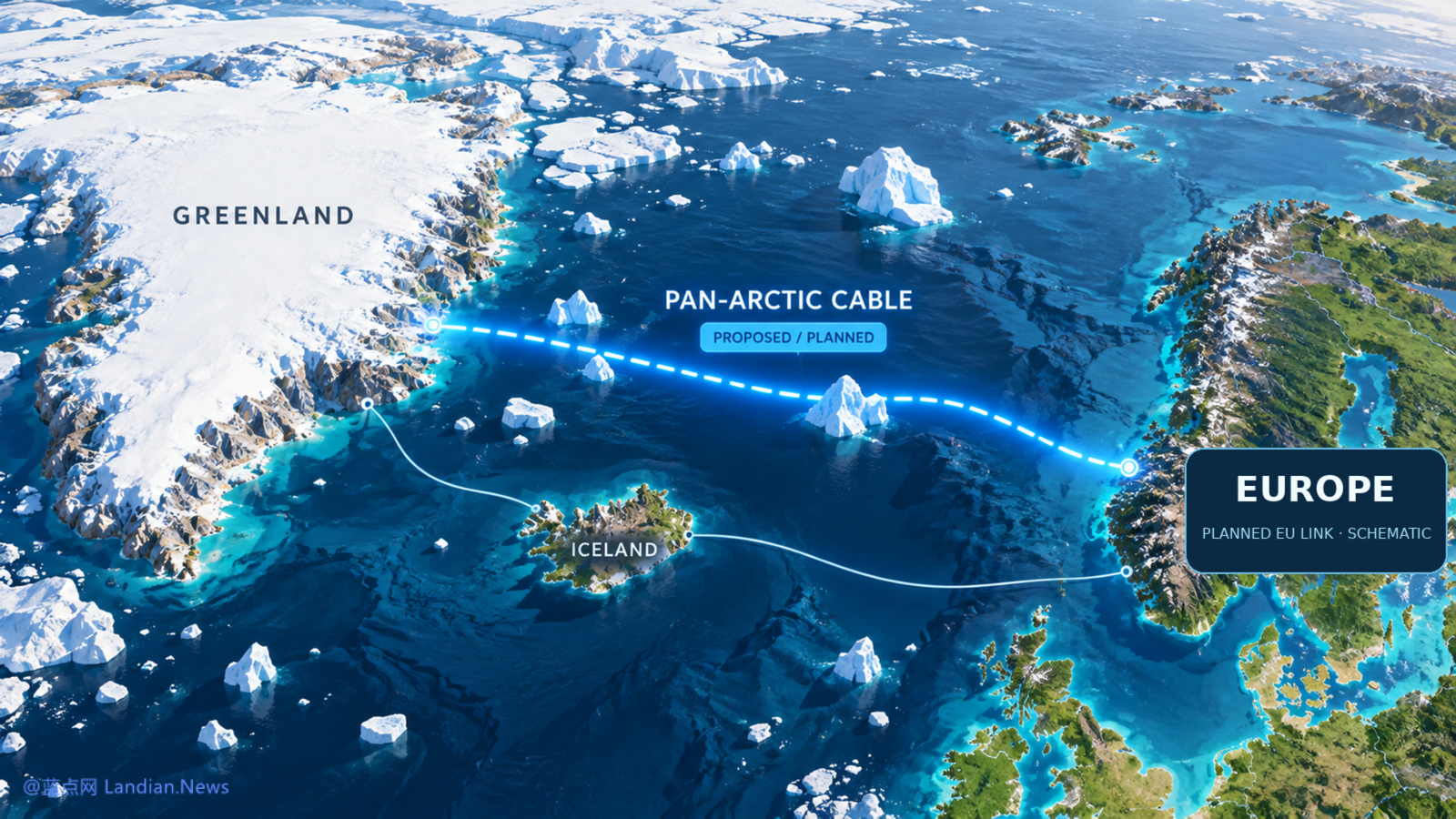
The EU's updated Arctic strategy adds a Pan-Arctic subsea cable concept that would link Greenland, specifically the island of Greenland, directly with continental Europe. For communications professionals, the proposal is important because it treats submarine connectivity as a resilience measure: a new independent path could preserve service when existing routes are unavailable for maintenance or damaged.
Why a direct European route is proposed
Greenland already has an international submarine cable connection. The Greenland Connect cable entered service in 2009. Its route begins in Newfoundland, Canada, connects to Greenland, then extends to Iceland, where links continue to Europe. That existing corridor gives the island international access, but it does not create a direct connection to an EU member state. Because Iceland is not an EU member, the route remains an indirect path for EU territory.
The Pan-Arctic subsea cable is meant to change that pattern. By connecting Greenland to EU members on continental Europe, the EU aims to increase routing choices and strengthen the safety and resilience of European communications infrastructure. If a fault or planned outage affects an existing line, an additional independent route can help maintain communications service.
From the Arctic segment to possible East Asia links
The EU strategy states that the EU will cooperate with Denmark and Greenland to support a secure and reliable direct submarine cable. The first planning objective is the Arctic segment: a direct link between Greenland and Europe. The strategy also includes a longer-term consideration of extending the cable to Canada. From there, the EU is considering onward connections to Japan, South Korea and other parts of the East Asia region.
If the wider Pan-Arctic line concept advanced to completion, Europe could have another route toward East Asia and Southeast Asia. The stated planning implication is that such a route would not need to use the Suez Canal or pass through the Middle East region, and would not need to rely on transit through the United States to reach East Asia and the Southeast Asian region. At present, the status remains feasibility work rather than a built, commissioned or financed system.
What Arctic conditions change for subsea cable work
Building and operating a cable in the Arctic is not a routine copy of temperate-water deployment. Sea ice, icebergs and a short navigable season can complicate seabed survey, cable laying and later maintenance. If a fault occurs, repair vessels may require longer time to reach the work site, so response planning becomes part of the route's practical value.
To address those conditions, the EU plans to support an Arctic Subsea Cable Center. Its role would cover monitoring, protection and repair for submarine communication lines in the North Atlantic and the Arctic region. This gives the project an operations-focused dimension: not only a new cable, but a support system intended for difficult maritime environments.
Comparison table: existing Greenland Connect versus the Pan-Arctic proposal
| Aspect | Existing connectivity: Greenland Connect | Proposed connectivity: Pan-Arctic subsea cable |
|---|---|---|
| Service status | In service since 2009 | Under feasibility planning as part of the updated EU Arctic strategy |
| Core route | Newfoundland, Canada, to Greenland, then Iceland and onward to Europe | A direct route from Greenland to continental Europe, with possible later extension to Canada and onward to East Asia |
| EU territory relationship | Indirect for the EU because Iceland is not an EU member | Designed to connect Greenland with EU member states on continental Europe |
| Stated resilience purpose | Provides an existing international path | Seeks to add another independent path for routing, maintenance and fault scenarios |
| Environmental planning emphasis | Not described in the updated strategy for this cable | Sea ice, icebergs, short navigable season and longer repair vessel transit times shape the plan |
| Support mechanism | Operational cable route | Planned EU support for an Arctic Subsea Cable Center for monitoring, protection and repair |
Checklist: what the next phase should clarify
- Feasibility output: The European Commission indicates that the Pan-Arctic cable feasibility work is proceeding and that the specific route, funding arrangement and construction time will become clearer as planning develops.
- Political scope: Cooperation is framed with Denmark and Greenland for the direct submarine link.
- Routing purpose: The immediate goal is a direct connection from Greenland to continental Europe to improve routing diversity and resilience.
- Long-term expansion: The strategy considers possible extension to Canada, then onward routes toward Japan, South Korea and the East Asia region.
- Operations need: The Arctic environment drives attention to survey windows, maintenance access and repair response.
Data and reference points from the plan
- 2009: the year Greenland Connect entered service, linking Newfoundland, Greenland and Iceland into a route that reaches Europe.
- Iceland: a non-EU country on the existing path, which is why the proposed direct link targets EU members in continental Europe.
- Denmark and Greenland: named partners for support of a secure and reliable direct submarine cable.
- Arctic Subsea Cable Center: the planned support mechanism for monitoring, protection and repair of North Atlantic and Arctic region submarine lines.
- European Commission: the source for the statement that feasibility work is active while route, financing and schedule are not fixed.
Common misconceptions
- The Pan-Arctic cable is already under construction. The updated strategy presents a plan and active feasibility study, not a finished cable system.
- The new cable simply replaces Greenland Connect. The text frames the existing Greenland Connect as an important 2009 international connection; the Pan-Arctic proposal is intended to add direct EU routing, not to describe the existing cable as obsolete.
- The project guarantees a Europe-to-Asia bypass. Canada, Japan, South Korea, East Asia, Southeast Asia, and avoidance of the Suez Canal, Middle East region and United States transit are mentioned as longer-term planning implications, not completed facts.
FAQ
What is the Pan-Arctic subsea cable?
It is a proposed direct submarine communication cable linking Greenland with continental Europe, included in the EU's updated Arctic strategy as a way to strengthen digital connectivity and communications resilience.
How does it relate to the existing Greenland Connect cable?
Greenland Connect has been in service since 2009 and reaches Europe through Newfoundland, Greenland and Iceland. The Pan-Arctic cable is proposed because the current path is not a direct link to an EU member state, given that Iceland is outside the EU.
What regions could the project connect in the long term?
The strategy considers extending the line to Canada, then onward to Japan, South Korea and the East Asia region. If that full concept advanced, Europe could gain an additional route to East Asia and Southeast Asia without using the Suez Canal, the Middle East region or transit through the United States.
Why does the Arctic environment matter?
Sea ice, icebergs and short navigable seasons affect survey, laying and maintenance. The EU plans an Arctic Subsea Cable Center to address monitoring, protection and repair in the North Atlantic and Arctic region.
When will route, funding and construction timing be known?
The European Commission says feasibility work is active, while the specific route, funding arrangement and construction schedule will be clarified as planning progresses.